


How to Prepare for Your First Recording at a Podcast Studio in Lahore
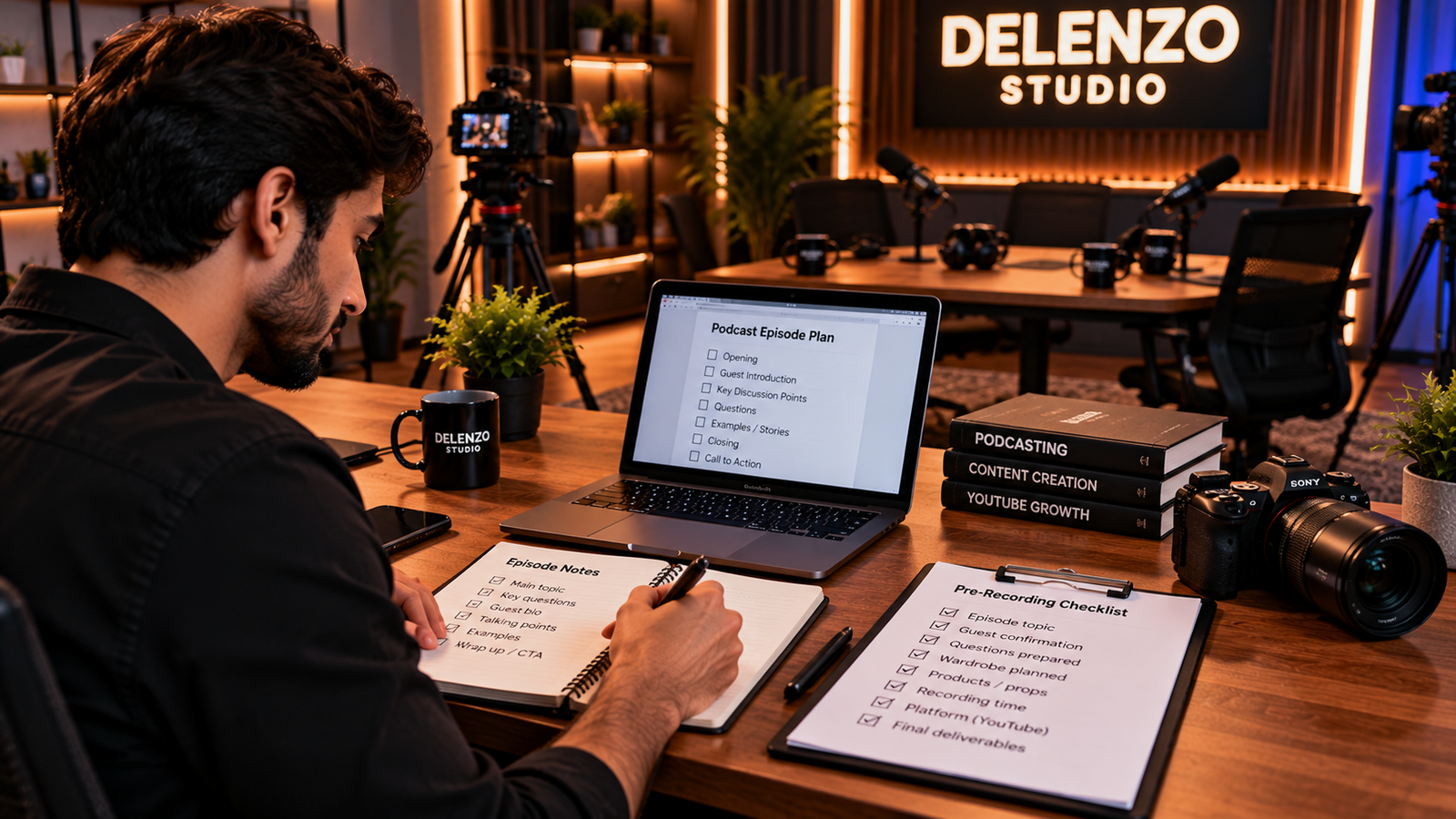
Booking your first professional podcast session is exciting, but walking into the studio without preparation can quickly waste valuable recording time. The studio can handle cameras, microphones, lighting, and technical setup, but it cannot decide what you want to say, prepare your guest, or structure your conversation for you.
Before arriving at a podcast studio in Lahore, prepare your episode topic, talking points, guest information, wardrobe, content goals, and final deliverables. A little planning before recording day allows you to spend more of your session having a strong conversation instead of making decisions that could have been handled earlier.
Here is a practical first-time recording guide.
1. Decide the Main Goal of Your Episode
Start with one simple question:
What should the audience understand, learn, or feel after watching this episode?
Your answer becomes the foundation of the conversation.
A podcast episode might aim to:
-
Educate beginners
-
Interview an industry expert
-
Share a founder story
-
Discuss a current industry problem
-
Build personal-brand authority
-
Explain a business topic
-
Entertain an existing audience
-
Introduce a product or service
Avoid trying to cover every possible subject in one episode.
A focused topic generally creates a stronger title, better conversation, clearer promotional clips, and a more useful episode for viewers.
2. Create an Outline Instead of Memorizing a Full Script
First-time hosts sometimes write every sentence and attempt to memorize it.
That can make the conversation sound unnatural.
Instead, prepare a simple episode outline.
For example:
Opening
-
Introduce the topic
-
Introduce the guest
-
Explain why the conversation matters
Main Discussion
-
Topic 1
-
Topic 2
-
Topic 3
-
Examples or stories
Closing
-
Key takeaway
-
Guest contact or social channels
-
Call to action
Keep a few bullet points under each section.
This gives you direction without forcing you to read every sentence.
A full script can still be useful for a carefully written introduction, sponsored message, disclaimer, or closing CTA.
3. Prepare More Questions Than You Expect to Ask
If you are interviewing a guest, prepare your questions before arriving.
Start with your essential questions and then add optional follow-ups.
Good interview questions usually encourage explanation rather than one-word answers.
Instead of:
“Was starting your business difficult?”
Try:
“What was the most difficult part of starting your business, and how did you deal with it?”
Prepare more questions than you think you need because some answers may be shorter than expected.
At the same time, do not become trapped by your list.
If the guest says something interesting, ask a natural follow-up question even if it was not part of your original plan.
The outline should guide the conversation, not control it.
4. Brief Your Guest Before Recording Day
Do not let your guest discover everything after arriving at the studio.
Send a short briefing beforehand containing:
-
Episode topic
-
General discussion areas
-
Recording date
-
Arrival time
-
Studio location
-
Expected recording duration
-
Wardrobe guidance
-
Whether video is being recorded
-
Any items they should bring
You can share a few example questions, but avoid sending an overly detailed script unless the format requires one.
The objective is to help the guest arrive prepared without making their answers feel rehearsed.
Also ask for their correct:
-
Name
-
Job title
-
Company
-
Short bio
-
Social media handles
You may need these later for introductions, graphics, descriptions, thumbnails, or promotional posts.
5. Know Your Target Episode Length
Decide approximately how long the final episode should be.
For example, if your target is a 40-minute finished episode, do not assume that exactly 40 minutes of studio time will be enough.
Your session can also include:
-
Arrival
-
Seating
-
Microphone adjustments
-
Sound check
-
Camera framing
-
Lighting adjustments
-
Retakes
-
Breaks
-
Promotional clips
Delenzo Studio's current podcast packages list a standard recording duration of one hour, so your episode plan should realistically fit within the session you have booked.
If you expect a longer conversation or additional content, discuss the required time before recording day.
6. Choose Camera-Friendly Clothing
Wardrobe matters when your podcast is also being recorded on video.
Simple, solid clothing is generally easier for cameras than very small patterns, tight stripes, or highly reflective materials.
Consider your background as well.
If you know the set color in advance, avoid clothing that makes you disappear into it.
Delenzo Studio currently provides brown, green chroma, and white background options depending on the podcast setup.
For branded shows, your wardrobe should also fit the tone of the podcast.
A corporate leadership show may require a different visual style from a casual creator podcast.
Most importantly, wear something that allows you to sit and speak comfortably for the entire recording.
7. Prepare Any Products, Props or Brand Assets
If the episode includes physical products or demonstrations, organize them before leaving for the studio.
You may need:
-
Products
-
Packaging
-
Books
-
Documents
-
Demonstration items
-
Branded props
-
Laptop or tablet
-
Reference images
Clean and prepare physical products beforehand.
If your production requires digital brand assets, have files such as logos or graphics organized and accessible.
Do not spend your recording session searching through WhatsApp conversations or email attachments for a logo that could have been prepared earlier.
8. Plan Your Short-Form Content Before the Episode
Your first podcast can create more than one long-form episode.
It can also generate:
-
YouTube Shorts
-
Instagram Reels
-
TikTok clips
-
LinkedIn videos
-
Teasers
-
Promotional highlights
Think about potential short-form moments before recording.
You might prepare questions such as:
-
What is the biggest mistake beginners make?
-
What is one thing people misunderstand about your industry?
-
What advice would you give someone starting today?
-
What changed your approach completely?
These naturally encourage concise, standalone answers that can work well as clips.
Higher-level Delenzo podcast packages currently include social media Reels and promotional highlights, depending on the selected option.
9. Practice Your Introduction Out Loud
Your opening often feels more difficult in the studio than it did while writing it.
Practice it aloud before recording day.
Include:
-
Podcast or show name
-
Episode topic
-
Guest introduction
-
Reason to keep watching
Keep the introduction focused.
You do not need to explain the guest's entire career before the conversation starts.
If you make a mistake during recording, stop briefly and repeat the sentence. Clean retakes are usually easier to edit than trying to continue through a badly delivered line.
10. Arrive Early
Do not plan to reach the building at the exact moment your session starts.
For a first recording, arriving around 15 minutes early is a sensible target.
That gives you time to:
-
Find the studio
-
Meet the team
-
Settle in
-
Organize notes
-
Check appearance
-
Understand the setup
-
Ask last-minute questions
Delenzo Studio is currently located at Office 906, 9th Floor, High Q Tower, Jail Road, Gulberg V, Lahore – 54000.
Send the address and agreed arrival time to your guest in advance as well.
Arriving calmly is much better than beginning your first episode immediately after rushing through traffic.
11. Use the Sound Check Properly
Do not treat the sound check as a formality.
Speak at approximately the same volume you expect to use during the actual conversation.
If you normally become louder when excited, mention that to the technician.
During the check, the production team can adjust:
-
Microphone position
-
Input level
-
Seating
-
Headphone monitoring
-
Camera framing
Delenzo Studio currently provides technical assistance during podcast sessions, so use the setup period to make sure you are comfortable before the actual episode begins.
If something feels awkward, say so before recording.
12. Learn Basic Microphone Technique
Even professional microphones cannot completely compensate for poor microphone technique.
Once the technician positions your microphone, try to maintain a reasonably consistent distance from it.
Avoid repeatedly:
-
Moving far away
-
Leaning dramatically backward
-
Turning your head completely away while speaking
-
Touching the microphone
-
Hitting the desk
-
Moving the microphone arm unnecessarily
If you need to cough or clear your throat, move away from the microphone briefly.
When interviewing someone, remember that turning toward the guest does not mean you should abandon your microphone position entirely.
The studio team can guide you based on the specific microphone being used.
13. Check Your Camera Framing Before Starting
If your podcast is being filmed, look at the monitor before the actual recording.
Check:
-
Sitting posture
-
Clothing
-
Hair
-
Microphone position
-
Background
-
Camera framing
Make any adjustments before beginning.
Once the conversation starts, avoid continuously looking at the monitor to check yourself.
For interview podcasts, your attention should normally be on the guest rather than your own camera preview.
A professional studio team can monitor framing and technical issues while you concentrate on the conversation.
14. Silence Your Phone and Other Devices
A notification during an important answer can interrupt the conversation or introduce unwanted sound.
Before recording:
-
Put your phone on silent
-
Disable vibration if necessary
-
Turn on Do Not Disturb
-
Silence smartwatch notifications
-
Close unnecessary laptop notifications
If you are using your phone for notes, make sure notifications cannot appear during the session.
A printed outline or tablet can sometimes be less distracting than repeatedly unlocking a phone during a video podcast.
15. Speak Naturally and Allow Pauses
First-time podcasters often feel pressure to fill every second with speech.
You do not need to.
Natural pauses can be edited.
If you lose your thought, pause, collect it, and continue.
Avoid filling every gap with repeated words simply because silence feels uncomfortable.
Also allow your guest to finish.
Strong podcast conversations usually come from listening carefully enough to ask meaningful follow-up questions rather than racing toward the next prepared question.
The studio handles recording quality. Your main responsibility is creating a conversation worth recording.
16. Do Not Panic When You Make a Mistake
You will probably make one.
You may mispronounce a word, forget a point, repeat a sentence, or lose your place.
That does not mean the recording is ruined.
For a clean correction:
-
Stop.
-
Pause briefly.
-
Start the sentence again.
-
Continue naturally.
A clear restart gives the editor an easier place to make a cut.
Trying to apologize repeatedly or discuss the mistake for another minute creates more unnecessary material.
17. Record Extra Promotional Material Before Leaving
Once the main episode is complete, consider recording a few additional assets while the cameras, microphones, and lighting are already prepared.
These might include:
-
15-second episode teaser
-
Direct-to-camera hook
-
Guest introduction
-
Call to subscribe
-
Short promotional statement
-
Dedicated Reel
-
Thumbnail poses
For example:
“On today's episode, we discuss the three biggest mistakes new ecommerce brands make when scaling.”
A clean promotional take can sometimes perform better than extracting every marketing asset from the middle of the long-form conversation.
18. Confirm What Happens After Recording
Before leaving, understand the post-production workflow.
Confirm:
-
What files you receive
-
Whether raw audio is included
-
Whether raw video is included
-
Whether editing is included
-
Number of Reels or clips
-
Thumbnail deliverables
-
Expected delivery date
-
How files will be transferred
Delenzo Studio's current Basic podcast option provides raw audio and video, while higher packages add editing, audio cleanup, promotional clips, and thumbnails.
Edited package delivery is currently listed at approximately three to five working days, depending on the selected service.
Knowing this before leaving helps you plan your publishing calendar.
First Podcast Recording Checklist
Before heading to the studio, confirm that you have:
-
Final episode topic
-
Simple episode outline
-
Main interview questions
-
Guest confirmation
-
Guest bio and correct title
-
Recording time and address
-
Camera-friendly outfit
-
Products or props
-
Required brand assets
-
Short-form content ideas
-
Practiced introduction
-
Planned call to action
-
Phone set to Do Not Disturb
-
Clear understanding of deliverables
Keep this checklist simple enough to review on the morning of your session.
Final Thoughts
Preparing for your first session at a podcast studio in Lahore is mainly about separating creative preparation from technical production.
The studio can provide the sound-controlled room, microphones, cameras, lighting, and technical assistance. Your job is to arrive knowing the episode objective, key discussion points, guest details, content requirements, and what you want to create from the recording.
Avoid over-scripting the conversation. Prepare enough questions to stay confident, brief your guest beforehand, arrive early, and use the technical check to become comfortable with the microphone and cameras.
During the episode, focus on listening rather than performing perfectly.
Afterward, confirm your files, editing requirements, promotional clips, and delivery timeline.
Your first studio recording does not need to be flawless. It needs to be well prepared enough that you can stop thinking about the production process and concentrate on having a useful, engaging conversation.
Frequently Asked Questions
What should I bring to my first podcast studio recording?
Bring your episode outline, interview questions, guest details, any products or props required for the conversation, relevant brand assets, and a clear idea of your final content requirements.
How early should I arrive for my first podcast recording?
Arriving around 15 minutes before the agreed session is a practical target for a first recording. It gives you time to settle in, review the setup, and complete technical checks without rushing.
Should I write a full script for my first podcast?
Usually, a structured outline works better for conversational podcasts. A full script can be useful for introductions, sponsored sections, important statements, or calls to action.
What should I wear for a video podcast?
Choose comfortable, camera-friendly clothing. Solid colors are generally safer than very fine patterns or highly reflective materials. Also consider how your outfit will look against the studio background.
Does Delenzo Studio help first-time podcasters with the technical setup?
Yes. Delenzo Studio currently provides technical assistance during podcast recording, along with a soundproof room, professional microphones, cameras, and lighting according to the selected package.
