


Utility-Scale Solar PV in Europe: Investment Strategies for 2030
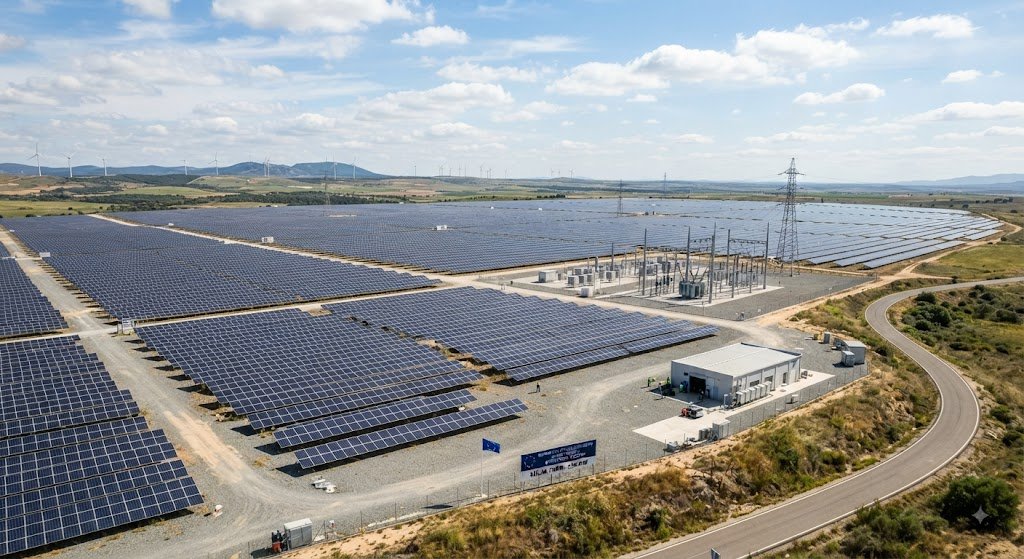
Europe Utility-Scale Solar PV Market: Emerging Opportunities for Investors
Europe's utility-scale solar sector is becoming a major investment arena for infrastructure funds, utilities, developers, technology companies, and industrial energy buyers. The fundamental demand case remains strong because electrification is increasing power requirements while governments seek lower-carbon generation. Solar offers scalable deployment, increasingly competitive equipment, and broad geographic applicability. However, investors are discovering that attractive technology economics do not automatically guarantee attractive project returns.
The Europe Utility-Scale Solar PV Market Size is best understood through capacity, pipeline quality, project economics, and grid deliverability rather than through a single headline figure. Europe contains markets with different solar resources, electricity-price structures, support systems, planning processes, and network conditions. These differences create substantial variation in the attractiveness of individual projects and investment strategies.
Southern Europe remains important because high irradiation can support strong generation yields. Spain, Italy, Portugal, and Greece offer significant solar development potential. Northern and Central European markets can also support large projects where land, transmission capacity, policy frameworks, and demand conditions align.
One of the most important changes is the growing importance of revenue quality. As solar penetration increases, production can become concentrated during low-price daytime periods. This phenomenon can reduce the average price received by photovoltaic generators compared with the market average. Investors therefore need to examine capture rates and price-shape exposure instead of relying solely on annual production forecasts.
Grid conditions can amplify this challenge. Congestion, delayed reinforcement, connection queues, and curtailment can reduce deliverable output even when a plant has excellent technical performance. Projects located in areas with stronger network capacity may command greater strategic value because they can provide more dependable access to markets. Grid intelligence is therefore becoming a competitive advantage in site origination.
Contracting strategies are adapting accordingly. PPAs can provide revenue stability, while auctions and other support schemes can improve financing visibility. Merchant exposure may offer upside when power prices rise, but it also increases sensitivity to price volatility and solar cannibalization. Many investors are therefore exploring combinations of contracted and market-based revenues to balance predictability with potential returns.
Battery integration adds another dimension. Co-located storage can shift electricity toward higher-value periods, support grid services, and potentially reduce the impact of negative-price events. It can also improve the economic utilization of interconnection capacity. The value of storage varies widely by market, however, making detailed dispatch modeling essential. Developers that treat storage as a standardized add-on may miss the operational and financial requirements of a true hybrid asset.
The supply chain is also evolving. Higher-efficiency modules, advanced trackers, improved inverters, digital monitoring, and sophisticated control systems can improve performance. At the same time, project teams must consider equipment warranties, availability guarantees, grid-code requirements, and long-term service arrangements. Lower purchase prices are valuable, but reliability and bankability can be more important over a project's operating life.
Capital is increasingly selective. Infrastructure investors and lenders are looking for projects with credible schedules, robust counterparties, realistic connection assumptions, and transparent downside cases. This favors experienced developers with strong origination networks and the ability to coordinate land, permitting, grid access, EPC execution, financing, and offtake.
Future opportunities extend beyond conventional greenfield projects. Repowering, brownfield sites, agrivoltaics, floating solar, and hybrid renewable facilities can help overcome land constraints and improve asset utilization. Digital forecasting and automated dispatch can further strengthen operational performance.
Europe's utility-scale solar market therefore remains a large and strategically important growth opportunity, but scale alone is not enough. The next phase will reward organizations that can combine strong resource conditions with reliable grid access, intelligent contracting, flexible technology, and disciplined financial underwriting. That combination will determine which projects become enduring infrastructure assets across European power markets.
