


Why Choose Exosome Hair Therapy in Dubai for Hair Regrowth?
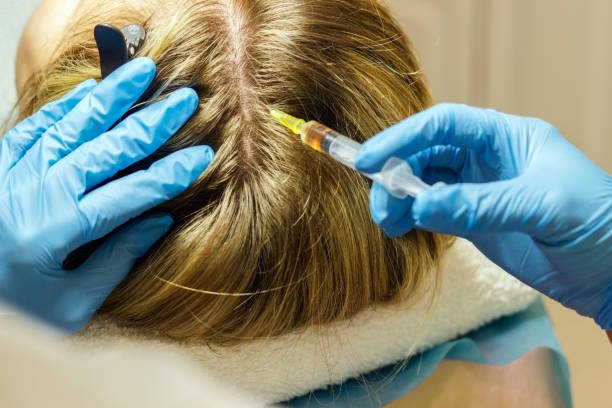
Hair restoration is no longer limited to surgery. Exosome Hair Therapy in Dubai is attracting attention as a minimally invasive option for people who want to support weakened hair follicles without immediately undergoing a transplant.
The treatment focuses on the scalp environment and biological signaling rather than physically moving follicles. That distinction makes it particularly relevant for selected patients with thinning hair who still have viable follicles.
What Makes Exosome Hair Therapy in Dubai Different?
Hair follicles are living structures surrounded by a complex network of connective tissue, blood vessels and signaling pathways. Their ability to produce visible hair can change when the follicle becomes miniaturized or its surrounding environment is affected.
Exosomes are extracellular vesicles involved in communication between cells. They contain biological signals that are being investigated for their potential role in tissue repair and regenerative processes.
In hair restoration, the treatment concept is to introduce exosome-based signaling into selected scalp areas to support the environment around existing follicles.
It Is Designed Around Existing Follicles
This is an important distinction.
Exosome therapy is not a follicle-replacement procedure. If follicles have been permanently lost, a regenerative injection cannot simply recreate them.
The potential benefit is more relevant where follicles remain present but are weakened, miniaturized or producing increasingly fine hair.
It Does Not Require Follicular Extraction
A traditional hair transplant involves harvesting follicles from a donor area and placing them into recipient sites.
Exosome therapy does not involve removing follicular units. There is therefore no donor-area extraction and no surgical recipient-site creation.
This can make the treatment appealing to patients who are not ready for surgery or who have early-stage thinning that does not yet justify transplantation.
How Exosome Therapy May Support Hair Regrowth
The term “regrowth” can create unrealistic expectations if it is interpreted as guaranteed restoration.
A more accurate way to view the treatment is as an attempt to support follicular activity and the surrounding scalp environment.
Cellular Signaling and the Scalp Environment
The follicle depends on communication between different cells and tissues.
Exosomes naturally participate in this type of communication. Researchers are studying how their contents may influence cellular behavior, inflammatory pathways and tissue-repair processes.
For hair applications, this provides the biological rationale for investigating exosome-based therapy as a regenerative approach.
Follicular Miniaturization Matters
In progressive pattern hair loss, susceptible follicles can gradually produce finer and shorter hairs.
Early intervention is therefore biologically different from treating an area where follicles have been absent for many years.
A consultation can help determine whether visible thinning is associated with follicles that are still active.
Who May Consider Exosome Hair Therapy in Dubai?
The treatment may be considered for selected adults experiencing hair thinning, reduced density or certain forms of early hair loss.
However, candidacy cannot be determined from the amount of hair visible on the scalp alone.
Patients With Early Thinning
Early thinning may leave many fine hairs across the affected region.
These follicles may be different from completely absent follicles and can therefore require a different treatment discussion.
Patients Looking for a Non-Surgical Option
Some patients want to postpone or avoid surgery.
For these individuals, an injectable regenerative treatment may be worth discussing when the underlying hair-loss pattern is appropriate.
Patients With Diffuse Density Changes
Diffuse thinning can involve larger areas rather than a single bald patch.
The treatment strategy may therefore involve assessing several scalp regions rather than focusing only on the hairline.
Why Dubai Patients May Prefer a Minimally Invasive Approach
Dubai's lifestyle can make recovery time an important practical consideration.
Professionals may have demanding schedules, frequent business travel and limited flexibility for prolonged surgical recovery.
A minimally invasive procedure may fit more easily around work and travel, although patients still need to follow individualized aftercare instructions.
Dubai Climate and Scalp Care
Outdoor heat, strong sunlight, indoor AC and seasonal humidity can create frequent changes in scalp conditions.
These environmental factors are not usually the primary cause of genetic hair loss, but they can affect scalp comfort and hair-shaft condition.
Patients should therefore view treatment as one component of a broader scalp-care strategy.
Exosome Therapy Versus Hair Transplantation
The two procedures solve different problems.
| Feature | Exosome Therapy | Hair Transplant |
|---|---|---|
| Surgical procedure | No | Yes |
| Follicle extraction | No | Yes |
| Moves existing follicles | No | Yes |
| Main concept | Follicular and scalp support | Physical follicle replacement |
| Recovery | Generally limited | Longer surgical recovery |
| Appropriate for permanent bald areas | Limited | Potentially suitable |
| Requires adequate donor hair | No donor harvesting | Yes |
A patient with significant permanent follicular loss may ultimately benefit more from transplantation.
Someone with early thinning and viable follicles may have a different set of options.
What Results Should Patients Expect?
Results should be discussed in terms of realistic improvement rather than guaranteed restoration.
Hair changes take time because follicles operate through biological growth cycles.
When Visible Changes May Appear
Information provided for the Tajmeels service indicates that visible changes may begin around two months, although individual responses can differ.
Some patients may notice changes gradually rather than at a clearly defined point.
Why Follow-Up Matters
Consistent photographs can help track changes in density and hair caliber.
Follow-up also gives the clinician an opportunity to assess whether the treatment is producing the intended response or whether another strategy should be considered.
When Exosome Therapy May Not Be the Right Choice
Not every form of hair loss is suitable for regenerative treatment.
Sudden shedding, patchy loss, scalp inflammation and suspected scarring conditions may require further assessment before an injectable procedure is considered.
Advanced baldness may also require a different approach if few viable follicles remain.
Choosing Treatment Based on Biology, Not Hype
Exosome therapy is most useful to consider as a targeted regenerative option, not as a universal cure for hair loss.
The strongest treatment plan begins with identifying why the hair is thinning, determining whether viable follicles remain, and matching the intervention to that biology.
For patients considering advanced non-surgical hair restoration in Dubai, Tajmeels Clinic can assess the scalp and discuss whether exosome therapy is appropriate for their specific pattern of hair loss.
