


Europe Offshore Wind Market Outlook: Capital, Technology, and Infrastructure
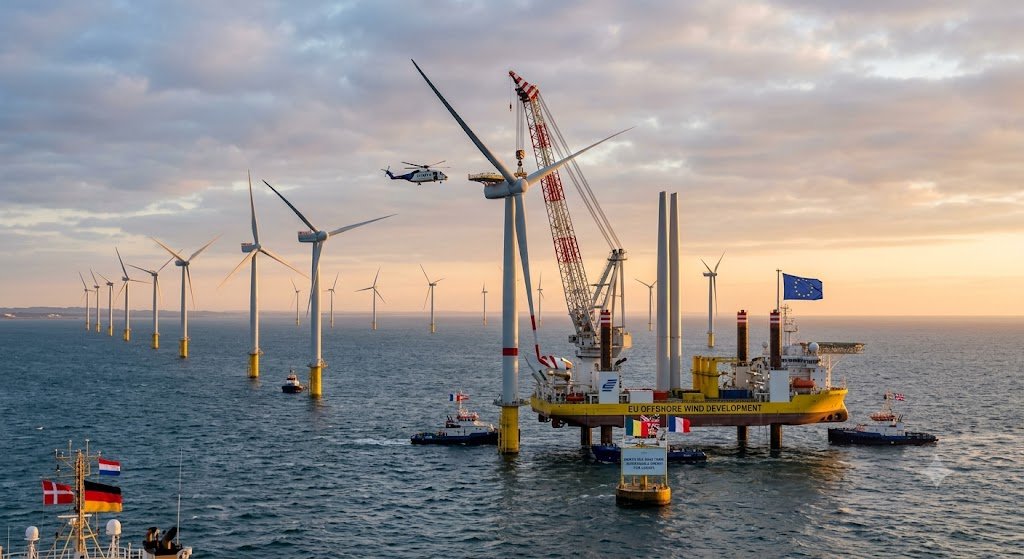
Europe Offshore Wind Market: Grid Expansion Becomes a Core Development Priority
Offshore wind development and electricity transmission are becoming increasingly interconnected across Europe. New wind farms cannot deliver their full value without dependable routes to demand centers, while grid planners need visibility into where and when offshore generation will enter the system. This relationship is reshaping project development, infrastructure planning, and investment decisions across the sector.
Historically, grid connection could be treated as a technical milestone within a wider project schedule. Today, connection timing can influence financing, procurement, construction sequencing, and commercial performance. Transmission delays can leave equipment and services waiting. Developers therefore need to evaluate grid milestones with the same attention given to turbines, foundations, and permits.
The European offshore environment also creates opportunities for more coordinated transmission models. Hybrid interconnectors can potentially connect wind generation with multiple electricity markets while supporting cross-border power flows. Such infrastructure requires complex planning, regulatory coordination, and clear rules for ownership and revenue allocation. The benefits can be significant, but only when project interfaces are defined early enough to support investment.
Grid congestion presents another challenge. Offshore generation may be located far from areas experiencing the strongest electricity demand, creating transmission requirements that extend beyond an individual wind farm. Curtailment, congestion charges, and basis differences can influence project economics when electricity cannot be delivered according to the assumptions used during development.
This makes grid readiness an important component of the Europe Offshore Wind Market Size discussion. Installed capacity alone does not describe the commercial opportunity. Market participants also need to consider connection queues, transmission investment, offshore network design, permitting, construction schedules, and the ability of electricity systems to absorb additional generation.
Permitting remains closely connected to infrastructure delivery. Offshore wind projects often require multiple approvals covering marine areas, environmental considerations, cables, ports, and onshore connection facilities. Delays at any point can affect the entire schedule. Streamlined processes can reduce development uncertainty, but efficiency depends on administrative capacity, stakeholder coordination, and credible implementation rather than policy announcements alone.
Ports are also emerging as strategic infrastructure. Offshore wind construction requires staging areas, heavy-lift capabilities, component storage, specialized vessels, and maintenance facilities. Expanding port capacity can strengthen regional supply chains while supporting local employment and industrial development. However, investment decisions need to reflect the timing of project pipelines so that facilities are available when demand materializes.
Transmission investment can also influence technology selection. Fixed-bottom projects in established shallow-water regions have different connection and construction requirements from floating projects in deeper waters. Floating wind may require new port layouts, assembly techniques, and cable approaches. These differences mean that grid planning should be coordinated with technology development rather than treated as a separate policy stream.
Digital tools can improve coordination as well. Developers and network operators can use forecasting, asset monitoring, project scheduling, and data platforms to identify potential conflicts earlier. Better visibility into construction progress and connection milestones can support procurement decisions and reduce the risk of expensive schedule changes.
For investors, grid infrastructure is increasingly part of project diligence. Questions around connection dates, transmission responsibility, curtailment treatment, and network upgrades can materially affect cash-flow expectations. For suppliers, grid expansion creates demand for cables, substations, transformers, engineering services, monitoring systems, and installation capabilities.
Europe’s offshore wind opportunity will ultimately depend on how effectively generation and networks develop together. Stronger coordination between governments, developers, transmission operators, ports, suppliers, and local authorities can reduce friction and improve delivery confidence. The next stage of offshore wind growth is therefore not simply a story about turbines at sea. It is equally a story about building the infrastructure that allows their electricity to reach consumers reliably.
Transmission investment will increasingly require coordination across national borders and project boundaries. Clear allocation of responsibilities can reduce uncertainty for developers and network operators, while transparent connection milestones can strengthen financing decisions. As offshore generation expands, integrated planning can also improve system flexibility, reduce avoidable congestion, and help infrastructure investments align with the timing of new wind projects.
