


The Ultimate Frontier: An Overview of the Brain Computer Interface Industry
Defining the Direct Link Between Mind and Machine
We are standing on the precipice of a technological revolution that promises to redefine the very nature of human-computer interaction. At the forefront of this new frontier is the groundbreaking and rapidly advancing Brain Computer Interface industry, a sector dedicated to creating a direct communication pathway between the human brain and an external device. A Brain-Computer Interface (BCI) is a system that acquires, analyzes, and translates brain signals into commands that can control computers, prosthetic limbs, or other devices, completely bypassing the conventional pathways of nerves and muscles. This once-niche field of science fiction and academic research is now blossoming into a vibrant industry, fueled by staggering advancements in neuroscience, materials science, and artificial intelligence. From restoring movement and communication to individuals with severe paralysis to creating next-generation gaming and augmented reality experiences, the potential applications of BCI are vast and profound. This industry is not just about creating a new type of mouse or keyboard; it's about unlocking the latent power of the human mind and forging an unprecedented symbiosis between human consciousness and digital technology.
The Two Paths: Invasive vs. Non-Invasive BCI
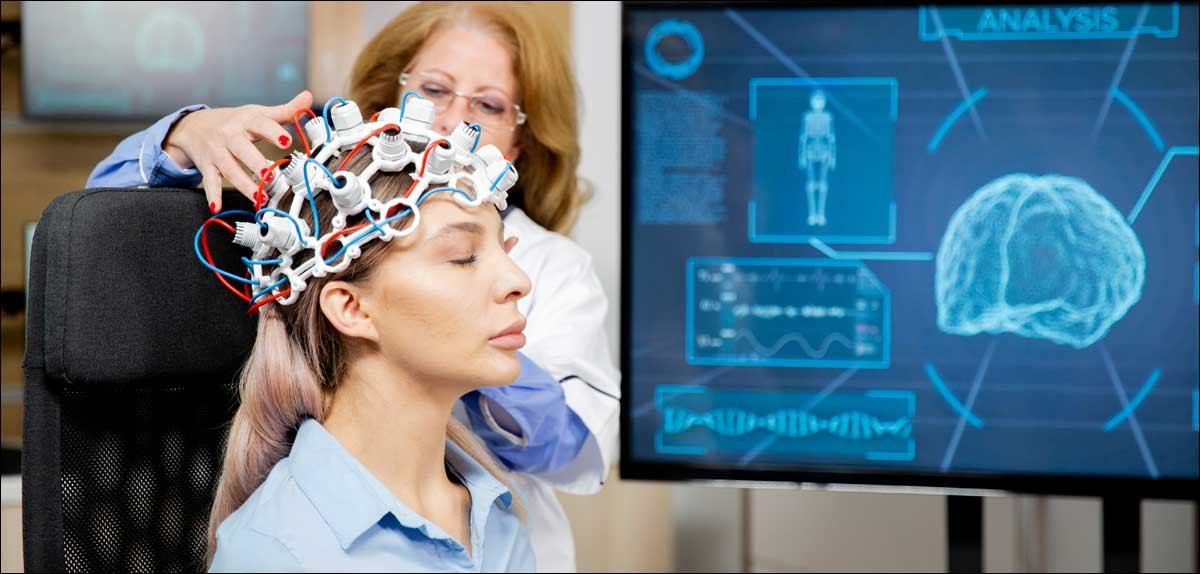
The Brain-Computer Interface industry is fundamentally divided into two main approaches based on how brain signals are acquired: invasive and non-invasive. Invasive BCI systems require surgery to implant electrodes directly onto the surface of the brain (electrocorticography or ECoG) or into the brain tissue itself (microelectrode arrays). This approach offers incredibly high-fidelity signals, allowing for the precise control of complex devices like advanced robotic arms with near-thought speed. Companies like Neuralink and Synchron are pushing the boundaries of this technology, aiming to treat neurological disorders and eventually augment human capabilities. While powerful, this approach carries the significant risks, costs, and ethical considerations associated with brain surgery. In contrast, non-invasive BCI systems acquire brain signals from outside the head, most commonly using an electroencephalography (EEG) headset that measures electrical activity through the scalp. These systems are safe, relatively inexpensive, and easy to use, making them ideal for a wide range of consumer applications in gaming, wellness, and neuromarketing. The trade-off is a lower signal quality (lower "signal-to-noise ratio"), which makes fine-grained control more challenging. The industry's evolution is a dynamic interplay between these two paths, each with its own set of advantages, challenges, and target applications.
Key Applications: From Medical Miracles to Consumer Experiences
The applications of BCI technology are incredibly diverse, spanning from life-altering medical treatments to revolutionary consumer products. The primary and most mature application area is in the medical and healthcare sector. BCIs offer hope and a restored sense of agency to individuals with severe motor disabilities, such as those caused by ALS, spinal cord injuries, or stroke. These systems can enable a completely paralyzed person to control a computer cursor to type messages, browse the internet, or even to control a prosthetic limb with their thoughts. Beyond motor restoration, BCIs are also being explored for diagnosing and treating neurological and psychiatric conditions like epilepsy, depression, and ADHD. On the consumer side, the gaming and entertainment industry is a major driver of innovation. BCI technology promises to create a new level of immersion, allowing players to control game characters or interact with virtual worlds using only their minds. Other emerging consumer applications include neurofeedback for wellness and meditation, neuromarketing to gauge consumer responses to advertising, and hands-free control of augmented reality (AR) and virtual reality (VR) systems, showcasing the technology's vast and versatile potential.
The Ecosystem of Innovation: Research Labs, Startups, and Tech Giants
The BCI industry is a vibrant ecosystem fueled by a collaboration between academic research institutions, agile startups, and deep-pocketed technology giants. For decades, the foundational research has been conducted in university and government labs around the world, which continue to push the boundaries of what is possible. In recent years, this research has spun out into a new generation of venture-backed startups. These nimble companies, such as Synchron, Blackrock Neurotech, and NextMind, are focused on translating laboratory breakthroughs into commercially viable products, whether it's a new implantable sensor or a consumer-grade EEG headset. Attracted by the immense long-term potential of the technology, major tech giants have also entered the fray. Meta (formerly Facebook) is investing heavily in developing non-invasive BCI for its future AR/VR glasses, while Elon Musk's Neuralink is pursuing a highly ambitious vision of a high-bandwidth, implantable BCI for the masses. This dynamic interplay between academic discovery, startup agility, and the massive resources of big tech is creating a powerful engine of innovation that is rapidly accelerating the development and commercialization of BCI technology.
➤ Latest Market Intelligence from Market Research Future:
