


Dental Bone Grafting Materials & Osseointegration Technology
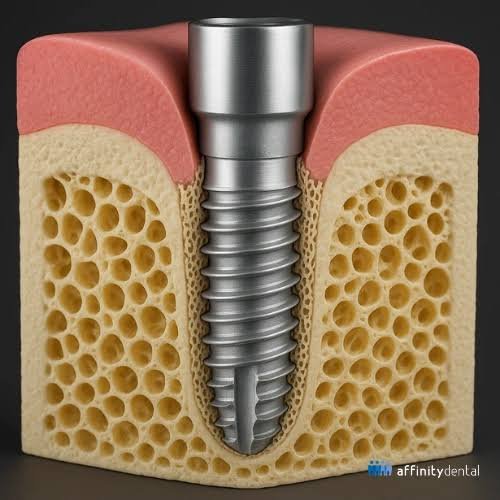
The successful placement of a Titanium Dental Implant System relies on two critical, interdependent pillars: sufficient bone volume and successful osseointegration. Dental Bone Grafting Materials provide the structural foundation when native bone is deficient, while Osseointegration Technology ensures the long-term stability of the implant by creating a direct biological bond with the bone. These two processes are often used in sequence to achieve predictable implant outcomes in complex cases. For example, after a graft is placed and a period of healing (4-6 months) allows new bone to form, the implant can then be placed. The new bone will then undergo osseointegration with the implant surface, effectively integrating the grafted bone into the final restoration. For oral surgeons, periodontists, and implantologists, the detailed analysis on Dental Bone Grafting Materials provides essential insights.
H2: The Biology of Grafting and Integration
Dental Bone Grafting Materials work through three primary mechanisms: osteogenesis (the formation of new bone by living cells in the graft), osteoinduction (the stimulation of host stem cells to become bone-forming cells), and osteoconduction (the provision of a scaffold or matrix for new bone to grow into) . Autografts are the only material that possesses all three properties. Allografts and xenografts are primarily osteoconductive, while some processed forms can be osteoinductive. Alloplasts are generally osteoconductive. Osseointegration Technology is a separate biological process that occurs after the implant is placed. It involves the direct apposition of living bone to the implant surface without an intervening soft tissue layer . The microscopic structure of the implant, including its surface roughness and chemistry, is designed to maximize this bone-to-implant contact.
H2: Materials and Innovations
Innovations in Dental Bone Grafting Materials are improving clinical outcomes. The use of platelet-rich fibrin (PRF) and other growth factors is being explored to enhance vascularization and bone formation within the graft, potentially accelerating the integration of the graft . Nanostructured biomaterials are also being developed, which may offer superior properties for bone regeneration . For Osseointegration Technology , the focus is on creating surfaces that are super-hydrophilic, which may accelerate the bone healing process and allow for earlier loading of the implant . The integration of biomimetic principles into implant design is a growing trend, with the goal of developing implants that more closely replicate the natural structure and function of teeth . For clinicians and researchers exploring advanced grafting and implant solutions, the market research available on Osseointegration Technology offers comprehensive guidance.
