


The Ultimate Guide to Lithium-Ion Battery Monitoring and Performance Optimization for Next-Gen EVs
The rapid evolution of the electric vehicle (EV) market has placed unprecedented demands on battery technology. At the heart of this revolution lies the need for sophisticated systems capable of ensuring safety, reliability, and maximum efficiency. Lithium-ion battery monitoring has emerged as the cornerstone of modern EV development, providing the critical data needed to prevent catastrophic failures and extend battery life. Without effective monitoring, lithium-ion batteries are vulnerable to overcharging, deep discharge, extreme temperatures, and internal short circuits—all of which can lead to thermal runaway and potentially disastrous consequences. The integration of intelligent monitoring technologies, including stress/strain sensors, temperature probes, and gas detection systems, allows for real-time assessment of battery health, enabling preemptive action before minor anomalies escalate into major failures. As the global EV market accelerates toward a projected 60% of car sales by 2030, the reliance on advanced monitoring frameworks has never been more critical for ensuring both consumer safety and vehicle performance.
The Science Behind Effective Battery Monitoring
Understanding what happens inside a lithium-ion cell during operation is fundamental to effective monitoring. During charge and discharge cycles, a complex interplay of electrochemical reactions generates heat, causes volume expansion, and can produce harmful gases. These internal changes directly impact battery safety and longevity. Traditional external sensors react too slowly to these internal shifts, which is why researchers are now developing embedded sensors placed directly inside battery components such as current collectors and separators. These lithium-ion battery monitoring solutions can track temperature, pressure, and chemical changes in real-time, providing early warnings that external systems simply cannot match. The implementation of in-situ sensing technologies like Fiber Bragg Grating (FBG) sensors and distributed fiber optic sensors offers unprecedented visibility into stress and strain variations, while thermistors and thermocouples enable precise temperature tracking. By capturing this data, monitoring systems provide the intelligence required for effective battery management, allowing for dynamic adjustments to charging protocols and operational parameters that directly influence battery longevity. With lithium-ion batteries being among the most expensive components in modern EVs, the ability to monitor their health accurately translates directly to economic value and sustainability.
Strategies for Optimizing Battery Performance
While monitoring provides the data, Battery performance optimization translates that information into actionable improvements. The internal resistance of a lithium-ion battery is a key physical parameter that limits fast-charging efficiency and high-power performance. Strategies to reduce this resistance involve a multifaceted approach spanning material design, electrolyte formulation, and system-level management. On the material front, optimizing electrode architecture enhances electron and ion conductivity, while advances in electrolyte chemistry reduce the energy barrier for lithium-ion desolvation at the anode interface, thereby improving rate capability. Separator design also plays a crucial role—enhanced wettability facilitates faster ion transport and reduces polarization resistance. The optimization journey extends beyond materials science into advanced manufacturing techniques such as thick-electrode engineering and porosity control, which together minimize ionic resistance. Additionally, the refinement of current collector structures and tab connection processes reduces contact resistance, ensuring that every component within the cell contributes to overall efficiency. This integrated approach—combining material innovation with manufacturing excellence—is essential for delivering the fast-charging capabilities demanded by today's EV consumers, while also safeguarding battery lifespan. With global EV sales reaching over 18 million units in 2024, these optimization strategies are not just beneficial but essential for market competitiveness.
From Data to Decisions: The BMS Intelligence Layer
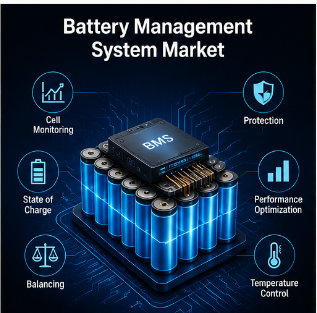
The vast amount of data generated by lithium-ion battery monitoring systems requires sophisticated processing to be useful. This is where the Battery Management System (BMS) becomes invaluable. Modern BMS platforms utilize algorithms to estimate State of Charge (SOC) and State of Health (SOH), balancing cell voltages and managing thermal loads to maximize performance. For instance, passive cell balancing uses resistive discharge to equalize cell SOC, while active balancing transfers energy from high-energy cells to low-energy cells, improving overall pack efficiency. The thermal management subsystem, which activates cooling when temperatures exceed critical thresholds, is a vital safety net that directly impacts battery performance optimization. Beyond basic control, advanced BMS frameworks incorporate Model-in-the-Loop (MIL) testing to validate control strategies before hardware deployment, ensuring robustness in fault scenarios. Emerging trends point toward cloud-based BMS and digital twins, which provide real-time diagnostics and predictive maintenance capabilities, allowing for system-wide optimization that was previously impossible. By leveraging these intelligent systems, manufacturers can not only extend the operational lifespan of battery packs but also improve the overall driving experience through consistent, reliable power delivery. As the industry moves toward "fast-charging under high-voltage" standards, the intelligence layer provided by the BMS will be crucial for maintaining safety while pushing the boundaries of performance.
Future Trends and Industry Implications
The future of battery performance optimization is inextricably linked to advancements in artificial intelligence and machine learning. Data-driven models, such as artificial neural networks, are now capable of estimating SOC with remarkable accuracy—achieving error rates below 2% under dynamic operating conditions. These models leverage variables like voltage, current, and temperature to predict battery behavior, enabling proactive management rather than reactive control. The rise of smart sensors embedded within battery cells represents another leap forward. Researchers are developing low-cost, scalable sensors that can detect dangerous internal failures before they escalate into fires or explosions, actively responding with fire-resistant materials and triggering built-in suppression features. This game-changing technology could unlock new possibilities in high-risk sectors such as aviation, maritime transport, and aerospace, where battery reliability is paramount. However, bridging the gap between academic research and real-world industrial application remains a significant challenge. As EV adoption continues to surge, the demand for more reliable, efficient, and intelligent lithium-ion battery monitoring and optimization systems will only intensify. By investing in these technologies today, the industry can ensure a safer, more sustainable future for electric mobility while simultaneously lowering the total cost of ownership for consumers. Battery performance optimization continues to drive innovation across the entire battery ecosystem, making electric vehicles more accessible and dependable than ever before.
In conclusion, the synergy between lithium-ion battery monitoring and battery performance optimization is driving the next generation of electric vehicles. From embedded sensors and advanced materials to intelligent BMS platforms and AI-driven analytics, every component of the battery ecosystem must work in harmony to deliver the performance, safety, and longevity that the modern consumer expects.
