


Urban Freight Bicycles vs. Delivery Vans: Why Cities Are Betting on Two-Wheeled Logistics
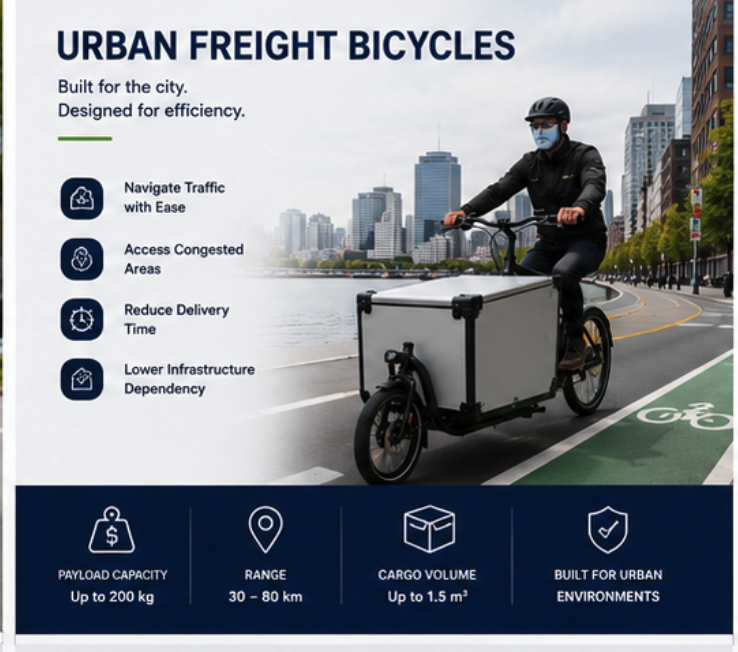
The sight of a brown delivery van double-parked, hazard lights flashing, is ubiquitous in every major city. But this familiar image represents a massive inefficiency—congestion, emissions, and wasted time. A new generation of logistics providers is turning to a quieter, nimbler solution: the cargo bike. Urban Freight Bicycles are purpose-built for the unique challenges of city delivery, offering speed, sustainability, and cost advantages that conventional vans cannot match. Central to this shift is the availability of durable Human-Powered Cargo Bicycles, which require no fuel and minimal maintenance.
The Speed Advantage in Congested Cities
In dense urban environments, speed is measured not in miles per hour but in deliveries per hour. A delivery van might travel at 15 mph average in city traffic, but that figure excludes time spent searching for parking, walking to the destination, and dealing with parking tickets.
Urban Freight Bicycles operate on a different calculus. They use bike lanes, bus lanes, and in some cities, dedicated freight bike lanes. They park at the curb directly in front of the destination. The rider steps off, grabs the package, and walks seconds to the door. In dense neighborhoods with high stop density, cargo bikes consistently achieve 20-30 deliveries per hour, compared to 10-15 for vans.
Data from the European Cycling Federation shows that in central London, Paris, and Berlin, cargo bike deliveries are 50% faster than van deliveries during peak hours. For time-sensitive goods like restaurant meals or pharmacy prescriptions, this speed advantage is decisive.
The Economic Breakdown
Let us examine the per-delivery costs for a typical urban logistics operation. Assumptions: 100 deliveries per day, 5 days per week, 50 weeks per year.
| Cost Category | Delivery Van | Urban Freight Bicycle |
|---|---|---|
| Vehicle purchase (amortized) | $8,000/year | $500/year |
| Fuel/energy | $6,000/year | $0 |
| Maintenance | $3,000/year | $300/year |
| Insurance | $2,500/year | $400/year |
| Parking tickets | $1,000/year | $100/year |
| Annual total | $20,500 | $1,300 |
Per-delivery cost (25,000 deliveries/year): $0.82 for van vs. $0.05 for bike. Even accounting for higher labor costs (bike deliveries may be slightly slower on long distances), the economic case for Human-Powered Cargo Bicycles in dense urban cores is overwhelming.
Regulatory Tailwinds
Cities are actively encouraging the shift from vans to bikes. Policies include:
-
Low Emission Zones (LEZs): Many European cities charge vans daily fees to enter central areas, while cargo bikes enter free.
-
Cargo bike subsidies: France offers up to €4,000 for businesses purchasing cargo bikes. The UK's Cycle to Work scheme includes cargo bikes.
-
Loading zone access: Some cities reserve curb space exclusively for cargo bike loading.
-
Congestion charges: London's £15 daily congestion charge applies to vans but not bicycles.
These policies reflect a recognition that Urban Freight Bicycles are a public good—they reduce traffic, pollution, and noise. Cities that invest in cargo bike infrastructure see measurable improvements in air quality and livability.
Case Study: The Parcel Carrier Transition
Major logistics companies are already making the shift. DPD has deployed over 1,000 cargo bikes across Europe, operating micro-hubs in city centers where parcels are transferred from semi-trucks to bikes for final delivery. UPS operates "Cycle Logistik" centers in 30+ European cities, using human-powered and electric cargo bikes.
In New York City, Amazon has begun using cargo bikes for same-day delivery in Manhattan, operating from a depot on the West Side. The bikes navigate narrow streets that defeat delivery vans, and they never receive parking tickets—a significant saving in a city where van tickets routinely exceed $1,000 per vehicle annually.
Challenges and Limitations
Despite their advantages, Human-Powered Cargo Bicycles are not a panacea. They struggle with:
-
Heavy parcels: Items over 50 kg require two riders or mechanical assistance.
-
Long distances: Routes exceeding 10 miles between depots and delivery zones exhaust riders.
-
Hilly terrain: San Francisco, Seattle, and Pittsburgh present significant challenges.
-
Extreme weather: Thunderstorms, snow, or extreme heat reduce rider productivity.
For these scenarios, electric-assist cargo bikes (which retain pedal power but add a motor) are a better fit. However, for the majority of urban delivery routes—flat, dense, and under 8 miles—human power remains highly effective.
Conclusion
The delivery van's dominance of city streets is ending. Urban Freight Bicycles offer faster speeds, lower costs, and zero emissions—a trifecta that traditional vehicles cannot match. As more fleet operators deploy Human-Powered Cargo Bicycles, cities will become quieter, cleaner, and more efficient. The future of urban freight is two wheels and a pedal.
