


Antipsychotic Drugs Market: Industry Size, Share, Central Nervous System Therapeutics & Psychiatric Care Trends, and Forecast by 2033
"
According to the latest report published by Data Bridge Market Research, the Antipsychotic Drugs Market
CAGR Value
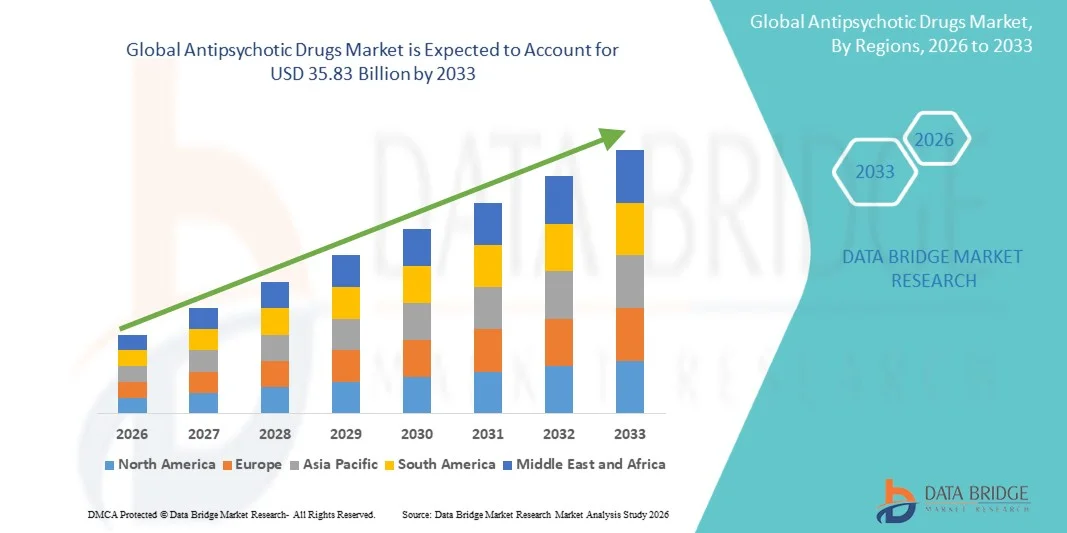
As per Data Bridge Market Research Analysis the global Antipsychotic Drugs market size was valued at USD 18.66 billion in 2025and is expected to reach USD 35.83 billion by 2033, at a CAGR of 8.50% during the forecast period
This Antipsychotic Drugs Market research report is a resource, which offers current as well as upcoming technical and financial details of the Antipsychotic Drugs Market industry for the specific forecast period. The report exhibits important product developments and tracks recent acquisitions, mergers and research in the Antipsychotic Drugs Market industry by the key players. A team of enthusiastic, dynamic and skilled researchers and analysts work with full dedication to provide our clients with the supreme market research report. The report can be referred efficiently by both traditional and new players in the industry for complete knowhow of the market. The market research data included in this Antipsychotic Drugs Market report is analysed and forecasted using market statistical and coherent models.
Stay informed with our latest keyword market research covering strategies, innovations, and forecasts. Download full report: https://www.databridgemarketresearch.com/reports/global-antipsychotic-drugs-market
Antipsychotic Drugs Market Segmentation and Market Companies
Segments
- Based on drug type, the antipsychotic drugs market can be segmented into first-generation antipsychotics and second-generation antipsychotics. First-generation antipsychotics, also known as typical antipsychotics, include medications like haloperidol and chlorpromazine. On the other hand, second-generation antipsychotics, also known as atypical antipsychotics, consist of drugs like risperidone, olanzapine, and quetiapine.
- On the basis of application, the market can be segmented into schizophrenia, bipolar disorder, and depression. Antipsychotic drugs are primarily used in the treatment of schizophrenia, a severe mental disorder that affects how a person thinks, feels, and behaves. These medications can also be prescribed for the management of bipolar disorder and as an augmentation strategy in the treatment of depression.
- By distribution channel, the antipsychotic drugs market can be categorized into hospital pharmacies, retail pharmacies, and online pharmacies. Hospital pharmacies play a significant role in the distribution of antipsychotic medications to inpatients and outpatients, ensuring timely access to necessary treatments. Retail pharmacies and online pharmacies cater to the needs of individuals requiring antipsychotic drugs for maintenance therapy.
Market Players
- Johnson & Johnson Services, Inc.
- AstraZeneca
- Eli Lilly and Company
- Pfizer Inc.
- Mylan N.V.
- Teva Pharmaceutical Industries Ltd.
- Novartis AG
- Allergan
- GlaxoSmithKline plc
- Omeros Corporation
The global antipsychotic drugs market is witnessing steady growth due to the rising prevalence of mental health disorders, increasing awareness about mental well-being, and advancements in drug development technologies. The market is driven by the growing demand for antipsychotic medications for the treatment of various mental illnesses, including schizophrenia, bipolar disorder, and depression. Additionally, the expanding geriatric population and the surge in stress-related disorders are contributing to the market's growth.
The competitive landscape of the antipsychotic drugs market is characterized by the presence of established pharmaceutical companies developing innovative treatment options and expanding their product portfolios through strategic collaborations and partnerships. Market players are focusing on research and development activities to introduce novel therapies with improved efficacy and reduced side effects. The market is also witnessing an influx of generic drug manufacturers offering cost-effective alternatives, further intensifying competition.
In conclusion, the global antipsychotic drugs market is poised for significant growth in the coming years, driven by factors such as increasing mental health awareness, rising prevalence of mental disorders, and technological advancements in drug development. With key players investing in research and development efforts and expanding their market presence through strategic initiatives, the market is expected to witness continuous expansion and innovation in the treatment landscape.
The global antipsychotic drugs market is poised for substantial growth as it continues to address the increasing burden of mental health disorders worldwide. One key trend shaping the market is the ongoing shift towards personalized medicine and precision healthcare. With advancements in technology, such as genetic testing and biomarker identification, healthcare providers can tailor treatment plans to individual patients, optimizing therapeutic outcomes and minimizing adverse effects. This trend is expected to drive demand for more targeted antipsychotic therapies and foster innovation in the development of novel treatment options.
Another significant aspect influencing the market dynamics is the emphasis on mental health parity and equal access to quality care. Governments and healthcare organizations around the world are increasingly recognizing the importance of mental health services and working towards eliminating stigma and barriers to treatment. This focus on addressing mental health needs on par with physical health conditions is likely to drive increased demand for antipsychotic drugs and support market growth.
Additionally, the growing emphasis on holistic approaches to mental health management is reshaping the treatment landscape for psychiatric disorders. Integrative therapies, including cognitive-behavioral interventions, mindfulness practices, and lifestyle modifications, are being increasingly incorporated into treatment protocols alongside pharmacotherapy. As a result, the market for antipsychotic drugs is evolving to complement these multifaceted treatment approaches, creating opportunities for combination therapies and personalized medicine strategies.
Furthermore, the emergence of digital health solutions and telehealth platforms is revolutionizing the delivery of mental healthcare services. Telepsychiatry, remote monitoring tools, and digital therapeutic applications are expanding access to mental health resources, particularly in underserved regions. This digital transformation in mental health care is expected to have a profound impact on the antipsychotic drugs market, facilitating greater patient engagement, treatment adherence, and real-time monitoring of treatment outcomes.
In conclusion, the global antipsychotic drugs market is evolving in response to changing healthcare paradigms, technological advancements, and the growing recognition of mental health as a critical component of overall well-being. By embracing personalized medicine, promoting mental health parity, integrating holistic treatment approaches, and harnessing digital health innovations, the market is poised to address the complex needs of individuals with psychiatric disorders more effectively. Moving forward, collaboration across healthcare sectors, continued research and development efforts, and patient-centered care models will be key drivers shaping the future trajectory of the antipsychotic drugs market.The global antipsychotic drugs market is currently experiencing growth due to various factors such as the increasing prevalence of mental health disorders, advancements in drug development technologies, and rising awareness about mental well-being. This market is segmented based on drug type, application, and distribution channel, allowing for a detailed understanding of the industry landscape. The presence of established companies like Johnson & Johnson, AstraZeneca, and Pfizer, among others, contributes to the competitive nature of the market, with a focus on innovation and expanding product portfolios. The market players are heavily investing in research and development to introduce novel therapies with improved efficacy and fewer side effects, catering to the evolving needs of patients with mental illnesses.
One of the significant trends shaping the antipsychotic drugs market is the move towards personalized medicine and precision healthcare. With advancements in technology enabling tailored treatment plans based on individual patient profiles, the demand for more targeted antipsychotic therapies is expected to rise. This shift towards personalized medicine aligns with the industry's goal of optimizing therapeutic outcomes while minimizing adverse effects, fostering innovation in treatment options. Additionally, the emphasis on mental health parity and equal access to quality care is driving governments and healthcare organizations to prioritize mental health services, leading to increased demand for antipsychotic drugs and supporting market growth.
The market is also witnessing a transformation in mental healthcare delivery through the adoption of digital health solutions and telehealth platforms. Telepsychiatry, remote monitoring tools, and digital therapeutic applications are improving access to mental health resources, particularly in underserved regions. This digital transformation not only enhances patient engagement and treatment adherence but also enables real-time monitoring of treatment outcomes, contributing to the overall advancements in mental health care delivery. As the industry continues to evolve in response to changing healthcare paradigms, technological advancements, and the growing recognition of mental health as a critical component of overall well-being, collaboration across sectors, ongoing research and development efforts, and patient-centered care models will be vital in shaping the future trajectory of the antipsychotic drugs market.
Frequently Asked Questions About This Report
How are Green regulations changing the Antipsychotic Drugs Market?
What is the growth of Antipsychotic Drugs Market in the Agriculture tech market?
What are the potential Black Swan events for the Antipsychotic Drugs Market?
How are Antipsychotic Drugs Market companies reducing their water footprint?
How do cultural factors influence Antipsychotic Drugs Market demand globally?
How much is the Services segment projected to be worth in 2026?
What are the key buying criteria for consumers in the Antipsychotic Drugs Market?
What are the ethical considerations in the Antipsychotic Drugs Market?
What are the top 5 companies by revenue in the Antipsychotic Drugs Market?
What is the impact of Right to Repair laws on the Antipsychotic Drugs Market?
How does product-level segmentation impact the overall Antipsychotic Drugs Market CAGR?
Browse More Reports:
Global Phytosterol-Fortified Margarine Market
Global Pin and Sleeve Devices Market
Global Pipe and Tank Coatings Market
Global Piriformis Syndrome Treatment Market
Global Plant-based Bacon Market
Global Plant-Based Egg Market
Global Plastic Bottles Market
Global Plastic Composite Packaging Market
Global Plastics In Personalized Drug Delivery Systems Market
Global Platinum Automotive Catalyst Market
Global Pleurisy Market
Global Pocket Container Market
Global Point-of-Care Coagulation Testing Devices Market
Global Polarized Sunglasses Market
Global Polyalphaolefin (PAO) Market
Contact Us:
Data Bridge Market Research
US: +1 614 591 3140
UK: +44 845 154 9652
APAC : +653 1251 978
Email:- corporatesales@databridgemarketresearch.com"
