


JustEat Clone: Turning Food Trends into a Profitable Local Delivery Business
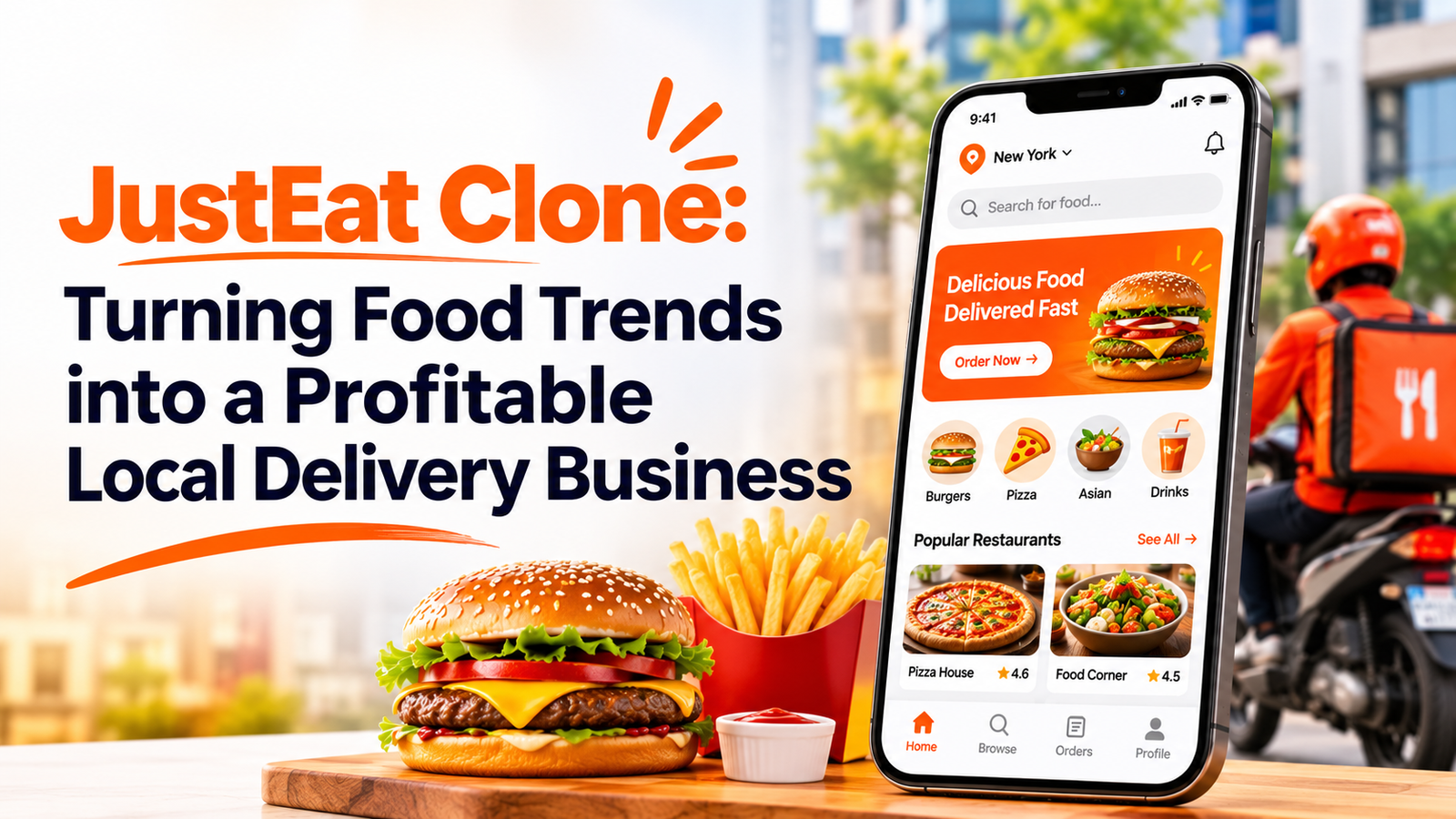
The next popular food item could come from a viral video, a food regional festival, a celebrity recommendation, or a new product introduced by a small restaurant. The challenge for a food delivery business is not simply identifying what people want to eat. It is making that demand available through local sellers before consumer interest moves elsewhere.
This creates an interesting direction for entrepreneurs entering the online food delivery industry with a JustEat clone.
Rather than building another platform that displays restaurant menus and waits for orders, business owners can develop a trend-responsive food marketplace. Its purpose is to connect changing consumer interests with restaurants capable of preparing and delivering the products customers are actively searching for.
Food Trends Are Becoming Shorter Commercial Windows
Food preferences are influenced by more than traditional cuisine choices. Social media content, entertainment, seasonal events, fitness interests, and regional celebrations can quickly influence what customers want to order.
Just Eat Takeaway.com's 2025 trends report highlighted how online attention can translate into purchasing behavior. In the UK, orders for Dubai chocolate-inspired products reportedly increased by 2,684% as the trend gained popularity.
For food delivery entrepreneurs, this demonstrates an important commercial consideration: customer demand can change faster than a restaurant's traditional menu planning cycle.
A platform could respond by creating temporary food collections around emerging interests. These might include trending desserts, regional festival menus, seasonal beverages, or popular meal combinations.
Restaurants could introduce limited-period products, while the platform provides a dedicated discovery section to help customers find them.
The advantage is not simply offering more choices. It is giving customers a reason to explore the platform when a particular food trend becomes popular.
The Business Model: Connect Local Supply with Changing Demand
A trend-responsive marketplace needs a different approach to restaurant onboarding.
Instead of treating every restaurant as a general food supplier, the platform can identify partners according to their product specialties and ability to respond to changing demand.
For example, a bakery producing specialty desserts could participate in seasonal product campaigns. A regional restaurant could introduce festival-specific meals. A cloud kitchen might test a limited menu designed around a popular food category.
The platform operator can coordinate these campaigns through:
-
Limited-time collections: Highlight products available during a specific period.
-
Local food discovery: Promote specialties from restaurants in selected delivery zones.
-
Seasonal ordering campaigns: Connect food businesses with festival and event-related demand.
-
New product showcases: Give emerging sellers visibility when introducing new menu items.
-
Pre-order campaigns: Allow customers to reserve products that require advance preparation.
This model gives restaurant partners a way to test new products without committing to permanent menu changes.
For entrepreneurs, it also creates a more identifiable marketplace than one based entirely on restaurant quantity.
Why Menu Availability Can Become a Competitive Advantage
Promoting a popular food item is only useful when customers can actually order it.
A restaurant may run out of ingredients, temporarily stop accepting orders, or need additional preparation time during a demand surge. If the platform continues displaying unavailable products, customers encounter a frustrating ordering experience.
This makes menu accuracy an important part of the business model.
A JustEat clone should support real-time product availability, seller-controlled menu updates, preparation estimates, and order acceptance settings. Restaurants should be able to pause individual products without disabling their entire storefront.
Consider a limited-edition dessert campaign involving several bakeries. If one seller reaches its daily production limit, the platform should update its availability while continuing to display products from other participating sellers.
This approach helps protect customer confidence and reduces unnecessary order cancellations.
For the platform owner, accurate availability can be more valuable than simply increasing the number of products displayed.
AI Can Help Translate Food Discovery into Ordering
Artificial intelligence is becoming increasingly relevant to food delivery because customers often spend time browsing menus before deciding what to purchase.
In 2026, Just Eat Takeaway.com announced the expansion of its AI voice assistant across additional markets, reflecting the industry's interest in reducing friction during food discovery and ordering.
Entrepreneurs developing a JustEat clone can explore similar capabilities through practical use cases.
An AI-powered discovery assistant could help customers find meals based on preferences, cuisine types, dietary requirements, or spending limits. Personalized recommendations could highlight relevant restaurants and products rather than presenting identical listings to every customer.
For example, a customer searching for vegetarian lunch options could receive suggestions from restaurants that currently have suitable products available.
AI-driven demand analysis could also help operators identify growing interest in particular food categories and share useful insights with restaurant partners.
However, these capabilities should support actual customer needs. Adding AI features without improving discovery, availability, or ordering convenience will not automatically create a competitive advantage.
Local Delivery Economics Still Determine Sustainability
A trend-responsive food marketplace must also consider the cost of fulfilling orders.
A popular product may attract considerable attention, but orders spread across distant locations can create inefficient delivery operations. Similarly, promotional campaigns can generate transactions without producing sufficient margins.
Entrepreneurs should evaluate demand at the neighborhood level.
A practical starting strategy could involve selecting a compact delivery area, onboarding restaurants with complementary food categories, and testing a few focused product campaigns.
The platform can then monitor order density, delivery distances, preparation times, cancellation rates, and repeat purchases.
These indicators help business owners identify which campaigns produce commercially useful demand.
Restaurant economics matter as well. A campaign should consider ingredient costs, preparation capacity, packaging, platform commissions, and delivery expenses before promotional pricing is introduced.
The National Council of Applied Economic Research's 2025 assessment of food delivery platforms in India found that platforms can expand restaurant reach and customer access, while also identifying concerns around commissions and profitability.
For a new platform, transparent commercial arrangements and manageable operating costs can help build stronger restaurant relationships.
Building the Technology Around a Changing Marketplace
A JustEat clone provides the core infrastructure for connecting customers, restaurants, and delivery partners.
The customer application can include restaurant discovery, category-based collections, product recommendations, secure payments, order history, and delivery tracking.
The restaurant panel should support menu management, temporary product listings, stock availability, order acceptance, preparation updates, and promotional campaigns.
The delivery partner application coordinates assignments, pickup information, navigation, and delivery status.
Meanwhile, the admin dashboard allows the operator to manage seller accounts, customer activity, commissions, campaigns, transactions, and operational performance.
Additional customization can support scheduled product releases, pre-orders, AI-assisted discovery, and location-based promotional collections.
The goal is to create a platform that can respond to changing food interests without making restaurant operations unnecessarily complicated.
Taking a Trend-Responsive Food Business to Market with spotneats
For entrepreneurs exploring this model, spotneats offers a JustEat clone solution with customer applications, restaurant panels, delivery applications, and an admin dashboard.
The software foundation can be customized around different market requirements, including local restaurant discovery, seasonal campaigns, specialty food collections, and personalized ordering experiences.
Business owners can begin with a focused restaurant network and expand their product categories as customer demand develops.
Rather than competing only through discounts or an extensive restaurant directory, the platform can establish its identity through relevant food discovery and responsive local supply.
Conclusion
Food delivery is no longer just about giving customers access to restaurant menus. Changing food interests, social trends, seasonal demand, and personalized discovery are creating new ways for platforms to attract customers and support restaurant partners.
A JustEat clone can provide the technology foundation for entrepreneurs who want to build around these developments.
The stronger business proposition is to connect emerging food demand with available local supply, helping restaurants test new products while giving customers more relevant reasons to order.
