


White Label App Builder: Features, Uses, and Business Advantages
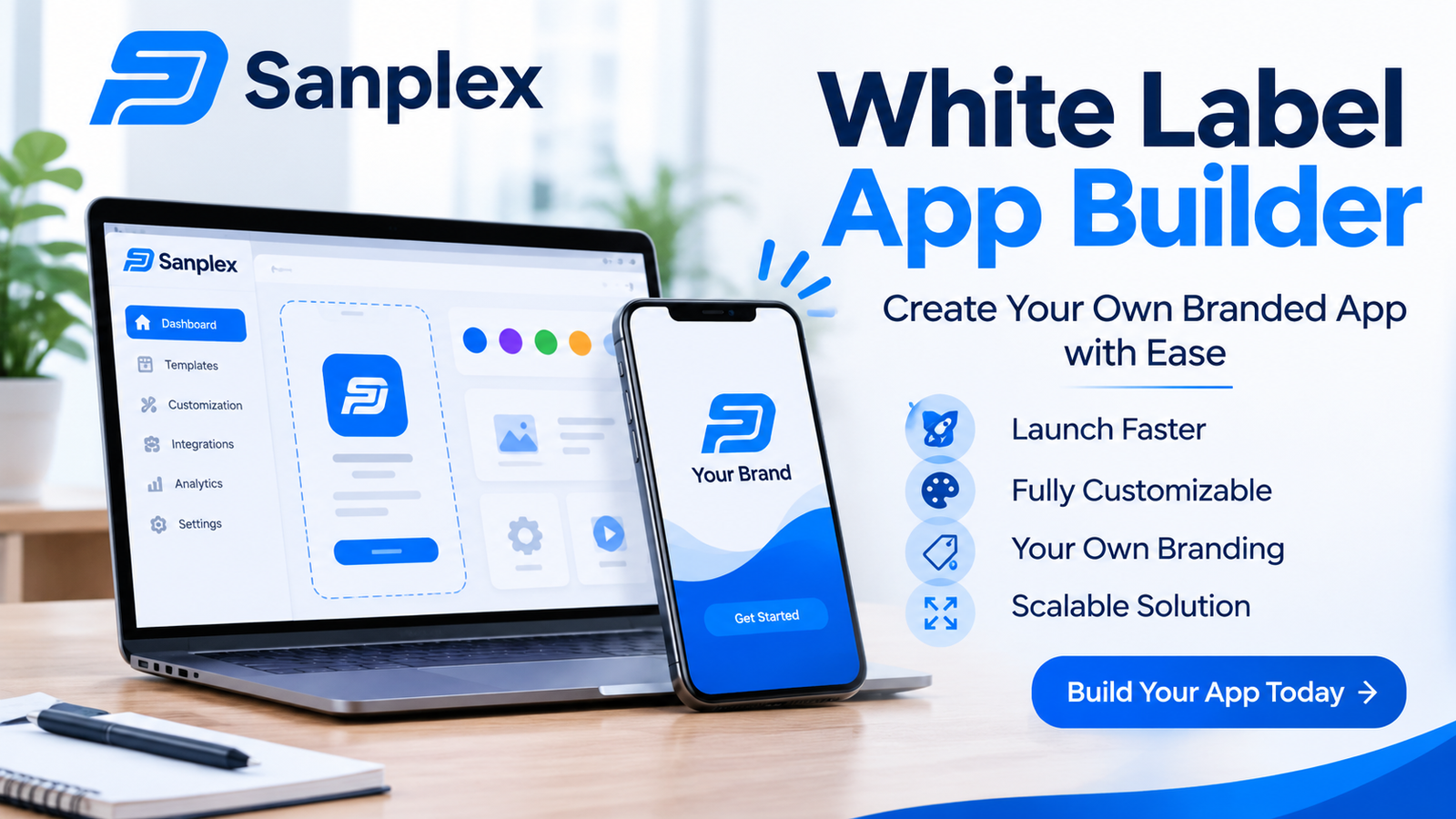
Mobile applications have become an important part of how businesses connect with customers, deliver services, and manage daily operations. However, developing an application from scratch requires technical expertise, financial investment, and ongoing maintenance. A white label app builder offers an alternative by providing ready-made technology that businesses can customise and launch under their own brand name.
This approach is particularly useful for startups, digital agencies, software resellers, and established companies that want to offer mobile applications without managing the entire development process. Instead of building every feature independently, businesses can use an existing platform, customise its design, and configure the tools needed for their customers. Understanding how a white label app builder works can help organisations identify the right solution for their goals and budget.
What Is a White Label App Builder?
A white label app builder is a software platform that allows businesses to create mobile applications using an existing development framework. The platform provider supplies the underlying technology, while the business customises the application with its own branding, content, and selected features.
The finished application can be presented as the business's own product, depending on the provider's licensing and branding arrangements.
For example, a web development agency may want to offer mobile applications to local retail stores. Rather than hiring a development team for every project, the agency can use a white label platform to create separate applications with individual logos, product catalogues, payment options, and customer accounts.
This arrangement saves development effort while allowing the agency to expand its services.
How Does the Technology Work?
Most white label app builders provide a central dashboard where users can manage application settings and content.
The general process includes:
-
Choose a platform: Select a provider that offers the required application features.
-
Set up branding: Upload logos, select colours, and customise the application layout.
-
Configure functionality: Add features such as booking systems, shopping carts, payment gateways, and notifications.
-
Upload content: Add business information, images, product details, and service descriptions.
-
Test the application: Check navigation, performance, compatibility, and important functions.
-
Publish the application: Prepare the app for distribution through supported platforms.
The provider typically manages the underlying infrastructure, but the exact responsibilities for updates, hosting, and maintenance depend on the service agreement.
Important Features of a White Label App Builder
Choosing a platform requires understanding which features are necessary for the intended application. The following capabilities are particularly useful.
1. Complete Branding Control
A professional application should reflect the business it represents. Branding tools allow users to customise logos, colours, fonts, icons, and visual layouts.
Some platforms also offer industry-specific templates. These can help businesses create applications that match their existing websites and marketing materials.
2. Drag-and-Drop Development Tools
Many platforms include visual editors that make application creation easier for non-technical users.
Users can arrange application sections, add content blocks, configure navigation, and activate features through a graphical interface. This reduces the need to write code for basic development tasks.
However, advanced customisations may still require technical knowledge.
3. Payment Gateway Integration
Businesses that sell products or services through mobile applications need reliable payment functionality.
A suitable platform should support appropriate payment providers and offer secure payment processing arrangements. Depending on the integration, customers may be able to complete purchases, pay invoices, or book paid services directly through the application.
Businesses should also check transaction fees and supported payment methods.
4. Customer Management Features
Customer management tools help businesses organise user information and maintain communication.
Useful functions may include customer profiles, account registration, order histories, appointment records, and communication preferences.
These features can improve service management and help businesses understand customer requirements.
5. Push Notifications
Push notifications allow businesses to send updates to customers who have installed their application and enabled notifications.
For example, an online store can notify customers about order updates, while a restaurant can announce special offers or changes to opening hours.
Notifications should provide useful information rather than overwhelming users with frequent promotional messages.
6. Analytics and Performance Tracking
Application analytics help businesses understand how customers use their services.
Depending on the platform, reporting tools may provide information about:
-
Application installations.
-
Active users.
-
Customer engagement.
-
Popular application sections.
-
Sales and conversions.
-
User retention.
Businesses can use this information to improve application design, identify customer preferences, and evaluate marketing performance.
Industries That Can Use White Label App Builders
White label app development is not limited to one business category. Different industries can use these platforms to improve customer access and service delivery.
Retail and E-Commerce
Retail businesses can develop applications with product listings, shopping carts, payment options, order tracking, and customer accounts.
For example, a clothing retailer can create a branded shopping application where customers browse collections, check product availability, and receive updates about new arrivals.
Restaurants and Food Businesses
Restaurants can use mobile applications to display menus, accept food orders, manage reservations, and operate customer loyalty programmes.
A restaurant chain can also maintain a consistent application experience across multiple locations while providing location-specific information.
Education and Training
Educational organisations can use suitable platforms to provide course information, learning resources, student accounts, notifications, and registration facilities.
These applications can make it easier for students to access important information through their mobile devices.
Healthcare and Professional Services
Healthcare providers and professional service companies can use applications for appointment scheduling, reminders, service information, and customer communication.
When handling medical or other sensitive personal information, businesses must verify that the platform meets relevant privacy, security, and regulatory requirements.
Practical Benefits of Using a White Label App Builder
A white label app builder can provide several advantages when its features match the business's requirements.
Lower Initial Development Investment
Custom application development involves expenses related to planning, design, programming, testing, and infrastructure.
White label platforms provide an existing technical foundation, reducing the amount of development work required. This can make mobile applications more accessible to small businesses and startups with limited budgets.
Faster Application Launch
Building an application from scratch can take considerable time, particularly when it includes several features and integrations.
Ready-made templates and components simplify the development process. Businesses can concentrate on customisation and testing rather than creating standard functionality from the beginning.
Multiple Client Applications
Agencies and resellers can use certain platforms to manage applications for several clients.
For instance, a digital agency could create separate branded applications for restaurants, gyms, and retail businesses through one management system. This can help agencies expand their services without maintaining completely separate development infrastructures.
Simplified Maintenance
Many providers manage software updates, hosting, and technical infrastructure.
This reduces the operational burden on businesses, although responsibilities vary between providers. Companies should understand which maintenance services are included in their subscriptions.
New Revenue Opportunities
Digital agencies and software service providers can offer application creation as part of their commercial packages.
They may charge clients for initial setup, monthly subscriptions, maintenance, additional features, or ongoing management. This provides an opportunity to develop recurring revenue while delivering useful digital services.
Common Challenges and Considerations
Despite their advantages, white label platforms have limitations that businesses should evaluate before choosing a provider.
Limited Technical Flexibility
Prebuilt application frameworks may not support every specialised feature. Businesses with complex workflows or unique technical requirements may eventually need additional development.
Dependence on the Platform Provider
The provider controls important parts of the underlying technology. Changes in pricing, service availability, or platform functionality may affect the business.
Check whether the provider offers data exports, migration assistance, and clear service agreements.
Security and Privacy Requirements
Applications may process personal information, payment details, and customer records. Businesses should examine encryption, authentication, access controls, backups, and data storage practices.
They should also understand their responsibilities regarding applicable data protection laws.
Long-Term Pricing
Some platforms charge separately for additional applications, premium features, integrations, hosting, or technical support.
Compare the complete pricing structure instead of relying only on the advertised starting subscription.
How to Select the Right White Label App Builder
Before purchasing a platform, businesses should assess their requirements and compare available providers.
Consider these important factors:
-
Features: Confirm that the platform supports the required business functions.
-
Customisation: Check whether branding and application layouts can be adjusted.
-
Compatibility: Verify support for relevant Android and iOS devices.
-
Integrations: Review compatibility with existing business software.
-
Security: Examine data protection and access management policies.
-
Scalability: Check whether the platform can support additional users and applications.
-
Customer support: Evaluate technical assistance and response times.
-
Pricing: Understand subscription fees, additional charges, and renewal conditions.
A free trial or product demonstration can also help businesses evaluate the platform before making a financial commitment.
Frequently Asked Questions (FAQs)
1. What Is the Main Purpose of a White Label App Builder?
Its main purpose is to help businesses create and launch branded mobile applications using an existing software framework. It reduces the need to develop every application feature independently.
2. Can Beginners Create Apps Using a White Label App Builder?
Yes. Many platforms provide drag-and-drop editors, templates, and visual configuration tools. These features allow beginners to create basic applications without extensive programming knowledge.
3. Can I Sell White Label Applications to Other Businesses?
Yes. Many providers offer reseller or agency plans that allow businesses to create and manage applications for clients. However, the available commercial rights depend on the provider's licensing terms.
4. Are White Label Apps Suitable for Small Businesses?
Yes. Small businesses can use these applications to provide online ordering, appointment scheduling, customer communication, and other digital services without investing in a fully custom development project.
5. What Should I Check Before Choosing a White Label App Builder?
Review its features, branding flexibility, security standards, integrations, device compatibility, scalability, customer support, and total pricing. These factors help determine whether the platform is suitable for long-term business use.
Conclusion
A white label app builder offers a practical approach to mobile application development by combining existing technology with business-specific branding and functionality. It allows companies to introduce digital services, improve customer experiences, and expand their offerings without managing every stage of software development.
However, the right choice depends on business objectives, technical requirements, security expectations, and available resources. By comparing platform capabilities, understanding licensing conditions, and evaluating long-term costs, businesses can select a solution that supports their operations and future growth.
