


How Does Rhinoplasty Correct a Crooked Nose?
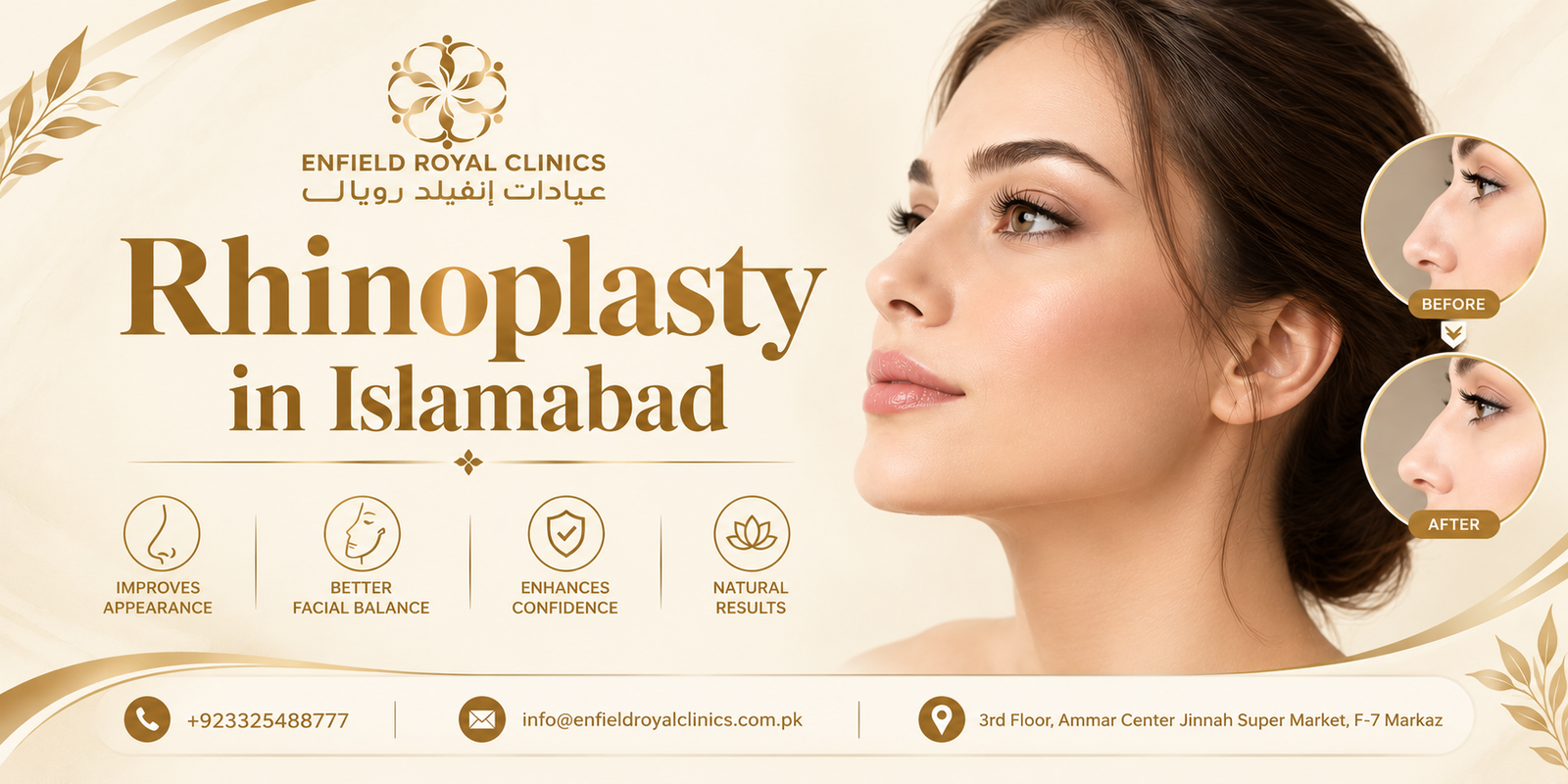
A crooked nose can affect more than facial appearance. For some people, it may also cause breathing difficulties, nasal blockage, or discomfort due to an uneven internal structure. A crooked nose can develop because of genetics, an injury, or changes in the nasal bones and cartilage during growth. Rhinoplasty is a surgical procedure that can help improve nasal alignment while creating a more balanced facial appearance.
People considering Rhinoplasty in Islamabad often want to understand how the procedure corrects a crooked nose, what changes it can achieve, and whether it can improve breathing. The treatment depends on the cause and severity of the nasal deviation. A carefully planned procedure focuses on the nose's structure, proportions, and function rather than simply changing its external shape.
What Causes a Crooked Nose?
A crooked nose occurs when the nasal structure does not follow a straight line down the centre of the face. The deviation may be visible from the front, side, or both. In some cases, the nose may lean towards one side, while in others, the bridge or tip may appear uneven.
Several factors can contribute to this condition:
-
Genetics: Some individuals naturally develop an asymmetrical nasal structure because of inherited facial features.
-
Physical injuries: Sports accidents, falls, or other impacts can shift nasal bones or damage cartilage.
-
Deviated septum: The septum is the wall separating the two nasal passages. When it bends to one side, it can affect both nasal appearance and airflow.
-
Uneven cartilage growth: Differences in cartilage development can cause the nasal tip or bridge to appear misaligned.
-
Previous nasal surgery: In some cases, an earlier procedure may leave structural irregularities or asymmetry.
Identifying the underlying cause is important because not every crooked nose requires the same surgical approach. An external deviation may involve the nasal bones, cartilage, or both.
How Does Rhinoplasty Straighten a Crooked Nose?
Rhinoplasty corrects a crooked nose by reshaping and repositioning the structures that contribute to the uneven appearance. The surgical approach depends on whether the problem involves the nasal bones, cartilage, septum, or a combination of these structures.
During the procedure, the surgeon may carefully adjust the nasal bones to improve their alignment. If the cartilage is contributing to the deviation, it may be reshaped or repositioned to create a more balanced structure. In some cases, cartilage grafts may be used to provide additional support or improve symmetry.
The main goal is to create a nose that looks more aligned with the rest of the face while maintaining adequate structural support. The procedure does not necessarily make the nose perfectly symmetrical, as natural facial features are rarely identical on both sides.
For patients seeking Rhinoplasty in Islamabad, an individual assessment helps determine which surgical techniques may be suitable for their nasal structure and desired outcome.
Can Rhinoplasty Correct a Deviated Septum?
A deviated septum is one of the common structural problems associated with a crooked nose. It occurs when the thin wall separating the nasal passages shifts away from the centre. This can make one nasal passage narrower than the other and may interfere with normal airflow.
When a deviated septum affects breathing, a procedure called septoplasty may be recommended. Septoplasty focuses on correcting the internal septum, while rhinoplasty primarily addresses the external shape and structure of the nose.
When both concerns are present, surgeons may perform a combined procedure known as septorhinoplasty. This approach can address external crookedness and internal septal deviation during the same operation.
Possible benefits may include:
-
Improved nasal airflow when obstruction is caused by structural deviation.
-
Better alignment of the nasal bridge.
-
Improved balance between the two sides of the nose.
-
Correction of certain structural problems affecting nasal function.
However, breathing problems can have several causes, including allergies, swollen nasal tissues, and sinus conditions. Rhinoplasty or septoplasty may not resolve symptoms that are unrelated to the nasal structure.
What Happens During Crooked Nose Rhinoplasty?
The treatment process begins with a detailed consultation and examination. The nasal bones, cartilage, septum, skin thickness, and facial proportions are assessed to understand the nature of the deviation.
The surgeon may also ask about previous injuries, breathing problems, medical history, and the patient's expectations. Photographs and other assessments may help with surgical planning.
During surgery, general anaesthesia is commonly used. Depending on the complexity of the case, the surgeon may use an open or closed rhinoplasty technique.
Open rhinoplasty involves a small incision across the tissue between the nostrils, allowing greater visibility of the nasal structures. It may be useful for complex corrections.
Closed rhinoplasty involves incisions inside the nostrils. It may be suitable for selected cases where the required adjustments can be performed through an internal approach.
The surgeon then makes the necessary changes to the nasal bones or cartilage. Once the desired structural adjustments are completed, the incisions are closed and a protective splint may be placed over the nose.
The exact technique varies according to the patient's anatomy and the degree of crookedness. Not every patient requires the same surgical steps.
How Long Does Recovery Take After Rhinoplasty?
Recovery after crooked nose rhinoplasty happens gradually. Patients may experience swelling, bruising, mild discomfort, and temporary nasal congestion during the early healing period. These effects are generally expected after surgery and usually improve over time.
During the first week, a nasal splint may be used to support and protect the nose. It is important to follow post-operative instructions and avoid activities that could place pressure on the healing structure.
Some general recovery recommendations include:
-
Keeping the head elevated while resting to help manage swelling.
-
Avoiding strenuous exercise until the surgeon gives permission.
-
Not blowing the nose during the period advised by the surgeon.
-
Protecting the nose from accidental bumps or pressure.
-
Attending scheduled follow-up appointments.
-
Taking prescribed medication according to instructions.
Many patients can return to light daily activities within one to two weeks, depending on their recovery and the nature of the surgery. However, swelling may take several months to settle, and subtle changes can continue for up to a year or longer.
Patients considering Rhinoplasty in Islamabad should understand that the final result cannot be judged immediately after surgery. Patience and proper aftercare are important parts of the healing process.
Who Is a Suitable Candidate for Crooked Nose Rhinoplasty?
Rhinoplasty may be suitable for individuals who have a visibly crooked nose due to bone or cartilage irregularities. It may also be considered when nasal deviation contributes to breathing difficulties.
A suitable candidate generally has completed facial growth, is in good overall health, and has realistic expectations about the possible results. Patients should also understand the procedure's risks, recovery period, and limitations.
The procedure may not be appropriate for everyone. Certain medical conditions, uncontrolled health problems, or unrealistic expectations may affect surgical suitability. A detailed consultation is necessary before making a decision.
It is also important to remember that rhinoplasty can improve alignment without guaranteeing perfect symmetry. The outcome depends on the original nasal structure, skin characteristics, healing response, and complexity of the correction.
Conclusion
Rhinoplasty can correct a crooked nose by adjusting the nasal bones, cartilage, and, when necessary, the internal septum. The procedure may improve facial balance and help address certain structural breathing problems. However, the right approach depends on the cause of the crookedness and the patient's individual anatomy. Anyone considering Rhinoplasty in Islamabad should seek a thorough assessment, understand the potential risks, and have realistic expectations about recovery and results.
For more information visit Enfield royal clinic in islamabad
Frequently Asked Questions
1. Can rhinoplasty completely straighten a crooked nose?
Rhinoplasty can significantly improve nasal alignment, but perfect symmetry cannot always be achieved. The final result depends on the original structure, the extent of deviation, and the healing process.
2. Does correcting a crooked nose improve breathing?
It can improve breathing when the problem is caused by structural issues such as a deviated septum or narrowed nasal passages. Other causes of breathing difficulties may require different treatments.
3. Is crooked nose rhinoplasty different from regular rhinoplasty?
The main difference is the focus of the procedure. Crooked nose rhinoplasty specifically addresses structural misalignment, which may require more detailed adjustments to the nasal bones and cartilage.
4. How long does it take to see the final rhinoplasty results?
Initial changes become visible as swelling decreases over the first few weeks. However, complete healing and refinement of the nasal shape may take 12 months or longer.
