


Europe’s Hydrogen Economy: Industrial Applications and Emerging Opportunities
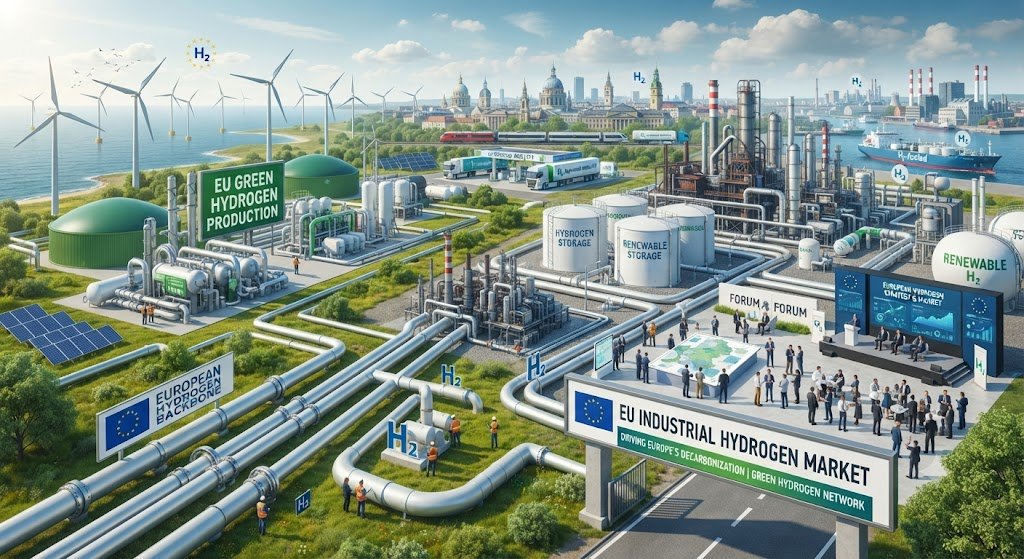
Infrastructure and Supply Reliability: Building Europe's Hydrogen Backbone
The industrial hydrogen transition is becoming a test of infrastructure coordination as much as technology development. Electrolysers, renewable power, pipelines, storage systems, compressors, industrial equipment, and safety systems must operate as one connected chain. A technically proven component does not guarantee a commercially successful project if another part of the system cannot keep pace.
For industrial users, the hydrogen delivery point is often more important than the production asset itself. A factory needs hydrogen at the required pressure, purity, flow rate, and time. If supply arrives late, falls below specification, or becomes unavailable during maintenance, the financial consequences can extend beyond the hydrogen contract. Production interruptions can affect equipment utilization, product output, workforce scheduling, and customer commitments.
This reality increases the importance of storage and buffering. Storage can help balance variable production with relatively stable industrial demand. It can also provide protection during maintenance, grid interruptions, transport delays, or short term changes in consumption. The appropriate configuration depends on process requirements, supply mode, site footprint, safety conditions, and expected variability. Designing storage too narrowly can create operational exposure, while excessive capacity can increase capital and operating costs.
Compression is another key interface. Hydrogen produced by electrolysers may require conditioning before entering a process or distribution system. Pressure requirements can vary between production equipment, pipelines, storage, and industrial machinery. Compression therefore becomes part of the system design rather than an isolated auxiliary function. Efficient equipment selection and control strategies can influence both energy consumption and operational reliability.
Grid infrastructure can determine whether on site hydrogen production performs as expected. Electrolysers require dependable electricity, and variable renewable generation can introduce changes in operating hours. Grid congestion or connection delays may limit utilization. Some projects may respond through dedicated renewable generation, flexible operation, electricity procurement strategies, storage, or hybrid supply. Each option changes the project’s cost structure and risk profile.
Water management also deserves attention. Electrolysis requires water, and industrial sites may face limitations involving treatment, availability, discharge, or environmental permitting. These issues can be particularly significant for brownfield projects where existing utilities were not designed around hydrogen production. Early engineering work can identify constraints before they become schedule critical.
Safety integration is another central requirement. Hydrogen systems can require new equipment, detection, ventilation, containment, controls, emergency procedures, and training. When installations are added to operating industrial facilities, safety approval must be coordinated with production requirements. Poor sequencing can delay commissioning even when equipment is delivered on time.
The industrial hydrogen ecosystem therefore creates opportunities for engineering and integration specialists. Customers may prefer suppliers that can take responsibility across multiple interfaces, including design, equipment selection, commissioning, acceptance testing, and operational support. This does not eliminate specialist suppliers, but it changes how their capabilities are evaluated. Integration readiness becomes a competitive attribute alongside equipment performance.
Network development can eventually transform supply economics, but network availability should not automatically be treated as guaranteed. Industrial projects may need to start before regional infrastructure is fully operational. Bridge solutions can provide early supply while preserving a migration route toward network hydrogen. Such designs can reduce stranded asset concerns when temporary equipment and permanent infrastructure are planned together.
The EU Industrial Hydrogen Market Report highlights a broader lesson for stakeholders: project economics depend on the complete delivery architecture. Capacity announcements can create expectations, but investment decisions require evidence that electricity, water, compression, storage, safety approvals, logistics, and industrial demand can align.
As the European market develops, infrastructure coordination will become a defining factor in project execution. Companies that anticipate interfaces early can reduce commissioning delays and operational surprises. Industrial buyers can improve resilience by evaluating alternative supply routes and realistic contingency plans. Investors can strengthen due diligence by testing physical constraints alongside financial assumptions. The result is a market increasingly shaped by integrated delivery capability rather than production capacity alone.
