


Should Podcast Guests Use Separate Microphones? What Changes in the Final Audio
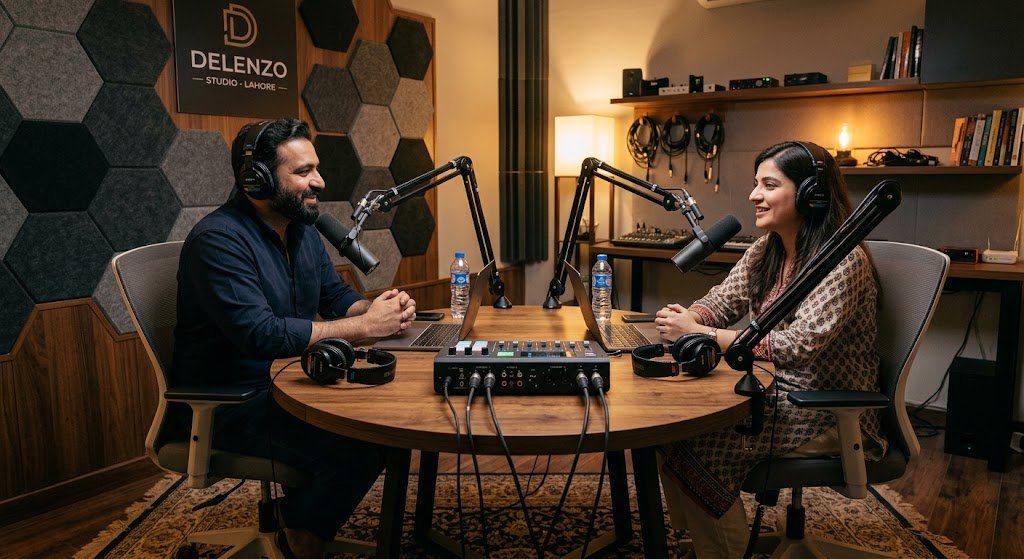
Yes, podcast guests should use separate microphones whenever possible. Recording each person on their own mic and their own audio channel gives you individual control over levels, background noise, and editing — something a single shared mic simply can't offer. The difference shows up most clearly in post-production, where a bad section from one speaker can be fixed without touching the other person's audio at all.
This question comes up constantly with new podcasters, especially those recording remotely or in a small space where a single mic feels simpler. It seems like it should work, especially for a casual two-person conversation. But once you start editing, or once one guest turns out to have a raspy voice or sits too close to the mic, the limitations of a shared setup become obvious fast.
Here's exactly what changes in your final audio when you switch from one shared mic to individual mics per speaker, and when a single mic is genuinely fine to use.
What a Single Shared Microphone Actually Captures
A single microphone, even a good one like a Rode NT1 or a Shure SM7B, has a polar pattern that determines how it picks up sound from different directions. Most podcast mics use a cardioid pattern, which is most sensitive to sound coming from directly in front of the capsule and rejects sound from the sides and rear.
When two people share one mic, both voices are recorded onto a single track, at whatever levels their distance and volume produce naturally. If one person leans in and speaks loudly while the other sits back and speaks softly, that imbalance is baked into the recording permanently. You can't raise one voice without also raising the other's background noise.
Example: A two-host business podcast recorded on a single condenser mic placed between them worked fine for the first few episodes, until one host started joining from a noisier home office. On playback, every time that host spoke, a faint hum from a ceiling fan became audible, and there was no way to reduce it without also lowering the other host's voice.
Cardioid Pickup: Why Positioning Matters on a Shared Mic
|
Speaker Position Relative to Mic |
Sound Quality on Recording |
|
Directly in front (on-axis) |
Clear, full presence, minimal background pickup |
|
Slightly off to the side |
Slightly duller, more room tone captured |
|
Behind or far to the side |
Noticeably weaker, more echo and background noise |
What Changes When Each Guest Has Their Own Mic
Independent Level Control
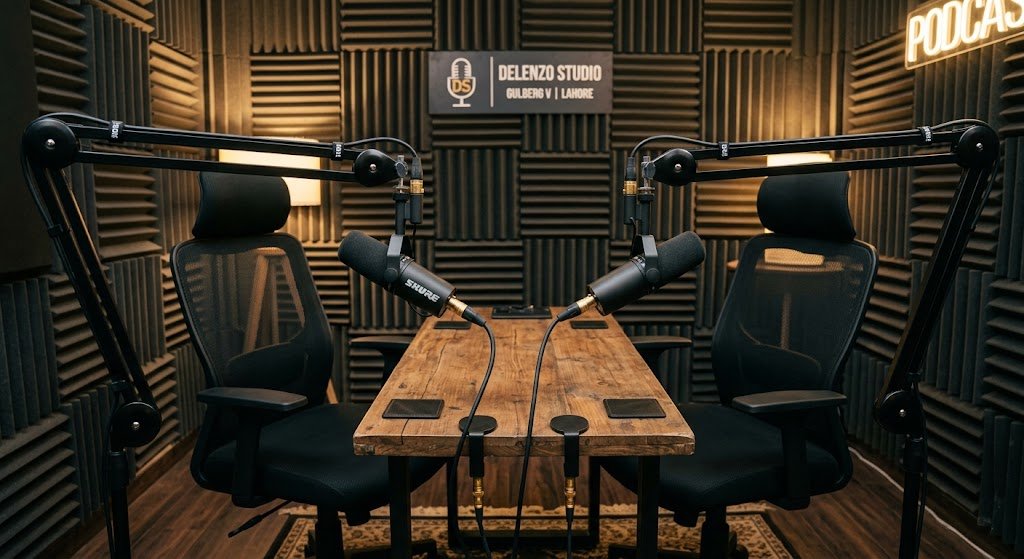
With separate mics feeding separate channels — through a mixer like a Zoom PodTrak P4 or an interface like the Focusrite Scarlett 2i2 — each person's volume can be adjusted independently, both while recording and during editing. If a guest speaks quietly, you raise only their channel. If a host tends to get loud when excited, you can pull that track down without affecting anyone else.
This also means you can apply different processing to each voice. A guest with a deeper voice might need slightly different EQ than a host with a higher-pitched voice, and that's only possible when they're on separate tracks.
Example: During a recorded interview with three participants, one guest had a noticeably breathy speaking style that picked up plosives (hard "p" and "b" sounds popping on the mic). With individual tracks, a de-esser and a high-pass filter were applied only to that guest's channel, leaving the host and second guest untouched.
Cleaner Noise Removal and Editing
Background noise, whether it's a guest's laptop fan, traffic outside a window, or someone shifting in their chair, stays isolated to that person's track when mics are separate. Noise reduction tools like RX Voice De-noise or built-in DAW plugins work far more accurately on an isolated voice than on a track with two people's voices layered together.
Editing overlaps is also far easier. If two people talk over each other, which happens in almost every real conversation, having separate tracks lets an editor trim or duck one voice under the other cleanly. On a single shared track, overlapping speech is fused together and can't be separated after the fact.
Better Stereo Separation for Video Podcasts
For video podcasts published on YouTube, separate mics also allow for cleaner stereo panning, where each speaker can be placed slightly left or right in the mix. This isn't essential, but it makes multi-camera edits feel more natural, especially when the video cuts to whoever is speaking.
When a Single Shared Microphone Is Actually Fine
Separate mics aren't always necessary. For a casual, low-stakes recording, a single mic can work perfectly well, especially with the right technique.
A single omnidirectional mic placed centrally between two speakers of similar volume, in a quiet, treated room, can produce a genuinely usable recording. This setup is common for informal interview-style content, quick voice notes, or budget-conscious solo creators just starting out who don't yet need heavy post-production control.
The tradeoff is flexibility. If both speakers have similar voice levels, sit at a consistent distance, and the room is quiet, a shared mic setup can save money on gear and simplify the recording process. The moment one of those conditions breaks — a louder guest, an inconsistent seating position, background noise — the limitations show up in the final file.
|
Scenario |
Single Shared Mic |
Separate Mics Per Speaker |
|
Casual 2-person chat, similar voice levels, quiet room |
Acceptable, minimal editing needed |
Ideal but not essential |
|
Guest with noisy background or inconsistent volume |
Risky, hard to fix in post |
Strongly recommended |
|
3+ person panel discussion |
Not recommended, positioning becomes unreliable |
Necessary for clarity |
|
Video podcast for YouTube with multiple camera angles |
Workable for audio, weaker separation |
Better match for professional editing workflow |
|
Budget-limited first-time recording |
Practical starting point |
Ideal once budget allows |
How to Decide: A Quick Checklist
-
Count your speakers. Two people can sometimes share a mic if conditions are right. Three or more almost always need individual mics for usable audio.
-
Check for background noise risk. If any guest is joining from a location with fans, traffic, or unpredictable noise, give them their own mic and channel.
-
Compare voice levels in a quick test. Record 30 seconds of normal conversation. If one person is consistently louder or quieter, separate mics will save significant editing time later.
-
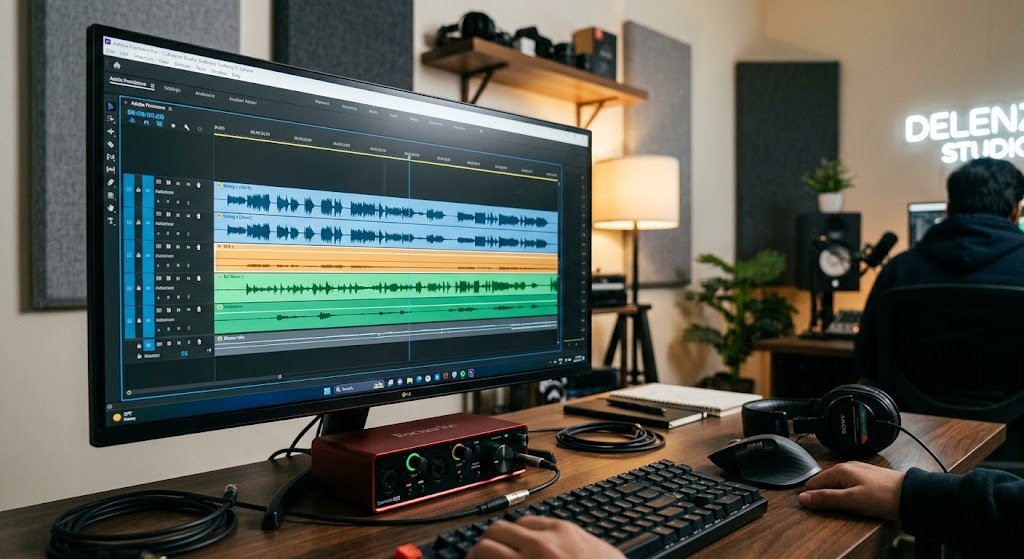
Think about your editing workflow. If you plan to remove filler words, tighten pauses, or clean up specific mistakes, separate tracks make this dramatically easier and less error-prone.
-
Factor in your budget and gear. A second decent dynamic mic and an extra input on your interface is a reasonable investment if you're recording regularly, even if it's not necessary for a one-off recording.
If you're recording a show with more than one guest regularly, or you've already run into the level-balancing problems described above, a studio setup with individual mics per person removes the guesswork. Our podcast studio in Gulberg V, Lahore, is set up with separate mics and channels for every guest as standard, so each voice can be mixed and cleaned independently. You can check availability via WhatsApp at +92 325 1111082 or at delenzostudio.com.pk.
Separate microphones give you more control, cleaner edits, and fewer compromises once you sit down to mix an episode, but they aren't mandatory for every kind of recording. If you're just starting out with a simple two-person setup in a quiet room, a single shared mic can still get the job done. The real decision point is how much editing flexibility you'll need, and that depends more on your guests and your workflow than on any fixed rule.
FAQs
Do podcast guests need their own microphone? Guests don't strictly need their own microphone for a casual, low-stakes recording in a quiet room with similar voice levels. For regular shows, interviews with multiple guests, or any situation involving background noise, separate microphones give far more control during editing.
Can two people share one microphone for a podcast? Two people can share one microphone if they have similar voice volumes, sit at a consistent distance from the mic, and record in a quiet space. The main limitation is that you can't adjust one person's level or remove their background noise without affecting the other person's audio.
How many microphones do I need for a 3-person podcast? A 3-person podcast generally needs three separate microphones and channels, since positioning around a single shared mic becomes unreliable with more speakers. Individual mics also make it possible to balance three different voice levels independently during editing.
What equipment do I need to record guests on separate mics? You'll need one microphone per speaker, such as a Shure SM7B or Rode PodMic, along with an audio interface or mixer with enough inputs, like a Focusrite Scarlett 2i2 for two people or a Zoom PodTrak P4 for up to four. Each mic should feed its own channel so tracks can be edited independently later.
Does using separate mics improve podcast audio quality? Yes, separate mics improve audio quality mainly through better control during editing, not necessarily through a dramatic difference while recording. You get isolated noise reduction, independent volume leveling, and cleaner handling of overlapping speech, all of which are difficult or impossible to achieve with a single shared microphone.
