


Scalp Micropigmentation in Dubai for Natural Hairline Design
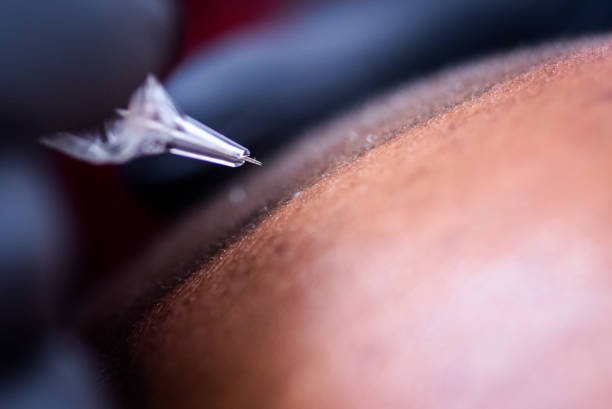
A natural-looking hairline is defined by proportion, irregularity, and how convincingly it transitions into the surrounding scalp. For patients considering Scalp Micropigmentation in Dubai, the design process should therefore focus on reproducing the visual character of a realistic follicular edge rather than drawing a sharp cosmetic boundary.
The strongest results are planned around facial structure, existing hair distribution, preferred hairstyle, and the patient's age-appropriate appearance. SMP can then introduce carefully placed micro-pigment points that soften the perceived transition between forehead and hair-bearing scalp.
What Makes a Hairline Look Natural
Natural Hairlines Are Not Perfectly Geometric
A biological hairline contains subtle variations in follicular position, density, direction, and depth. Even when viewed closely, the frontal edge does not behave like a continuous painted line.
A cosmetic hairline that is excessively straight, symmetrical, or uniformly dark can therefore look disconnected from the patient's existing hair.
Natural SMP design uses controlled irregularity. Individual pigment points are positioned to create a soft follicular impression while avoiding obvious repetition.
The Frontal Transition Matters
The first few millimeters of the hairline can have a different visual density from the area immediately behind it. This creates a gradual transition between forehead skin and the stronger hair-bearing region.
A practitioner may use smaller and more dispersed deposits toward the perimeter, followed by progressively stronger visual density behind it.
This transition is one of the most important elements separating a refined SMP design from a simple outline.
Facial Proportion and Hairline Planning
SMP Treatment for Natural Hairline Design
Hairline design should begin with the face rather than the tattooing device.
The practitioner evaluates the relationship between the proposed hairline and:
- Forehead height
- Facial width
- Temple configuration
- Existing hairline shape
- Brow position
- Age-related hairline characteristics
- Normal hairstyle
- Existing follicular density
The goal is not to impose a predetermined shape. It is to establish a border that works with the individual's anatomy.
The Importance of Age-Appropriate Positioning
A hairline that appears appropriate for one age group may look unnatural on another person.
For mature patients, an overly low or aggressively youthful frontal line can conflict with facial proportions. A more conservative design may create better continuity with the patient's existing appearance.
This is why SMP planning should consider long-term visual compatibility rather than only the immediate appearance after treatment.
Hairline Architecture
Different sections of the frontal hairline perform different visual functions.
| Hairline region | Primary design consideration | SMP approach |
|---|---|---|
| Central frontal zone | Overall facial framing | Establish controlled density |
| Frontal corners | Transition into temples | Gradual tapering |
| Temple junction | Directional change | Follow natural growth pattern |
| Leading edge | Softness and realism | Fine, irregular micro-points |
| Behind the edge | Visual reinforcement | Increase density progressively |
Treating every section identically can remove the subtle variation normally present in natural hair.
Micro-Pigment Placement and Hairline Softness
SMP uses microscopic pigment deposits rather than painted hair strands. The ISHRS describes the technique as shallow, pointillistic placement designed to create the visual impression of follicular points or short stubble.
For hairline design, this means the practitioner has to control more than pigment color.
Important technical variables include:
- Deposit diameter
- Placement depth
- Point spacing
- Density progression
- Pigment tone
- Directional arrangement
- Transition between treated and untreated skin
The objective is to create thousands of small visual cues that collectively resemble a natural follicular edge.
Why Hairline Lines Can Create an Artificial Effect
Avoiding a Drawn-On Border
A solid or highly continuous pigment line does not replicate the appearance of follicular emergence.
Instead, the frontal edge should contain microscopic variation. Some points may sit slightly farther forward or backward, creating a less predictable perimeter.
Avoiding Excessive Symmetry
Human facial structures are rarely perfectly symmetrical. A hairline designed with mathematical symmetry can appear visually rigid even when the underlying facial proportions are balanced.
Subtle asymmetry can be incorporated without creating an obviously uneven appearance.
Matching the Existing Hair Pattern
Direction Matters at the Temples
Hair does not emerge from every scalp region in the same direction. The frontal region, corners, and temple areas can show directional changes.
Pigment placement should follow the visual logic of the surrounding follicles instead of creating a repeated pattern that ignores anatomical transitions.
Hair Caliber Influences the Design
Fine hair produces a different visual background from coarse hair. A person with finer strands may need a more delicate pigment distribution to avoid excessive visual saturation.
Likewise, darker or thicker surrounding hair can influence how closely spaced the follicular points appear.
Designing Around the Patient's Hairstyle
A hairline should be assessed in the hairstyle the patient is actually likely to maintain.
Someone who keeps a close crop may expose the frontal pigment more directly. Someone who wears slightly longer hair may rely on the existing strands to interact visually with the SMP.
This affects the appropriate position, density, and softness of the frontal edge.
Dubai Lifestyle and Hairline Appearance
Hairline design in Dubai should account for the way patients commonly move between outdoor and indoor environments.
Bright sunlight can reveal subtle differences in texture and pigmentation that may be less apparent under controlled indoor lighting. Frequent social, professional, and photographed settings also mean that the hairline may be viewed from multiple angles.
A properly planned design should therefore remain coherent rather than depending on a single lighting condition.
Ultraviolet exposure can also influence pigment longevity. The ISHRS notes that UV resistance and pigment behavior are relevant considerations in SMP planning and maintenance.
Consultation-Based Hairline Mapping
Establishing the Design Before Treatment
The design should be evaluated before pigment is introduced.
A clinical consultation may involve assessing the patient's facial proportions, existing hairline, density, preferred haircut, and expectations. The proposed perimeter can then be reviewed from frontal, lateral, and angled perspectives.
This reduces the risk of designing a hairline that looks appropriate from only one viewpoint.
Planning for Future Hair Changes
Hair loss may continue after an SMP procedure. A design that looks natural with today's hair distribution should also be considered against possible future changes.
For patients with active or uncertain hair loss, the treatment plan may need to be more conservative.
When Natural Hairline SMP May Be Considered
SMP hairline design may be useful for people experiencing:
- A visually weak frontal border
- Reduced definition around an existing hairline
- Hairline irregularity
- Fine frontal hairs that create a soft but indistinct edge
- A preference for a close-cropped hairstyle
- Residual visual gaps after previous hair restoration
- A desire for greater definition without surgical graft placement
Suitability depends on the condition of the scalp, the underlying hair-loss pattern, and the individual's expectations.
When a Different Approach May Be More Appropriate
SMP is not a substitute for every form of hair restoration.
If the primary concern is active progressive hair loss, a medical evaluation may be appropriate before cosmetic camouflage is considered. Patients with significant follicular absence may also require discussion of surgical restoration or other treatment options depending on their goals.
A good SMP consultation should identify these distinctions rather than treating every hairline concern with the same design.
Preserving a Natural Visual Transition
A realistic hairline is not created by maximizing density at the front.
Instead, the design should establish a hierarchy:
- A soft leading edge.
- Gradually increasing follicular-point density.
- Integration with existing hair.
- Appropriate temple transitions.
- Visual compatibility with the patient's facial proportions.
This layered approach helps the eye interpret the treatment as part of the existing hair pattern.
Long-Term Appearance and Maintenance
Pigment gradually changes with time, while natural hair can continue to change independently. This means the original hairline design should be evaluated as a long-term cosmetic structure rather than a temporary outline.
Sun protection and practitioner-specific aftercare can help preserve the appearance of the treatment. Periodic professional assessment may also be useful if surrounding hair density changes substantially.
Strategic Investment in Hairline Design
Natural SMP hairline design is fundamentally an exercise in proportion, transition, and microscopic placement. The most convincing result is not necessarily the darkest or most sharply defined hairline; it is the one that integrates with existing follicles, facial structure, hairstyle, and long-term appearance.
For patients exploring hair restoration care in Dubai, an individualized consultation can establish whether SMP is appropriate and how the hairline should be mapped before treatment begins.
A consultation with Tajmeels Clinic can help assess facial proportions, existing hair characteristics, scalp condition, and the level of hairline definition that can be achieved through a personalized SMP plan.
