


Hybrid Hair Transplant in Dubai for Previous Transplant Repair
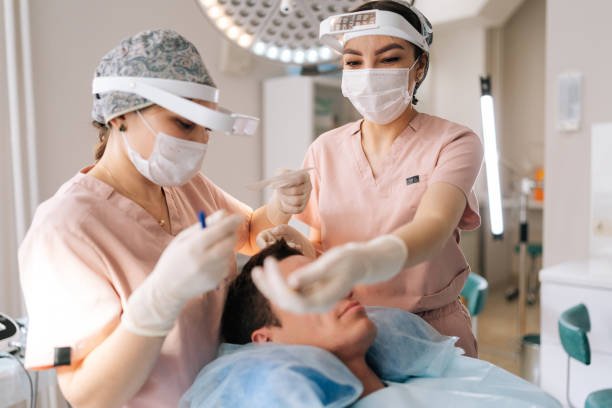
Repairing an earlier hair transplant requires a different level of planning because the scalp may already contain transplanted follicles, extraction scars, altered density, and depleted donor resources. Hybrid Hair Transplant in Dubai can be considered for selected revision cases when combining FUE and FUT provides a practical way to obtain additional grafts while addressing uneven coverage, donor limitations, or incomplete restoration.
Why Revision Hair Transplantation Is Different
A first transplant begins with relatively untouched donor and recipient anatomy. A revision procedure does not.
Previous surgery can change the density of the donor area, direction of existing transplanted hair, scalp tissue, scar characteristics, and the number of follicles still available for harvesting.
The Original Procedure Matters
The revision assessment should establish whether the earlier procedure involved FUE, FUT, or both.
The harvesting technique determines what remains available in the donor zone and what type of scarring may need to be considered.
Existing Transplanted Hair Must Be Mapped
Previously transplanted follicles may be growing normally even when the overall result appears sparse.
A revision plan should distinguish between genuinely missing density and areas where existing grafts can still contribute to the final appearance.
Native Hair May Have Changed
The patient's natural hair-loss pattern may have progressed after the original procedure.
This can create a common revision problem: transplanted hair remains visible while surrounding native follicles continue to thin.
The new procedure must therefore address the current scalp rather than simply reproducing the original design.
Common Reasons Patients Seek Revision
A previous transplant does not necessarily need to be considered a failure simply because the patient wants additional density.
Revision can be required for several different reasons:
- Uneven density
- An unnatural hairline
- Excessive hairline density
- Poor graft direction
- Visible donor depletion
- Persistent crown thinning
- Insufficient graft coverage
- Progressive native hair loss
- Linear or scattered donor scarring
- Previous graft placement that does not match current anatomy
Each problem requires a different corrective strategy.
Low Density
Some patients achieve survival of transplanted follicles but still have insufficient visual coverage.
Additional grafts may be considered if adequate donor supply remains.
Unnatural Hairline
An overly straight, low, or dense hairline can be particularly noticeable.
Revision may involve softening the transition, adding finer grafts, changing the distribution, or addressing problematic existing grafts where appropriate.
Directional Problems
Grafts implanted at incorrect angles can create hair that stands away from the scalp or grows against the surrounding pattern.
Corrective planning must account for existing follicles before adding new sites.
The Donor Area Needs a New Assessment
One of the biggest mistakes in revision planning is assuming that the donor zone has the same capacity it had before the first procedure.
It does not.
Previous FUE Changes Donor Density
Every FUE extraction permanently removes a follicular unit.
If the first procedure involved extensive extraction, a second procedure must identify the remaining density and determine whether additional harvesting can be performed without creating visible depletion.
Previous FUT Changes Scalp Anatomy
A previous FUT procedure leaves a linear scar and removes a section of donor tissue.
Scalp laxity, scar characteristics, and the location of the previous strip all influence whether another strip-based procedure could be considered.
Mixed Harvesting Requires Detailed Mapping
A patient who has already undergone both FUE and FUT may have several different donor considerations simultaneously.
This is where a hybrid assessment can become particularly useful: the remaining donor area needs to be evaluated as a whole rather than judged by one technique alone.
How Hybrid Planning Can Support Revision
Combining FUE and FUT does not automatically make revision better.
Its potential value comes from using the two harvesting methods selectively when the patient's remaining anatomy supports them.
FUE for Targeted Graft Selection
FUE can allow individual follicular units to be selected from suitable remaining donor areas.
This may be useful when a revision requires specific graft characteristics for a hairline, transition zone, or density correction.
FUT for Additional Graft Yield
Where scalp laxity and scar anatomy permit, FUT can provide a concentrated group of follicular units from a donor strip.
This can be relevant when the donor area has already undergone extensive FUE and further distributed extraction could create excessive depletion.
The Combination Requires Restraint
A hybrid procedure should not be interpreted as an opportunity to exhaust the remaining donor supply.
Revision patients often need greater donor preservation because their future options may already be reduced by previous surgery.
Diagnosing the Actual Revision Problem
Before determining graft numbers, the surgeon should identify why the previous result does not meet the patient's current expectations.
| Revision problem | What needs assessment | Possible planning priority |
|---|---|---|
| Sparse frontal area | Existing graft density | Strategic density improvement |
| Unnatural hairline | Graft type and placement | Softer frontal transition |
| Poor direction | Emergence angles | Blending with existing growth |
| Crown deficiency | Remaining donor reserve | Targeted vertex coverage |
| Donor depletion | Extraction pattern | Conservative harvesting |
| FUT scar visibility | Scar width and scalp laxity | Scar-focused correction |
| Progressive native loss | Current miniaturization | Long-term density planning |
The table illustrates why “more grafts” is not a sufficient diagnosis for a revision case.
Correcting an Unnatural Hairline
Hairline repair is among the most demanding forms of revision because existing grafts can restrict where new follicles can be placed.
Creating a Softer Leading Edge
Fine single-hair follicular units can help create a more natural transition where the previous hairline is too abrupt.
The design should avoid producing a second artificial border immediately in front of the existing grafts.
Managing Excessively Low Hairlines
A low hairline can consume a disproportionate amount of donor hair.
In some revision cases, the objective is not to lower the hairline further but to improve its shape and density while allowing the existing design to mature into a more age-appropriate appearance.
Correcting Temporal Areas
The temples require careful attention to facial proportions and natural hair direction.
Adding density without respecting the existing temporal angle can make the repair obvious.
Correcting Uneven Density
Patchy density can result from inconsistent graft survival, poor distribution, progressive native loss, or an original design that did not account for future thinning.
Identify the Cause First
A sparse region should not automatically be filled with additional grafts.
The surgeon must determine whether the underlying issue is donor depletion, continuing miniaturization, graft positioning, or inadequate original density.
Use Grafts Where They Matter Most
If donor supply is restricted, a small number of carefully selected grafts may produce greater cosmetic improvement when placed strategically rather than distributed uniformly.
Scar Management in Revision Surgery
Scarring is particularly important when correcting an earlier transplant.
FUE Scars
Previous FUE creates numerous small extraction marks. Their visibility depends on extraction density, punch characteristics, healing, skin properties, and hair length.
A second FUE procedure should account for areas already harvested.
FUT Scars
A linear FUT scar may be narrow and well concealed in some patients but more visible in others.
Scar width, scalp laxity, closure history, and hairstyle preferences all affect revision planning.
Grafting Into or Around Scars
Scar tissue has different characteristics from normal scalp tissue.
Blood supply, tissue quality, and existing follicle distribution need to be assessed before graft placement is considered.
The objective is not simply to place hair over a scar but to determine whether the tissue can support predictable growth.
When Donor Supply Is Already Depleted
Some revision patients have little remaining donor hair.
In these situations, the treatment strategy may need to shift from maximizing density to maximizing visual improvement.
Conservative Hairline Design
A smaller corrective area can preserve grafts for future needs.
Prioritizing Visible Defects
A strategically targeted repair may improve the areas that most affect the patient's appearance without attempting complete scalp reconstruction.
Protecting Remaining Donor Hair
Every additional extraction should be considered in the context of the patient's future donor reserve.
This is particularly important when the original procedure used a large number of grafts.
The Importance of Graft Selection in Revision Cases
Revision surgery often benefits from matching graft characteristics to the problem being corrected.
Single-Hair Units for Frontal Refinement
Fine grafts can be useful where the existing hairline requires a softer transition.
Multi-Hair Units for Broader Density
Where appropriate, multi-hair grafts can provide more coverage per graft behind the frontal zone.
Curly or Wavy Hair
Hair texture can influence how well a scar or sparse area is visually concealed.
Patients with naturally textured hair may have different optical coverage requirements from patients with very straight, fine hair.
Recipient-Site Planning Around Existing Grafts
A revision recipient area is not an empty canvas.
Existing transplanted and native follicles occupy physical space beneath the scalp.
Avoiding Unnecessary Follicular Trauma
Recipient sites must be planned around existing follicles where clinically appropriate.
Blindly placing new sites between old grafts can increase the risk of damaging existing structures.
Matching Existing Angles
New grafts should blend with the established direction of surrounding hair.
A mismatch between old and new implantation angles can make the correction more noticeable.
Creating Density Transitions
A revision should not create an abrupt density jump between corrected and untreated areas.
Gradual transitions can make the additional grafts integrate more naturally with the existing result.
When a Hybrid Revision May Not Be Appropriate
Combining techniques is not suitable for every patient.
A surgeon may reconsider the approach when:
- Donor density is severely depleted.
- Scalp laxity is inadequate for FUT.
- The donor zone contains significant miniaturization.
- The recipient tissue is heavily scarred.
- Expectations exceed realistic donor capacity.
- The underlying hair-loss pattern remains unstable.
- The proposed correction would compromise future options.
In some cases, a smaller targeted revision may be safer and more effective than attempting a large reconstruction.
Recovery After Revision Hair Transplantation
Recovery depends on whether FUE, FUT, or both techniques are used, as well as the number of grafts and the condition of the scalp.
Patients may experience redness, swelling, tenderness, itching, or scabbing during the early period.
Previously Operated Scalp
A previously transplanted scalp may respond differently from untouched tissue, particularly where scar tissue is present.
Postoperative instructions should therefore be individualized rather than copied from the patient's original transplant.
Protecting the Healing Areas
Patients should follow instructions concerning scalp washing, sleeping position, physical activity, medication, and sun exposure.
Dubai's intense sunlight and high temperatures make recovery planning especially relevant for patients who spend considerable time outdoors.
How to Judge a Revision Result
Revision outcomes should be evaluated against the actual correction objective.
A patient seeking improved frontal density should not judge success solely by total graft numbers. Someone correcting a scar should focus on how effectively the scar blends with surrounding hair.
Early Appearance Is Not the Final Result
Scabbing and temporary shedding can make the scalp look worse before it improves.
Hair growth occurs progressively, so the final assessment should be made after sufficient time has passed for transplanted follicles to mature.
Frequently Asked Questions
Can a Hybrid Hair Transplant Repair a Previous Hair Transplant?
In selected patients, it can be part of a revision strategy. The appropriate approach depends on the cause of the previous result, remaining donor supply, existing grafts, scarring, and recipient anatomy.
Is Revision Surgery More Difficult Than a First Transplant?
Often, yes. Previous surgery can alter donor density, recipient anatomy, scar tissue, and follicular direction. The surgeon must work around structures that did not exist before the original procedure.
Can Previous FUE Be Followed by FUT?
Potentially, if scalp laxity, scar anatomy, donor density, and the overall clinical situation make FUT appropriate. It should not be assumed that previous FUE automatically makes FUT unsuitable.
Can Previous FUT Be Followed by FUE?
Potentially. FUE can sometimes be considered around an existing FUT donor pattern, but remaining follicular density and scar characteristics need assessment first.
Can an Unnatural Hairline Be Corrected?
Some unnatural hairlines can be improved through careful graft redistribution, additional fine graft placement, changes in density transitions, or other revision techniques depending on the original problem.
What If the Donor Area Was Overharvested?
The remaining donor supply should be mapped conservatively. When significant depletion exists, treatment may need to focus on strategic improvement rather than attempting complete restoration.
Can Grafts Be Placed Into Scar Tissue?
Grafting into scar tissue may be possible in selected cases, but tissue quality and blood supply must be assessed because scarred areas can behave differently from normal scalp.
Will a Revision Prevent Future Hair Loss?
No. A revision restores or improves selected areas but does not necessarily stop untreated native follicles from continuing to miniaturize.
The Strategic Investment
A previous transplant should be treated as clinical history, not simply as a cosmetic inconvenience. Patients considering a corrective hair transplant approach in Dubai can benefit from a detailed review of their original procedure, remaining donor reserve, existing grafts, scalp scars, hair-loss progression, and realistic correction priorities.
The strongest revision strategy is not the one that adds the most grafts. It is the one that understands what happened during the first procedure, protects what remains, corrects the most visible deficiencies, and creates a sustainable foundation for the patient's future hair-restoration needs.
