


PRP hair treatment in Dubai for Mild Hair Loss Cases
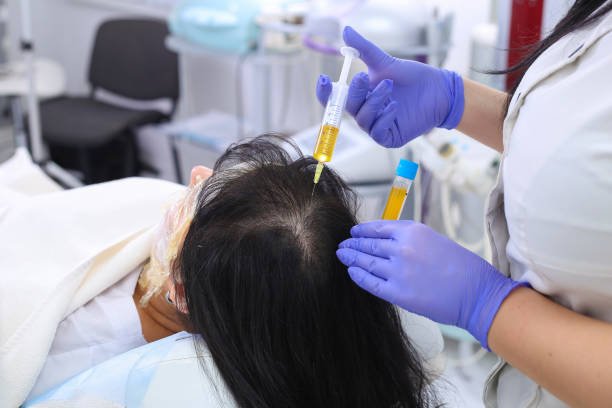
PRP hair treatment in Dubai may be considered for people with mild hair loss when the scalp still contains a meaningful number of active follicles but early changes in density, caliber, or shedding have become noticeable. Treating mild thinning is different from treating advanced baldness because the objective may be to support existing follicles before substantial permanent loss occurs.
The challenge is identifying whether the early change represents genuine follicular miniaturization, temporary shedding, hair-shaft breakage, or another underlying condition.
What Counts as Mild Hair Loss
Mild hair loss does not necessarily mean that only a few hairs have been lost.
The more useful distinction is often the degree of follicular change and the amount of remaining coverage.
A person with mild thinning may notice:
- Slightly increased scalp visibility
- A wider-looking part
- Reduced styling volume
- Finer hairs around a previously dense area
- Early crown visibility
- Subtle frontal changes
- More shedding than usual
- Hair that feels less substantial than before
These changes can be easy to overlook because the overall hairstyle may still appear relatively full.
Early assessment can therefore identify changes that are difficult to recognize through casual observation.
Why Early Assessment Can Matter
Hair follicles affected by progressive thinning can change gradually.
A follicle may continue producing hair while the diameter of the shaft decreases. This process can make the hair appear thinner without immediately creating an obvious bald area.
That creates an important distinction between visible baldness and early follicular weakening.
When viable follicles remain, a clinician can evaluate whether a supportive treatment such as PRP has a reasonable role.
Waiting until a large area becomes completely bald can reduce the range of non-surgical options available.
Mild Hair Loss Has Different Causes
The same degree of visible thinning can result from very different biological processes.
Potential causes include:
- Early androgenetic alopecia
- Temporary stress-related shedding
- Postpartum shedding
- Hormonal changes
- Nutritional issues
- Certain medical conditions
- Medication-related changes
- Hair-shaft breakage
- Age-related changes
PRP is not a universal treatment for all of these causes.
The first objective should be to understand why the hair is changing.
Distinguishing Shedding From Miniaturization
This distinction is particularly important in mild cases.
Someone experiencing temporary shedding may see a noticeable increase in hairs falling out while the remaining strands retain their normal caliber.
Someone with early pattern hair loss may not experience dramatic shedding but may gradually develop finer hairs.
| Finding | Possible Interpretation |
|---|---|
| Sudden increase in shedding | May indicate a temporary shedding process |
| Gradually finer hairs | May suggest miniaturization |
| Wider part | May indicate reduced coverage |
| Hair breakage | May relate to shaft damage rather than follicle loss |
| Frontal recession | May indicate pattern-related change |
| Crown visibility | May reflect early regional thinning |
These findings are not diagnostic by themselves. A clinical assessment is needed to interpret them correctly.
How PRP Hair Treatment in Dubai May Help Selected Mild Cases
PRP is prepared from the patient's own blood.
After a small blood sample is collected, it is processed to concentrate platelets within the plasma. The prepared material is then administered into selected areas of the scalp using multiple small injections.
Platelets contain biological mediators involved in signaling and tissue-repair processes.
In hair restoration, the treatment is intended to support the environment surrounding existing follicles.
The aim is not to create a new follicle. Instead, PRP may be considered when existing follicles are still active but their performance has weakened.
Why Mild Cases Require Precise Treatment Planning
It may seem that mild thinning requires less planning than advanced hair loss.
Clinically, the opposite can sometimes be true.
When changes are subtle, the treatment area can be difficult to define. Injecting the entire scalp without identifying the areas of concern may not be the most rational approach.
A treatment plan can instead consider:
- Where thinning is occurring
- Whether miniaturization is present
- Which areas remain dense
- Hair caliber differences
- Scalp visibility
- The direction of progression
This allows treatment to be focused on clinically relevant regions.
Mapping Early Changes Across the Scalp
Mild thinning may not follow an obvious pattern.
Some patients notice changes primarily at the crown. Others see subtle frontal or mid-scalp changes, while some experience a more generalized reduction in fullness.
A clinician may divide the scalp into anatomical zones and compare the affected areas with regions that remain relatively stable.
This helps determine whether the pattern is localized or diffuse.
It also creates a baseline that can be used to monitor future changes.
What a PRP Session Involves
A typical appointment begins with blood collection from the arm.
The blood sample is processed to prepare the platelet-rich plasma. The scalp is cleansed, and topical numbing can be applied to improve comfort.
Fine needles are then used to deliver the preparation into selected scalp regions.
Injection depth, spacing, and coverage depend on the patient's anatomy and treatment plan.
A session commonly takes approximately 45–60 minutes, including preparation and injections.
Recovery in Mild Hair Loss Cases
PRP generally involves limited downtime compared with surgical hair restoration.
Temporary effects may include:
- Redness
- Tenderness
- Mild swelling
- Local scalp sensitivity
- Small injection marks
These effects commonly settle within a short period, although individual recovery varies.
For patients with professional commitments, the relatively limited recovery profile can make PRP a practical option when clinically appropriate.
How Mild Cases Should Be Monitored
Subtle hair changes are particularly difficult to evaluate without a baseline.
A patient may feel that their hair has improved simply because it was styled differently or photographed under better lighting.
Standardized photographs can provide a more objective reference.
The same:
- Camera position
- Lighting
- Hair part
- Hair length
- Scalp exposure
- Viewing angle
should be used when possible.
Clinical assessment can then be combined with photographs to determine whether the condition is stable or changing.
What Improvement May Look Like
A successful response does not necessarily mean a dramatic increase in the number of hairs.
Potential improvements may involve:
- Better visual coverage
- More stable hair caliber
- Reduced scalp visibility
- Improved appearance of thinning areas
- Stabilization of a previously changing region
The response develops gradually because hair follicles operate through biological growth cycles.
Visible changes commonly require months rather than days.
Why Results Differ Between Patients
PRP does not produce identical results in every person.
Response can depend on:
- Underlying cause of hair loss
- Follicular viability
- Severity of thinning
- Genetic factors
- Age
- Lifestyle
- Treatment protocol
- Individual biological response
This is why mild hair loss should not automatically be equated with a guaranteed strong response.
Early treatment can provide an opportunity for intervention, but it does not eliminate biological variability.
Deciding Whether One Course Is Enough
The number of PRP sessions should be determined according to the patient's condition and response.
Some patients may undergo an initial course followed by reassessment. Others may require a broader management strategy from the beginning.
A sensible review asks whether:
- Hair caliber has changed.
- Scalp visibility has improved.
- Shedding has stabilized.
- The underlying pattern is still progressing.
- Additional PRP is clinically justified.
This prevents mild hair loss from becoming an excuse for unnecessary repeated procedures.
PRP Versus Waiting
Patients with mild thinning often face a difficult decision: treat early or simply monitor the condition.
Observation can be reasonable when the cause is uncertain or when the change appears temporary.
However, unexplained progressive thinning deserves assessment because early miniaturization can become more difficult to manage after substantial follicular loss.
The decision should therefore be based on diagnosis rather than fear of future baldness.
PRP Versus Hair Transplantation in Mild Cases
Hair transplantation is generally designed to restore areas where follicular density has become insufficient and donor follicles can be relocated.
PRP serves a different purpose.
When mild thinning is spread across areas that still contain viable follicles, a non-surgical approach may be considered before surgical restoration becomes necessary.
This does not mean PRP can replace transplantation when permanent follicular loss is extensive.
Instead, the two treatments should be viewed as options for different stages and patterns of hair loss.
When Mild Hair Loss Needs Medical Evaluation
Not every early hair change should be treated cosmetically.
Medical evaluation may be appropriate when hair loss is:
- Sudden
- Rapidly progressive
- Associated with scalp inflammation
- Accompanied by unusual symptoms
- Associated with significant systemic changes
- Occurring after a major physiological event
The purpose is to avoid treating the visible hair change while overlooking the actual cause.
Once the underlying situation is understood, a clinician can determine whether PRP or another approach is appropriate.
Dubai Lifestyle and Early Hair Management
Dubai's climate can influence practical hair-care and treatment considerations.
High outdoor temperatures, strong sunlight, frequent air conditioning, exercise, travel, and demanding work schedules may affect scalp comfort and how patients organize appointments.
These factors should not be treated as universal causes of hair loss.
Genetic, hormonal, and physiological mechanisms remain important in many cases of progressive thinning.
However, practical treatment planning can account for lifestyle so that aftercare and follow-up remain realistic.
Long-Term Planning for Mild Thinning
Mild hair loss can be easier to ignore than advanced thinning.
That does not mean it should always be ignored.
If the underlying process is progressive miniaturization, monitoring can identify whether the condition is stable or continuing to develop.
A long-term strategy may include:
- Establishing a baseline
- Identifying the underlying pattern
- Monitoring hair caliber
- Reviewing shedding
- Assessing scalp visibility
- Considering supportive treatment when appropriate
- Reassessing periodically
This approach focuses on preserving options rather than reacting only after significant loss has occurred.
When PRP May Not Be the Right Choice
PRP is not appropriate for every person with mild hair loss.
It may have limited value when the actual problem is primarily:
- Hair-shaft breakage
- A temporary shedding episode
- An untreated medical condition
- Advanced permanent follicular loss
- An incorrect diagnosis
- Expectations of instant or complete regrowth
The treatment should be selected because it matches the biological problem, not simply because the procedure is minimally invasive.
Maintaining Realistic Expectations
Mild thinning can create unrealistic expectations because patients often seek complete restoration before the problem becomes visible to others.
A more appropriate goal is to determine what can realistically be preserved or improved.
PRP may support existing follicles in suitable cases, but it cannot guarantee that every weakened follicle will return to its previous condition.
Results also develop gradually.
The most useful assessment is therefore based on measurable changes rather than promises of dramatic transformation.
Building a Practical Treatment Strategy
A patient with mild thinning does not necessarily need an aggressive intervention.
The better strategy may be to identify the cause, establish a baseline, determine whether viable follicles are affected, and then choose the least invasive approach that reasonably matches the clinical objective.
For patients considering professional hair restoration services in Dubai, this approach can help distinguish appropriate early intervention from unnecessary treatment.
The focus should remain on preserving follicular function and making decisions based on how the hair changes over time.
The Strategic Investment
For selected patients, PRP hair treatment in Dubai may offer a minimally invasive option for addressing mild thinning while a meaningful number of follicles remain active. The value of early treatment lies less in treating a small amount of hair loss aggressively and more in accurately identifying the cause, documenting the baseline, and determining whether existing follicles can benefit from support.
A personalized assessment at Tajmeels Clinic can help determine whether PRP fits the patient's early hair-loss pattern and whether monitoring, maintenance, or another restoration strategy is more appropriate.
