


Europe Green Hydrogen Market: Infrastructure, Investment, and Future Demand
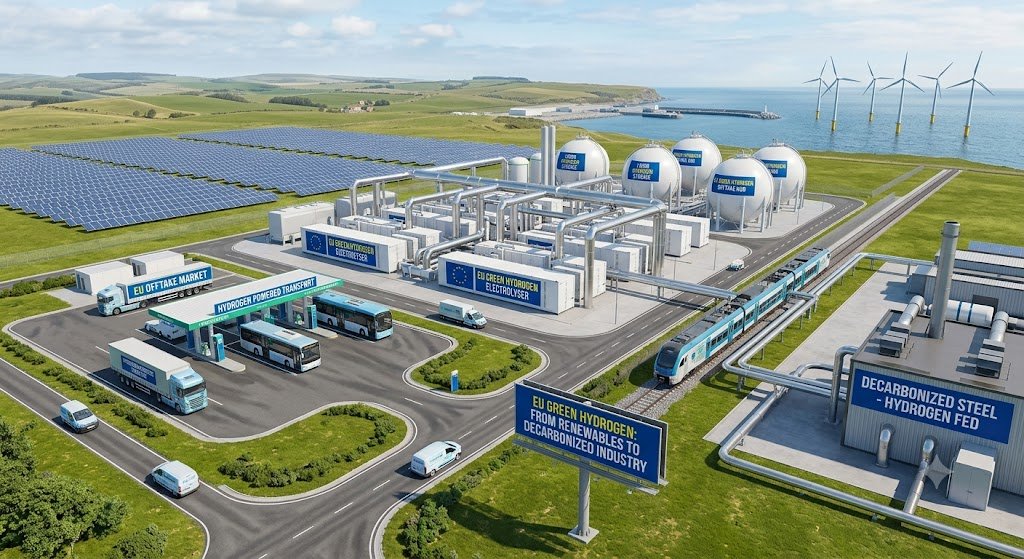
Investment Signals and Value Chain Opportunities in Europe's Green Hydrogen Economy
Europe is building a broader clean energy ecosystem in which green hydrogen can complement renewable electricity and electrification. The fuel is attracting interest because several industrial processes require molecules rather than electrons. This distinction makes hydrogen relevant to sectors such as primary steel, fertilizers, chemicals, refining, maritime transport, and selected high temperature applications.
The European Green Hydrogen Market is developing at the intersection of industrial policy and energy strategy. Public authorities want to reduce emissions, strengthen energy resilience, and stimulate domestic clean technology industries. Businesses are evaluating hydrogen as a pathway for meeting decarbonization objectives while protecting long term competitiveness. This combination is encouraging project announcements across production, infrastructure, and end use.
A major investment signal is the increasing focus on integrated projects. Rather than developing an electrolyser without a defined customer, project sponsors are increasingly considering renewable generation, hydrogen production, storage, transport, and industrial consumption as connected components. Such integration can improve visibility across the value chain and help identify constraints before construction begins.
Electrolyser selection is central to project design. Alkaline systems have a long industrial history, while proton exchange membrane technology offers operating characteristics that can complement variable renewable electricity. Solid oxide systems are also being developed for applications where higher temperature operation and available process heat may create efficiency advantages. Each technology has different requirements for capital, maintenance, operating conditions, and integration.
Renewable electricity remains the primary economic input for green hydrogen. Developers must secure sufficient generation and evaluate whether power will be supplied through dedicated assets, the grid, or a combination of arrangements. Electricity price volatility can materially affect hydrogen economics, making power procurement strategy an important element of project planning.
Offtake arrangements provide another critical investment signal. Potential buyers may seek fixed volumes, flexible delivery, certification, or pricing mechanisms linked to energy markets. Producers need contracts that provide revenue visibility without creating excessive exposure to power costs or operational uncertainty. Strong counterparties and credible demand can improve the attractiveness of projects to lenders and investors.
The detailed market assessment offers a useful framework for understanding these interconnected factors. Europe Green Hydrogen Market Report can help market participants examine the relationship between electrolyser deployment, offtake development, project pipelines, and broader value chain opportunities.
Infrastructure is likely to determine how quickly regional markets connect. Hydrogen pipelines can create corridors between production and industrial centers, while ports can support maritime applications and international trade. Storage facilities may provide flexibility by holding hydrogen when renewable production is high and releasing it when demand rises. Repurposing selected existing assets could reduce some infrastructure requirements, although technical and regulatory assessments remain necessary.
Manufacturing capacity is another important consideration. European equipment suppliers and industrial engineering companies are seeking opportunities to establish competitive supply chains for electrolysers and related systems. Scale can support cost reduction, standardized designs, faster project delivery, and improved service networks. At the same time, developers must manage supply chain risks involving critical materials, specialized components, and manufacturing capacity.
For investors, the distinction between announced capacity and bankable capacity is increasingly important. Project maturity, permits, land, grid access, renewable supply, equipment financing, procurement, and offtake commitments all influence execution probability. Strong fundamentals can turn a concept into an investable project, while unresolved dependencies can create delays.
Europe's green hydrogen opportunity therefore extends well beyond hydrogen production itself. It encompasses renewable power, electrolysers, infrastructure, industrial equipment, engineering services, digital systems, storage, logistics, and specialized financing. As commercial structures mature, participants that understand the complete value chain may be better positioned to capture emerging opportunities across national markets and industrial clusters as infrastructure connections expand across the continent and strengthen trade.
This integration can strengthen visibility, operational coordination, and confidence among developers, buyers, and financiers.
