


Why Your Jawline Looks Less Defined in Dubai
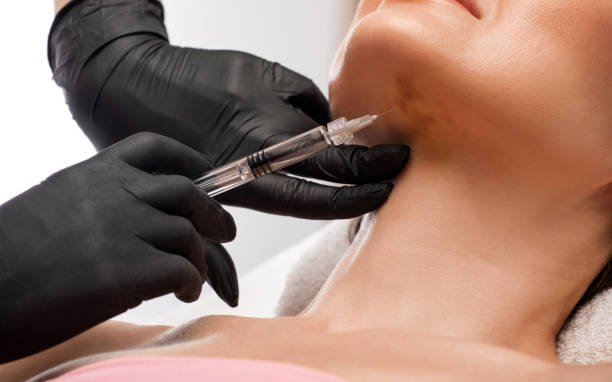
A jawline can gradually appear softer or less defined for many reasons, including facial volume changes, skin laxity, weight fluctuations, genetics, and natural facial anatomy. Jawline Filler Injections in Dubai may improve selected cases where reduced definition is associated with contour deficiency or volume loss, but filler is not designed to remove fat or significantly alter the underlying jawbone.
Understanding why the jawline looks blurred is therefore more important than immediately choosing an injectable treatment. The right approach depends on whether the main contributor is bone, soft tissue, fat, muscle, skin, or facial proportions.
Why Does a Jawline Lose Definition?
Jawline definition is influenced by both the underlying skeleton and the tissues covering it.
Even when the mandibular bone remains unchanged, changes in the surrounding soft tissue can make its outline less visible.
Common contributors include:
- Natural facial anatomy
- Age-related volume changes
- Skin laxity
- Weight gain or loss
- Submental fat
- Soft-tissue descent
- Reduced chin projection
- Masseter muscle development
- Genetic facial shape
- Previous facial procedures
Some patients notice a softer jawline gradually with age, while others have naturally subtle mandibular definition from an early age.
The treatment should reflect the cause rather than simply the appearance.
Can Jawline Filler Restore Definition?
In selected patients, yes.
Dermal filler can add volume and structural support to specific facial areas. When the jawline lacks definition because of a correctable contour or volume deficiency, carefully planned filler may make the mandibular border more visible.
The effect is primarily one of contour enhancement.
It does not mean the filler is physically removing tissue around the jaw or changing the underlying bone.
This distinction is especially important for patients expecting a dramatically slimmer or surgically reshaped lower face.
What Causes a Blurred Jawline?
Several different problems can produce a similar visual appearance.
1. Submental Fat
Fat beneath the chin can soften the transition between the jaw and neck.
In this situation, adding filler may not address the primary issue because filler adds volume rather than removing fat.
A fat-focused treatment may need to be considered instead.
2. Skin Laxity
Reduced elasticity can cause tissue to descend around the lower face.
Filler may provide some structural support in selected cases, but significant excess skin cannot simply be removed through filler injection.
3. Reduced Chin Projection
A relatively recessed chin can make the entire lower face appear less defined.
The jawline itself may be reasonably developed, but insufficient chin projection can change how the lower face is perceived.
In such cases, chin assessment may be as important as jawline assessment.
4. Facial Volume Changes
Changes in facial volume can alter the relationship between the skin, soft tissue, and mandibular border.
Selected areas may become hollow while others appear heavier, changing the visual continuity of the jawline.
5. Natural Anatomy
Some people simply have a softer jawline because of their facial structure.
This is not necessarily a problem that needs treatment.
If the patient wants greater definition, the provider should determine whether conservative contour enhancement can achieve the desired change without creating disproportion.
When Can Jawline Filler Injections in Dubai Help?
Jawline filler may be considered when the main concern involves a contour deficiency that can realistically be enhanced with an injectable approach.
Potential situations include:
- Mildly defined mandibular borders
- Selected prejowl depressions
- Reduced structural definition
- Mild contour irregularities
- Chin-jaw imbalance
- Subtle facial asymmetry
- Loss of definition associated with volume changes
The treatment may be less suitable when the dominant concern is significant fat, severe skin laxity, prominent muscle bulk, or major skeletal anatomy.
Recent reviews of nonsurgical jawline rejuvenation emphasize patient evaluation, facial anatomy, treatment planning, and complication awareness when considering injectable fillers.
Jawline Definition vs Facial Slimming
These goals are often confused.
Improving jawline definition does not automatically make the face smaller.
A sharper mandibular border may create a cleaner facial outline, but filler itself adds volume.
If too much product is used, the lower face can appear wider or heavier.
| Main goal | What the patient may want | What filler can potentially do |
|---|---|---|
| Jawline definition | Clearer mandibular border | Add structural contour |
| Facial slimming | Narrower-looking lower face | May improve proportions in selected cases |
| Chin projection | Stronger forward profile | Chin-focused filler may help |
| Prejowl correction | Smoother chin-jaw transition | May improve selected depressions |
| Fat reduction | Less lower-face fullness | Filler does not remove fat |
| Skin tightening | Firmer lower face | Filler has limited lifting capability |
| Skeletal reshaping | Major structural change | May require surgical evaluation |
This distinction helps patients develop realistic expectations before treatment.
How Facial Proportions Affect Jawline Definition
A jawline cannot be evaluated independently from the rest of the face.
The chin, cheeks, lips, nose, and forehead all influence how the lower face appears.
For example, a relatively small chin may make the jawline seem less prominent. Increasing jawline volume without addressing the chin could create an imbalance.
Similarly, a naturally broad jaw may not need additional width even if the patient wants more definition.
Anatomy-based filler literature emphasizes assessment of bony and soft-tissue landmarks, facial harmony, product characteristics, and injection technique when planning chin and jawline enhancement.
Could Weight Loss Change the Jawline?
Yes.
Weight fluctuations can alter facial soft-tissue volume and influence the appearance of the lower face.
After significant weight loss, some patients notice:
- More visible hollows
- Reduced facial fullness
- Changes in skin laxity
- Greater visibility of the mandibular border
- Or, in some cases, a less defined jaw because of loose skin
The response depends on the individual.
A patient with volume deficiency may potentially benefit from filler, while someone whose primary concern is excess loose skin may require another treatment approach.
What About Aging?
The aging face changes in multiple dimensions.
Changes can involve skin, fat compartments, connective tissue, and underlying structural relationships. As these changes occur, the jawline may become less distinct.
Filler may be used in selected patients to restore volume or support specific contours.
However, treatment should not attempt to recreate the facial structure of a much younger age through excessive volume.
A natural result usually requires respecting the patient's current anatomy.
Can Jawline Filler Improve Jowls?
Sometimes.
Jowls can become more visible when the lower-face contour changes.
A clinician may determine that a prejowl depression or adjacent contour deficiency contributes to the appearance and could potentially be improved with carefully positioned filler.
However, significant tissue descent or skin laxity may not respond adequately.
This is why a visible jowl should be assessed rather than automatically filled.
What If the Jawline Looks Uneven?
Mild asymmetry can sometimes be improved through targeted filler.
One side may have slightly different soft-tissue volume or mandibular definition.
The objective is not to make both sides perfectly identical but to create better visual balance.
If the asymmetry is primarily skeletal, muscular, or related to another underlying factor, filler may have limited ability to correct it.
How Doctors Determine the Cause of Poor Jawline Definition
A comprehensive assessment may include several views of the face.
The provider may examine:
- The front of the face
- Both profiles
- Three-quarter views
- Chin projection
- Jaw angle
- Mandibular border
- Prejowl area
- Submental region
- Skin elasticity
- Soft-tissue thickness
Medical and cosmetic history can also matter.
The clinician may ask about previous fillers, weight changes, facial trauma, dental treatment, and other procedures.
This helps determine whether filler is appropriate or whether another treatment should be considered.
Why More Filler Is Not Always the Answer
A softer jawline does not automatically mean that more filler is needed.
If the underlying problem is excess fat or skin laxity, additional filler may increase volume without adequately improving definition.
Likewise, if the jaw is already broad, adding substantial filler may create a heavier lower face.
A better treatment philosophy is:
Identify the cause → assess facial proportions → select the appropriate treatment → use conservative enhancement.
This approach places the patient's anatomy ahead of a predetermined filler quantity.
A small prospective 2025 case series on chin and jawline HA filler used individualized planning and minimal product volume to support natural-looking contour changes. The study was limited to a small number of patients, so it should not be treated as universal evidence, but it reinforces the principle of individualized planning.
What Happens During Jawline Filler Treatment?
The procedure begins with consultation and facial mapping.
The provider determines which areas actually require treatment before selecting the product and injection strategy.
A treatment pathway may include:
- Medical and aesthetic history
- Facial examination
- Assessment of the source of reduced definition
- Evaluation of chin and jaw proportions
- Selection of an appropriate filler
- Treatment mapping
- Conservative injection
- Immediate contour assessment
- Post-treatment instructions
- Follow-up planning
The exact technique and injection locations vary according to anatomy.
Dermal fillers are medical devices, and the FDA recommends that they be administered by licensed healthcare professionals with appropriate training and knowledge of facial anatomy.
What Results Can You Expect?
Possible improvements include:
- Greater mandibular definition
- A cleaner jaw-to-neck transition
- Improved chin-jaw proportion
- Smoother prejowl contours
- Better three-quarter facial definition
- More balanced lower-face proportions
The degree of improvement depends on the underlying cause.
Patients should not expect filler to:
- Remove significant facial fat
- Permanently reshape bone
- Eliminate substantial excess skin
- Guarantee a specific facial shape
- Replace surgery when major structural correction is necessary
Dermal fillers are generally temporary, and their duration varies according to the material, treatment area, and individual factors.
Recovery After Jawline Filler
Temporary swelling, bruising, redness, tenderness, pain, itching, or other injection-site reactions may occur after treatment. Many common reactions resolve over days to weeks, although recovery varies between patients.
Patients in Dubai should also consider the local climate when planning recovery.
Strong sunlight, high outdoor temperatures, exercise, swimming, and social events can influence how convenient the recovery period is.
Anyone scheduling treatment before a wedding, photoshoot, business event, or holiday should allow adequate time for temporary reactions to settle.
Safety Considerations
Although dermal filler is commonly used in aesthetic medicine, it is not risk-free.
One rare but serious complication occurs when filler unintentionally enters a blood vessel. This can cause tissue necrosis, vision abnormalities including blindness, or stroke.
Patients should seek urgent medical evaluation if they experience unusual severe pain, significant white, gray, or blue skin discoloration near the injection area, vision changes, or neurological symptoms.
Provider qualifications, anatomical knowledge, appropriate product handling, and emergency preparedness are therefore important parts of responsible treatment.
Questions to Ask Before Treatment
Before booking Jawline Filler Injections in Dubai, consider asking:
- Why does my jawline look less defined?
- Is the main issue fat, skin, muscle, bone, or soft tissue?
- Would chin enhancement improve my proportions?
- Could filler make my lower face appear wider?
- Is filler actually appropriate for my anatomy?
- Which filler is being recommended?
- Why is that product suitable?
- How much improvement is realistic?
- What complications should I understand?
- What aftercare and follow-up will I need?
These questions can help prevent unnecessary treatment and unrealistic expectations.
Dubai Lifestyle and Treatment Planning
Jawline treatment in Dubai often needs to fit around demanding professional and social schedules.
Patients may have frequent business meetings, weddings, photography sessions, travel plans, or outdoor activities.
Planning ahead can help avoid scheduling treatment immediately before an important occasion.
The city's strong sunlight and high temperatures also make it sensible to discuss activity and environmental exposure with the treating provider during the recovery period.
When Should You Consider an Alternative Treatment?
Consider discussing alternatives when the main concern is:
- Significant submental fat
- Pronounced skin laxity
- Major tissue descent
- Prominent masseter muscles
- Significant skeletal deficiency
- A medical or dental cause of facial asymmetry
Filler should be selected because it matches the underlying problem—not simply because it is available.
The Strategic Investment
A less-defined jawline can result from many different anatomical and soft-tissue factors. Jawline Filler Injections in Dubai may be appropriate when the main issue is a correctable contour or volume deficiency, but the treatment should begin with determining why the jawline looks blurred in the first place.
The strongest approach combines facial assessment, proportion-based planning, conservative filler use, realistic expectations, and appropriate safety protocols. When filler is not the right solution, identifying that early can be just as valuable as proceeding with treatment at Tajmeels Clinic.
