


Vulnerability Assessment in Cyber Security: A Fintech Guide for Indian Businesses
Fintech companies operate highly connected technology environments where web applications, mobile platforms, APIs, cloud infrastructure, payment systems, and internal networks work together to deliver financial services. As these environments become more complex, identifying weaknesses before they can be exploited becomes an important part of security management.
A vulnerability assessment in cyber security provides a structured way to discover and evaluate potential security weaknesses across defined technology assets. For fintech organizations, the process can provide visibility into technical exposure and help security teams prioritize remediation.
The assessment is most valuable when findings are analyzed in the context of the organization's architecture, asset criticality, exposure, and business processes.
Why Vulnerability Assessment in Cyber Security Matters for Fintech
A fintech platform may contain several interconnected layers:
- Web applications
- Mobile applications
- APIs
- Databases
- Network infrastructure
- Cloud workloads
- Authentication systems
- Administrative interfaces
A weakness in one component may have implications for other connected services. A vulnerability assessment helps organizations build visibility across the defined attack surface.
Vulnerability Assessment Services for Financial Applications
Vulnerability assessment services can help identify potential weaknesses in applications and supporting infrastructure.
Depending on scope, assessment activities may identify:
- Known software vulnerabilities
- Outdated components
- Exposed services
- Weak configurations
- Authentication concerns
- Insecure protocols
- Access-control weaknesses
Automated assessment can provide useful coverage, particularly across large environments, but findings need appropriate validation and interpretation.
Assessing Fintech APIs
APIs are often central to financial applications. They may connect mobile apps, web interfaces, backend systems, and other services.
A vulnerability assessment can examine potential weaknesses involving:
- Authentication
- Authorization
- Object-level access
- Input validation
- Data exposure
- Session controls
- Configuration
API findings should be evaluated according to the API's actual purpose and the privileges available to different users.
Vulnerability Assessment in Cyber Security for Cloud Systems
Cloud-hosted applications can introduce additional areas for security assessment.
Depending on the approved scope, organizations may assess externally accessible applications, services, workloads, and configurations.
The assessment should reflect the actual cloud architecture rather than treating every environment identically.
Prioritizing Fintech Vulnerabilities
A vulnerability list alone does not tell a business what to fix first.
Fintech teams can prioritize findings according to:
- Severity
- Exploitability
- Internet exposure
- Asset criticality
- Data sensitivity
- Required privileges
- Business impact
- Existing security controls
This provides a more useful remediation roadmap.
Vulnerability Management Services for Continuous Remediation
Vulnerability management services can help organizations move from one-time discovery toward an ongoing process.
A practical lifecycle can include:
Discover → Validate → Prioritize → Remediate → Retest
This approach helps organizations track vulnerabilities and verify whether significant issues have been addressed.
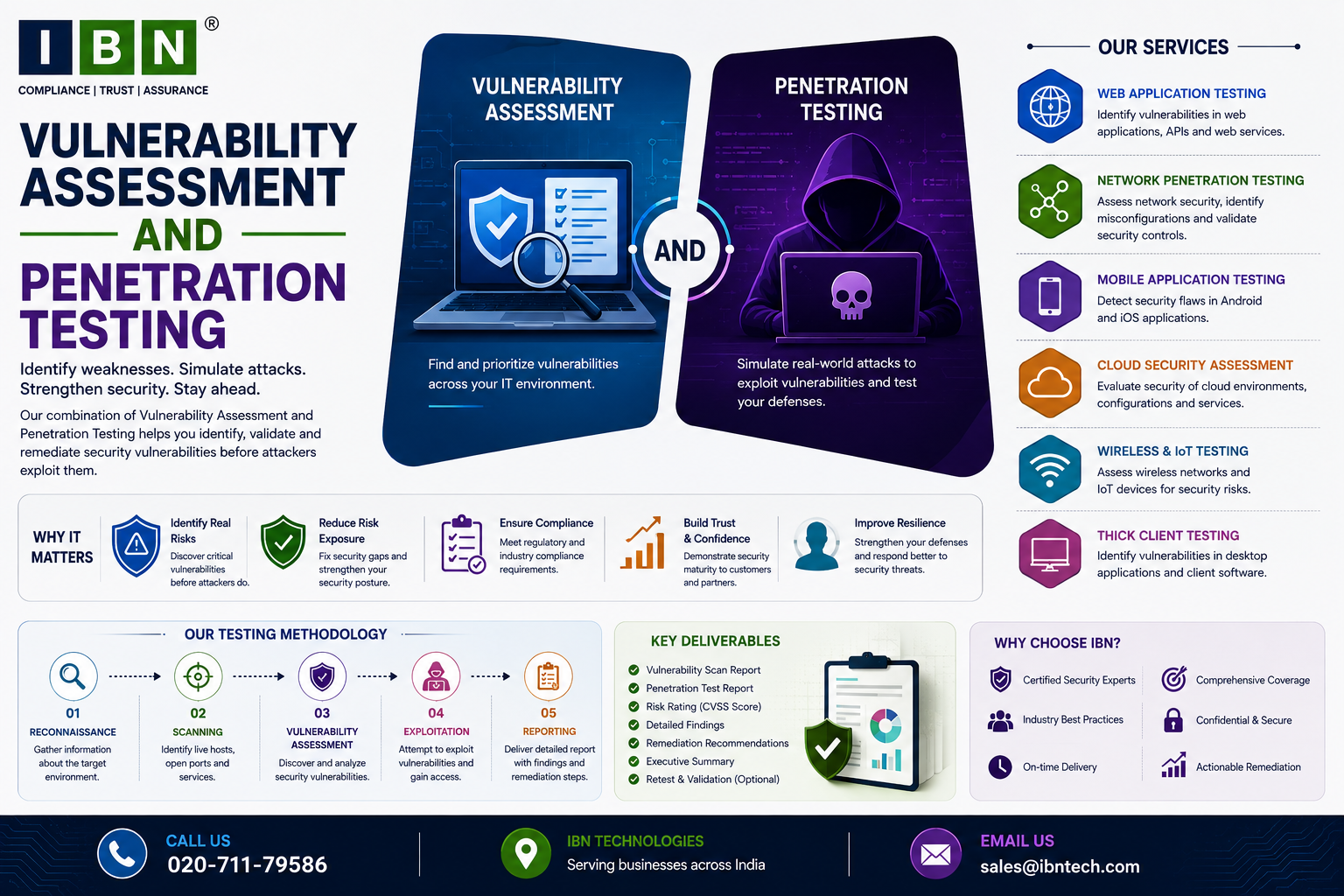
Vulnerability Assessment vs Penetration Testing
A vulnerability assessment primarily focuses on discovering and evaluating potential weaknesses. Penetration testing adds controlled exploitation to validate selected vulnerabilities and investigate realistic attack paths.
Both activities can complement each other.
For example, an assessment may identify a potentially vulnerable application component. Penetration testing can then investigate whether that weakness can actually be exploited within the authorized scope.
When Should Fintech Businesses Conduct Vulnerability Assessments?
Assessments can be useful:
- Before major application launches
- After significant software updates
- Following infrastructure changes
- During cloud migrations
- Before introducing new APIs
- After remediation
- As part of recurring security programs
The appropriate frequency depends on the organization's risk profile and pace of technology change.
Building a Strong Fintech Vulnerability Assessment Program
An effective program should connect technical discovery with business-focused remediation.
Security teams should maintain visibility into assets, validate important findings, prioritize vulnerabilities, assign remediation responsibilities, and retest significant issues.
For Indian fintech businesses, vulnerability assessment in cyber security provides a practical foundation for understanding weaknesses across increasingly interconnected financial platforms.
The goal should not be to produce the largest possible vulnerability list. It should be to identify meaningful exposure, prioritize the right issues, and continuously strengthen the security of critical fintech systems.
