


Powering the Future: Key Drivers of the Global Smart Grid Market Growth
The Decarbonization Mandate
The single most powerful engine fueling the global Smart Grid Market Growth is the worldwide political and societal commitment to combatting climate change. Governments around the world have set ambitious decarbonization targets, and the cornerstone of achieving these goals is the transformation of the electricity sector. This has translated into a wave of supportive policies, large-scale government stimulus funding, and regulatory mandates that are compelling or incentivizing utilities to invest heavily in grid modernization. In Europe, initiatives like the "Clean Energy for all Europeans" package have set clear targets for renewable energy integration and energy efficiency, directly driving smart grid deployment. In the United States, infrastructure bills have allocated tens of billions of dollars for grid upgrades, with a specific focus on enhancing resilience and accommodating clean energy. These top-down drivers create a stable and predictable investment environment, de-risking the massive capital expenditures required for smart grid projects and providing the primary catalyst for the market's robust and sustained expansion.
The Renewable Energy Surge
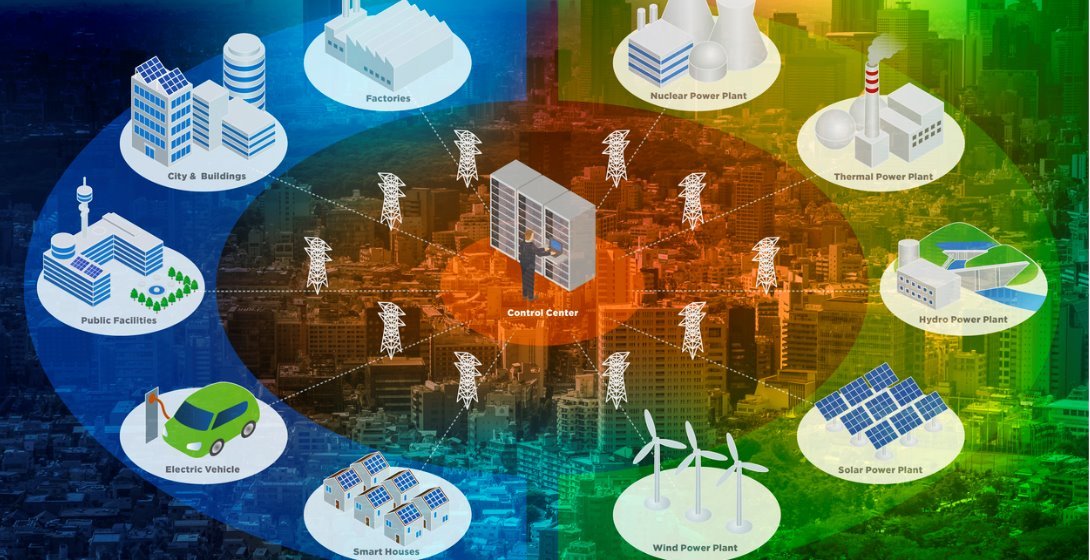
The exponential growth of renewable energy sources, particularly solar and wind, is a massive technical driver for the smart grid market. Unlike traditional power plants that provide a constant, predictable output, renewable sources are inherently intermittent and variable—the sun doesn't always shine, and the wind doesn't always blow. The old, analog grid is ill-equipped to handle this variability. Furthermore, the rise of distributed generation, such as rooftop solar panels on homes and businesses, fundamentally changes the physics of the grid, creating a complex, two-way flow of electricity where there was once a simple one-way path. A smart grid is absolutely essential to manage this new reality. Its advanced sensors and control systems allow grid operators to see and manage this distributed generation in real time. It enables advanced forecasting to predict renewable output and balance the grid accordingly, and its automation capabilities can respond in milliseconds to sudden changes in generation, ensuring grid stability and preventing blackouts. As renewables continue to grow their share of the energy mix, the need for a smarter grid will only become more acute.
Increasing Energy Demand and Efficiency Needs
While we strive for a cleaner grid, global demand for electricity continues to climb. This is driven not only by economic development in emerging markets but also by the "electrification of everything" in developed nations. The transition to electric vehicles (EVs) represents a massive new load that the grid must be able to support. The shift from natural gas to electric heat pumps for home heating is another significant new demand. Simply building more power plants to meet this demand is often unsustainable and uneconomical. A smarter grid provides a more intelligent solution by dramatically improving energy efficiency. By providing real-time data, smart grids help utilities identify and reduce technical losses in the distribution system. More importantly, they enable "demand response" programs. During periods of peak demand, utilities can offer financial incentives to customers who agree to temporarily reduce their consumption (e.g., by slightly adjusting their smart thermostat or delaying their EV charging). This ability to manage the demand side of the equation is a powerful tool for improving efficiency and avoiding the need to build expensive new power plants.
Enhancing Grid Resilience and Reliability
In an age of increasing climate-related extreme weather events—from hurricanes and wildfires to heatwaves and ice storms—the resilience and reliability of our electrical grid have become a matter of national and economic security. The traditional grid is brittle; a fault in one location, such as a downed power line, can cascade and lead to widespread, lengthy blackouts. A smart grid is designed to be more resilient and self-healing. Its network of automated sensors can instantly detect and pinpoint the exact location of a fault. Intelligent switches, known as reclosers, can then automatically re-route power around the damaged section, isolating the outage to the smallest possible area and restoring service to the majority of customers in a matter of seconds, often before a repair crew has even been dispatched. Beyond weather events, the growing threat of sophisticated cyberattacks targeting critical infrastructure makes a secure, smart grid essential. Modern smart grid solutions are built with cybersecurity at their core, providing better monitoring, threat detection, and control capabilities to protect the grid from digital adversaries.
Top Trending Reports:
