


Redefining Visual Immersion: The Evolution of Stereoscopic Display Technology and Glasses-Free 3D Displays
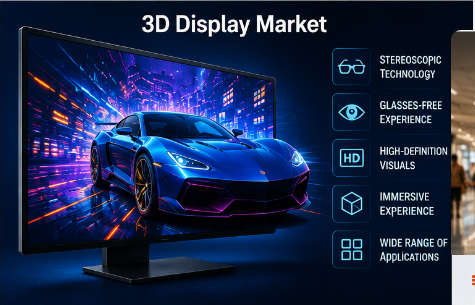
For decades, the quest for truly immersive visual experiences has been a driving force behind technological innovation. From the early days of red-and-blue anaglyph glasses to the sophisticated cinema systems of today, the goal has always been to replicate the way human beings naturally perceive depth and dimensionality in the real world. At the heart of this ongoing revolution lies the concept of stereoscopic display technology, a field dedicated to presenting slightly different images to each eye to create the illusion of three-dimensional space. However, a significant barrier to widespread adoption has always been the reliance on cumbersome eyewear. This challenge has spurred the development of the next frontier in visual media: glasses-free 3D displays. These advanced systems promise to deliver the same immersive depth and realism without the need for any headgear, opening up a universe of possibilities across gaming, medicine, engineering, and communication.
The core principle behind conventional stereoscopic systems is straightforward yet effective. By capturing or rendering two offset perspectives—mimicking the distance between human eyes—and delivering them to the corresponding eye of the viewer, the brain can fuse these images into a single, three-dimensional perception. While effective, this method creates a dependency on specialized glasses, which can be inconvenient, create eye strain over long periods, and disconnect the viewer from their physical environment. Glasses-free 3D displays, also known as autostereoscopic displays, eliminate this need by embedding the optical components required for 3D perception directly into the screen itself. This is typically achieved through technologies like parallax barriers or lenticular lenses, which direct light from the display to create distinct viewing zones for the left and right eyes, effectively "steering" the image without requiring the user to wear anything on their face.
The Mechanics Behind Modern Stereoscopic Systems
The evolution of stereoscopic display technology has been marked by significant milestones. Early systems relied on active shutter glasses or polarized lenses, both of which required synchronization with the display and imposed limitations on viewing angles. Modern advancements, however, have shifted toward more sophisticated approaches that integrate depth perception directly into the screen's hardware.
One of the most promising developments in recent years is the use of light field displays. These systems replicate the way light travels in the real world by projecting multiple perspectives across a wide viewing area. Unlike traditional stereoscopic setups, light field technology allows viewers to move their heads and still perceive accurate depth, creating a more natural and comfortable viewing experience. This has profound implications for fields like medical imaging, where surgeons can examine complex anatomical structures from different angles without physical manipulation of the patient.
Commercial Applications and Industry Adoption
The commercial landscape for glasses-free 3D displays is expanding rapidly. Consumer electronics manufacturers are actively integrating these screens into smartphones, tablets, and gaming consoles. The appeal is obvious: consumers want immersive content without the friction of donning specialized equipment. Streaming platforms and game developers are also beginning to produce content optimized for autostereoscopic viewing, recognizing the growing installed base of compatible devices.
In the professional sector, industries such as architecture, engineering, and product design are leveraging stereoscopic display technology for prototyping and visualization. Designers can evaluate the spatial relationships within their models with unprecedented accuracy, identifying potential issues before physical production begins. This reduces costs, accelerates time-to-market, and enhances the overall quality of finished products.
Health and Safety Considerations
A critical aspect of stereoscopic display technology is the impact on human vision and comfort. Extended viewing of 3D content can cause eye strain, headaches, and nausea—symptoms collectively known as visual fatigue. Glasses-free 3D displays aim to mitigate these issues by providing more natural depth cues and accommodating different interpupillary distances.
Researchers are actively studying the physiological effects of prolonged exposure to autostereoscopic screens. Early findings suggest that modern implementations with higher refresh rates and improved optical designs significantly reduce discomfort compared to older systems. However, the industry continues to refine these technologies to ensure that extended use remains comfortable and safe for all users.
Challenges and Future Directions
Despite the remarkable progress, challenges remain. Achieving high-resolution, glasses-free 3D at scale requires substantial computational power and sophisticated optical engineering. Current systems often suffer from limited viewing angles, reduced brightness, or increased production costs. Manufacturers are investing heavily in research to overcome these obstacles, with promising results emerging from laboratories worldwide.
Looking ahead, the convergence of stereoscopic display technology with artificial intelligence and augmented reality holds immense potential. AI-driven algorithms can dynamically adjust depth maps and optimize image quality in real-time, adapting to the viewer's position and preferences. This personalization enhances the overall experience and broadens the appeal of glasses-free 3D displays across diverse demographics
