


Real-Time Big Data Analytics Depends on High-Speed Processing
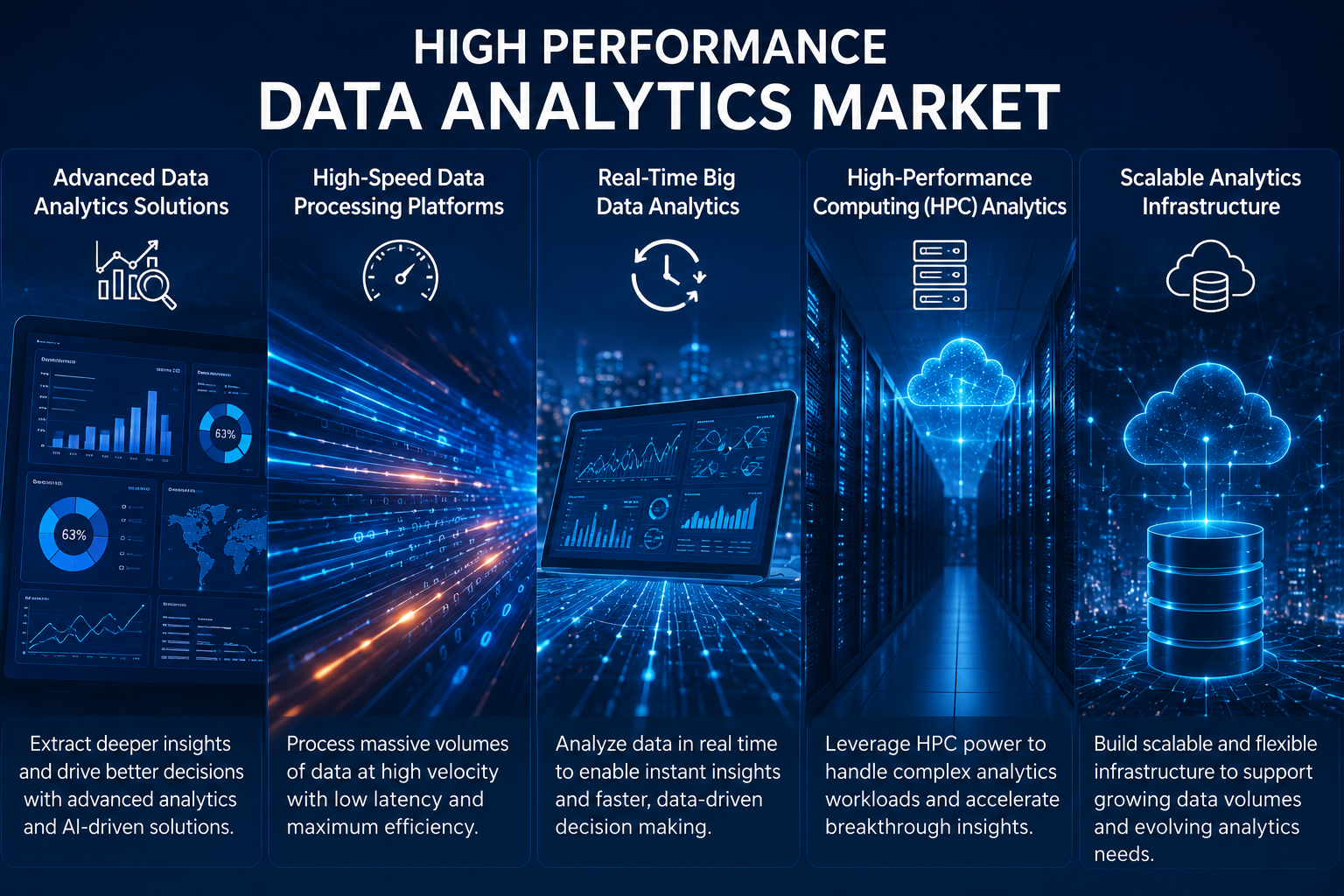
The difference between a 10-millisecond response and a 10-second response can mean millions in revenue or catastrophic losses in certain industries. High-frequency trading, fraud detection, and industrial safety systems all require analysis at the speed of data arrival. According to a recent study from Market Research Future (MRFR), Real-Time Big Data Analytics and High-Speed Data Processing Platforms are the foundational technologies for these time-critical applications. Real-time analytics provides the techniques; high-speed processing provides the performance.
The volume of data that must be processed in real time continues to grow. A single autonomous vehicle generates several terabytes of sensor data per hour. A power grid processes millions of readings per second. A global payment network handles thousands of transactions per second. Traditional databases and analytics tools cannot keep pace. Specialized high-speed platforms are required.
What Real-Time Big Data Analytics Entails
Real-time big data analytics is distinct from traditional analytics in several ways. First, it operates on streaming data—continuous, unbounded sequences of events—rather than static batches. Second, it produces results continuously, with each new event potentially changing the output. Third, it must handle data that arrives out of order, at variable rates, and with gaps. Fourth, it must meet strict latency requirements, often measured in milliseconds.
The types of analytics performed in real time vary by use case. Simple analytics include threshold detection (alert if temperature exceeds limit), aggregation (running sum or average), and filtering (pass only events matching a pattern). Complex analytics include pattern matching (detect sequence A followed by B followed by C), anomaly detection (flag statistically unusual events), and prediction (forecast future values from recent trends).
A credit card processor might use real-time analytics to detect fraud. The system evaluates each transaction against a model that considers the cardholder's spending history, location, device, and merchant category. If the transaction scores above a risk threshold, the system blocks it and sends an alert to the cardholder. The entire evaluation, from transaction receipt to block decision, must complete within a few hundred milliseconds to avoid disrupting the customer experience.
High-Speed Data Processing Platforms for Streaming Workloads
High-speed data processing platforms provide the infrastructure for real-time analytics. These platforms are built to handle streaming data at scale, with features like exactly-once processing (each event is processed precisely once, even during failures), event-time processing (ordering events by their embedded timestamps rather than arrival time), and state management (maintaining aggregates and models across events).
Modern streaming platforms use a continuous query model. Users define queries that run forever, producing results as new data arrives. A query might be "calculate the moving average of sensor readings over the last minute." The platform maintains the state needed for this calculation—the recent readings—and updates the average as each new reading arrives. The query never terminates; it produces a continuous stream of outputs.
A logistics company might deploy a high-speed processing platform to monitor delivery vehicles. The platform ingests GPS coordinates from each vehicle every few seconds. A continuous query calculates the distance each vehicle has traveled in the last hour, the speed between waypoints, and the estimated time of arrival at the next stop. Dispatchers see updated ETAs continuously, and customers receive accurate delivery windows.
Balancing Latency, Throughput, and Correctness
The MRFR report identifies three competing priorities in real-time analytics: latency, throughput, and correctness. Latency is the time between an event arrival and the corresponding result. Throughput is the number of events processed per second. Correctness refers to whether results are accurate given all events, including those that arrive late.
Optimizing for one priority often hurts others. Low latency can be achieved by processing events as they arrive, but this may produce incorrect results if events arrive out of order. High throughput can be achieved by batching events, but batching adds latency. Strong correctness requires waiting for late-arriving data, which increases latency.
The MRFR report advises organizations to make explicit trade-offs based on use case requirements. Fraud detection might prioritize low latency over perfect correctness—it is acceptable to occasionally block a legitimate transaction if most fraud is caught. Financial reporting might prioritize correctness over low latency—quarterly results must be accurate even if they take an extra day to produce.
Deployment Considerations
Organizations deploying real-time big data analytics should consider several factors. First, data volume and velocity determine the required platform scale. Second, latency requirements determine whether in-memory processing is necessary. Third, fault tolerance requirements determine checkpointing frequency and data replication strategy. Fourth, exactly-once semantics requirements determine the complexity of the processing pipeline.
The MRFR report notes that many organizations start with a simple streaming architecture—ingest, filter, aggregate, alert—and add complexity as their needs grow. This incremental approach allows teams to learn streaming patterns without committing to complex infrastructure prematurely.
Conclusion
Real-time analytics is no longer a niche requirement for specialized industries. Real-Time Big Data Analytics provides the techniques to analyze streaming data continuously. High-Speed Data Processing Platforms provide the infrastructure to perform that analysis at scale and with low latency. Together, they enable organizations to detect opportunities and threats as they emerge, not after the fact.
