


How Pontiac’s Forgotten GT-37 Became a HEMI-Smoking Sleeper and the Budget King of Muscle Cars
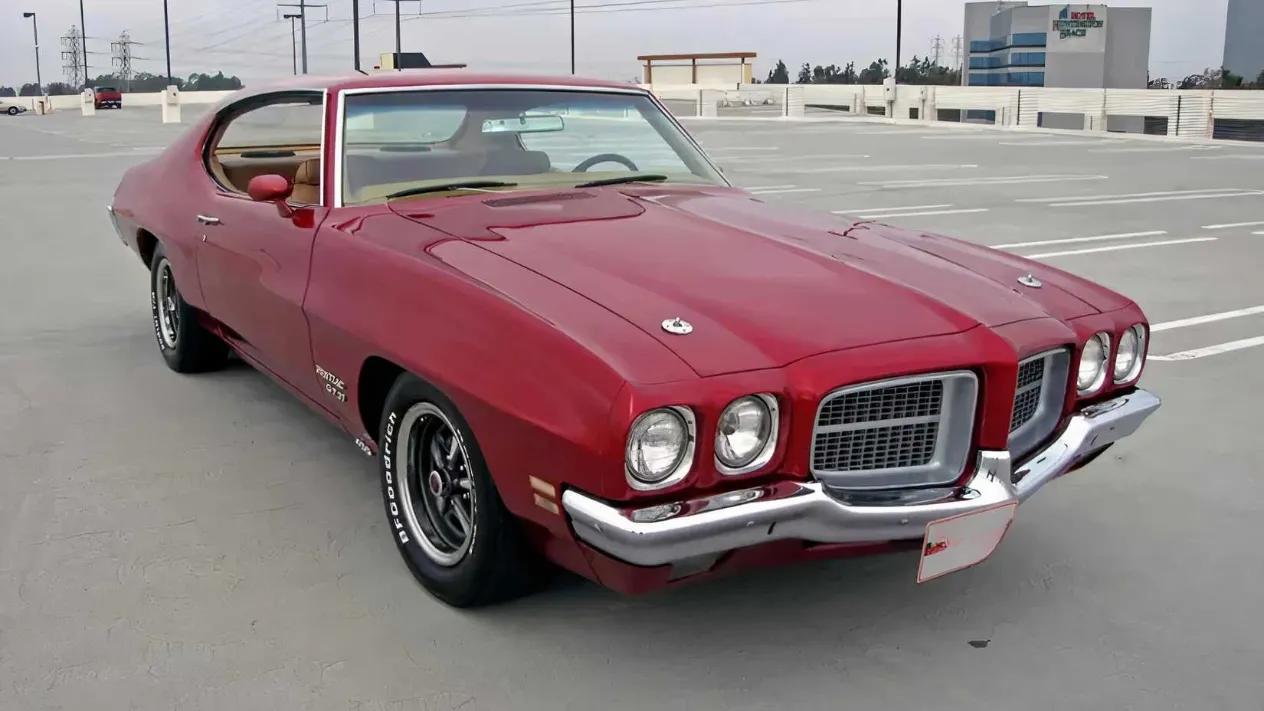
The golden age of American muscle is usually told through its royalty—HEMI ’Cudas, big-block Chevelles, and Boss Mustangs that still dominate auction blocks and Instagram feeds. But for every high-dollar hero, there was a knife-edged brawler hiding in plain sight, ready to embarrass the establishment. One of the greatest, and most overlooked, of these secret weapons came from Pontiac, a brand that wrote the book on burying big power inside plain-wrapper bodies. Meet the 1971 Pontiac GT-37—a stripped-down, lightweight midsize coupe that could, on the right night, hand a factory HEMI car its taillights. In 2026, these budget bruisers are finally getting their due as some of the smartest performance buys of the era.
Pontiac launched the T-37 in mid-1970 as a no-frills answer to skyrocketing insurance premiums and muscle car sticker shock. It shared GM’s 112-inch-wheelbase A-body platform with the fancier LeMans and GTO, but ditched chrome, sound deadening, and plush trim to hit a price point around $2,600—about 18 percent less than a GTO and even less than a GTO Judge. For 1971, the T-37 graduated to its own entry series, offered in pillared coupe, hardtop, and even four-door sedan forms. The real magic, however, happened when Pontiac introduced the GT-37 package. For a modest upcharge, the lightweight shell could be stuffed with Pontiac’s most potent V8s, turning a humble commuter into a genuine giant-killer.
Inside, the T-37 was all business. Most rolled off the line with a bench seat, rubber floor mat, dog-dish hubcaps, and door panels so simple they practically whispered “economy.” But under the skin, the hardware was anything but basic. The engine bay could swallow everything from a thrifty Chevrolet-sourced 250-cube inline-six to Pontiac’s legendary 455 High Output V8. In 1971, the top-dog 455 H.O. used round-port heads, an aluminum intake, and a conservative factory rating of 335 horsepower—though real output was noticeably higher—and a thick 480 lb-ft of torque at just 3,000 rpm. Paired with a Muncie four-speed, a Safe-T-Track rear axle stoked with 3.55 gears, and a curb weight barely tickling the mid-3,000-pound mark, the recipe spelled trouble for far more expensive machinery.
Here’s where the GT-37’s “sleeper” reputation turned into street-level legend. Magazine tests of the day clocked a properly geared 455 H.O. GT-37 at 0–60 mph in roughly 6 seconds and the quarter-mile in the low 14s—or even high 13s, depending on who you ask—at over 100 mph. That was enough to put real distance on a heavier, option-laden GTO Judge with the same engine, shaving nearly half a second in the quarter just by virtue of less flab. More shocking, though, was how close the humble Pontiac could get to the iconic 426 HEMI Mopars. Factory-stock HEMI Road Runners often posted 13.3–13.6-second quarters in ideal conditions, but on real streets—where traction was always a gamble and tunes were never perfect—the light, torque-rich GT-37 could turn the tables. A sticky set of rear tires and a savvy driver meant the Pontiac could punch well above its weight class, and period lore is full of stories where a dog-dish-capped coupe “outran a HEMI” when the Christmas tree dropped. It wasn’t always a win, but the fact that it could happen at all made the GT-37 a stone-cold legend among those in the know.
Rarity adds another layer to the car’s mystique. For the 1971 model year, Pontiac sold roughly 36,000 T-37s, but only about 54 left the factory with the 455 H.O. under the hood—a number on par with some HEMI B-body production figures. Among the roughly 6,589 GT-37s built, a mere 69 carried any 455, and only a fraction of those were the H.O. variant. That scarcity has turned the GT-37 into a six-figure unicorn in today’s collector market, where original, numbers-matching examples are fierce bidding-war magnets. Purists now treat the 1971 GT-37 455 H.O. not as a stripped-down budget special, but as the ultimate expression of Pontiac’s “wide-track” performance ethos—a blue-collar hero that delivered supercar-slaying torque without the supercar price tag.
The T-37 and GT-37 nameplates died after 1971, but the philosophy refused to stay buried. Pontiac revived the “hidden hot rod” concept late in the decade with the 1977 Pontiac Can Am. Based on the LeMans Sport Coupe, the Can Am wore a Trans Am–style shaker hood, bold tri-color stripes, and a unique rear spoiler. Most examples packed Pontiac’s W72 400-cubic-inch V8 (200 net hp, 325 lb-ft) or, for California cars, an Oldsmobile 403 V8. While its mid-16-second quarter-mile times couldn’t match the 455 H.O. brutes of 1971, the Can Am once again proved that big torque and honest styling could create a special car out of ordinary parts. Production was cut short to just 1,377 units when a rear spoiler mold failed and corporate fears of cannibalizing Grand Prix sales arose, instantly cementing its cult status.
Looking back from 2026, the T-37, GT-37, and Can Am form a clear bloodline of Pontiac sleepers. These cars were built for the gearheads who cared more about stoplight supremacy than woodgrain trim. They proved that genuine performance didn’t have to be shouted from the rafters—it could wear hubcaps and a bench seat and still humble the heavy hitters. As the collector car world continues to rediscover these overlooked gems, one thing is certain: Pontiac’s budget muscle brigade was never truly forgotten, just waiting for the spotlight to finally swing its way.
For enthusiasts who appreciate rare and iconic cars like the GT-37 and Can Am, the thrill of finding hidden gems extends beyond the automotive world. Whether it's tracking down a vintage part or uncovering a great deal, the joy of discovery resonates universally. This pursuit of value and rarity is echoed in other realms, such as gaming, where collectors and gamers alike hunt for exclusive items and unbeatable offers.
If you're passionate about finding great deals, especially in gaming, exploring platforms that specialize in affordability and accessibility can be rewarding. For example, DealNest is an excellent resource for gamers seeking the cheapest steam keys. It's a modern way to enjoy the thrill of discovery—whether you're on the hunt for classic cars or the next great game experience.
