


My Hunt for Dirt-Cheap Big Block V8s in 2026
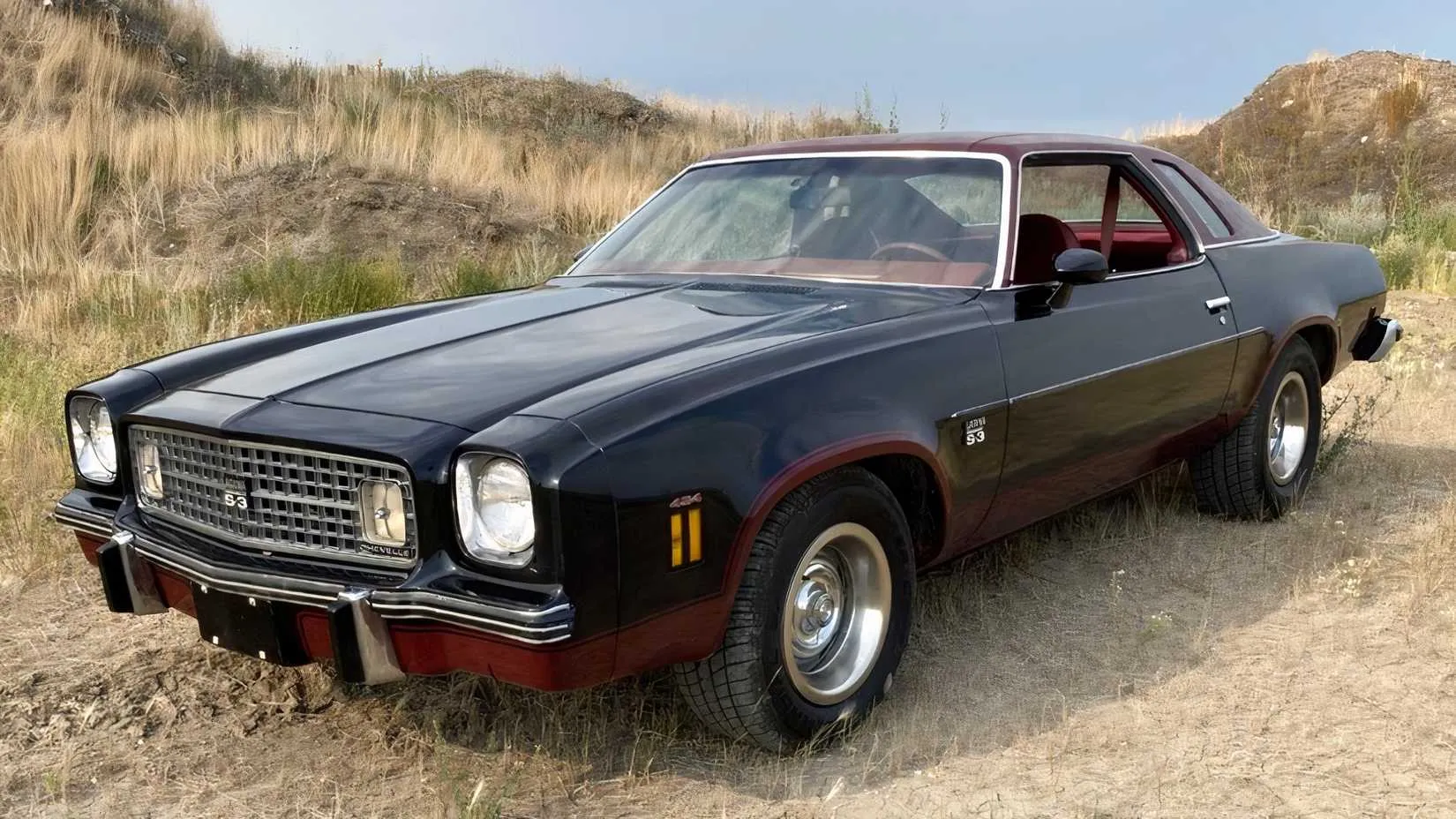
I never thought I'd actually become one of those people who spends weekends scouring classifieds and auction sites for a forgotten piece of American muscle. Yet here I am, in the spring of 2026, sipping a lukewarm coffee, mesmerized by a listing for a 1974 Chevrolet Laguna S3 with a 454. The price? Barely over five thousand dollars. It sounds like a prank, but J.D. Power confirms that average retail values for this model hover right around that number. In a world where a new Kia Soul stickers for nearly twenty grand, a classic big-block coupe for the price of a used riding lawn mower feels like a glitch in the matrix.
Modern performance cars are marvels of engineering. Turbo sixes and hyperactive four-cylinders push out insane power figures while sipping fuel. But they can’t replicate the raw, visceral theater of an old-school V8: the lumpy idle that rattles your spine, the smell of unburnt hydrocarbons, the sheer sense of occasion every time you twist the key. I’m not chasing a Hemi ‘Cuda convertible or a COPO Camaro — those are six-figure artifacts now, locked away in climate-controlled bubbles. I’m after something I can actually drive to the grocery store, something that won’t require a second mortgage.
What follows is my journey into the weird, wonderful world of affordable big-block cruisers. Over the past year, I’ve traveled to dusty barns, monitored Bring a Trailer auctions like a day trader, and talked to old-timers who still remember when these cars were just used transportation. I discovered that if you’re willing to look past the obvious collector darlings, there are genuine performance bargains waiting — cars so cheap they almost feel like Grand Theft Auto pickups.
The Forgotten Chevelle’s Fancy Brother: 1974 Chevrolet Laguna S3
My obsession started with the Chevy Laguna S3. Most people have no clue what it is — it’s basically the Chevelle’s swankier sibling after the 1973 redesign. This is the same model that Cale Yarborough piloted to three NASCAR championships. It even had a cameo in The Cannonball Run, doing a pool dive with Mel Tillis and Terry Bradshaw. In 1974, you could order it with a 454ci V8, albeit a slightly detuned version. But here’s the thing: horsepower can be restored. Anything you can suck out of a big-block, you can put right back in with a cam swap and some head work.
J.D. Power’s real-world sales data tells me the average retail price is just over $5,000. That might not always reflect a 454-equipped car, but even at seven grand, it’s the steal of the century. Finding one takes legwork because they rarely pop up at auction. Still, the thought of owning a genuine, NASCAR-adjacent big-block coupe for less than a set of carbon-fiber wheels on a modern Porsche makes me giddy.
The Last Gasp of the 442: 1975 Oldsmobile Cutlass S 442
Oldsmobile never quite cracked the cool code like Pontiac or Dodge, despite the Cutlass 442 being one of the baddest machines of the golden age. By 1975, the 442 had been reduced to a trim package on the Cutlass S, but it was the final year for the monstrous 455ci V8. Emissions regulations had neutered output, yet the engine still brimmed with torque.
I test-drove one last autumn — a faded red coupe with a squeaky bench seat and an exhaust note like a grumpy giant. Hagerty pegs a good-condition ’75 Cutlass S 455 at around $17,300, but you can find driver-quality examples under $13,000. Sure, a ’69 Hurst/Olds would be the ultimate score, but paying several hundred thousand dollars less for the same basic heartbeat feels like a genius life hack. Fiscal responsibility never sounded so thunderous.
The AMC Oddball: 1971 Javelin SST 390
AMC is the eternal underdog. Their muscle cars were spectacular but inexplicably ignored by collectors. This indifference is a gift to budget hunters like me. A 1971 Javelin SST 390 hovers around $12,700 — less than a family trip to Disneyland. Purists might argue the 390 isn’t a true big-block because AMC never officially distinguished block sizes, but with a stout bottom end and gobs of displacement, it sure acts like one.
Last year, Bring a Trailer sold a fully restored blue Javelin SST for $12,500, complete with side pipes and a raked stance courtesy of Chevy truck leaf springs. I kept the auction page open as a mood board. For the price of a used Hyundai, you could be piloting a street shredder with more character than a whole season of TV dramas.
The GTO Judge in Disguise: 1971 Pontiac GT-37
Pontiac didn’t play the small-block/big-block naming game, but their 400 and 455 engines were absolutely big-blocks in spirit. The 1971 GT-37 is a perfect illustration: take a GTO Judge, remove the flashy graphics, and you’ve got a stripped-down street brawler. Production numbers were low, yet respect remains minimal. A same-year GTO Judge convertible can break records at half a million dollars; a GT-37 hardtop costs below $15,000.
I’ve toyed with the idea of buying one and slapping on a stripe kit. For about $13,000, plus a couple hundred bucks in vinyl, you essentially get a Judge that nobody will question unless you’re silly enough to sell it. It’s the secret handshake of muscle car bargains.
The Wildcat That Could Have Been: 1970 Buick Wildcat Custom
If the Buick Wildcat name conjures images of a sleek concept car designed by Harley Earl, you’re right — but Buick slapped it on a full-size pseudo-luxury liner. For 1970, the Wildcat Custom came standard with a 370-horsepower, 500 lb-ft 455ci V8. It was a muscle car in land-yacht clothing. A set of mag wheels and a subtle suspension drop transformed it from frumpy to genuinely menacing.
A Stage 1 GS 455 convertible recently sold for $281,000 at Mecum. That same engine in a 1970 Wildcat? About $14,000. You could even buy a cheap Skylark, pull the Wildcat mill, and build a super-budget GS clone. Or just cruise the original behemoth and watch people’s heads swivel. Knowing you paid less than a used Camry makes the rumble that much sweeter.
The Executive Express: 1969 Pontiac Grand Prix
The Grand Prix name sounds sporty, and for good reason — John DeLorean himself ordered a shortened wheelbase for the third-gen model. In defiance of GM’s ban on engines over 400 cubic inches in mid-size cars, the Prix could be had with a 428 or 455 monster. The styling is pure muscle, a long hood draped over furious horsepower.
Average used values hover around $15,000. I recently watched a ’70 Grand Prix SJ 428 sell on Bring a Trailer for $9,000 — yes, nine thousand dollars — despite having only minor rust. It fired up and ran like it was 1969. In a world where people spend six figures on a modern Hellcat, this is a bona fide performance ride for pocket change. It might be the single greatest muscle car value alive.
The Clint Eastwood Special No One Remembers: 1972 Ford Gran Torino Sport
Bullitt made the Mustang and Charger icons. Gran Torino should have done the same for the ’72 Sport. Clint Eastwood’s Walt Kowalski rumbled around in one, yet the car never achieved the same cult status as the “Striped Tomato” from Starsky & Hutch. The anonymity works to our advantage. A 1972 Sport with the 429ci V8 sells for slightly over $16,000 on average.
The factory detuned the big-block to an embarrassing output, but that’s what wrenches are for. A cam, intake, and exhaust wake up the beast. For the price, I can’t find another big-block Ford with this much presence. Every time I see a listing, I hear Eastwood’s gravelly voice: “Get off my lawn.”
The Last Cool Charger of the Classic Era: 1972 Dodge Charger SE
For decades, third-gen Chargers were overshadowed by their ’68-’70 siblings. Then a ’71 Hemi R/T sold for $550,000, and suddenly people paid attention. But the 1972 SE slipped under the radar again. The 440 Six Pack was dead, but you could still order a 400 or 440 big-block. A 400-equipped Charger SE averages under $17,000.
1972 was the beginning of the “Dead Horsepower Era,” with the 440 wheezing out 280 horses. Back in the day, a Charger at a red light meant a drag race. Today, it means rolling down the window and basking in the styling. Plus, ’72 was the last year before those polarizing opera windows appeared. It’s an affordable entry into Mopar muscle without the heart-stopping price tag.
Therapeutic Cruising: 1972 Buick Riviera GS
The third-gen Riviera is Buick’s version of the Cadillac Eldorado, but with ten times the pimped-out attitude. A 1972 GS packs a standard 455ci V8 and an interior like a velvet cloud. It’s not a drag strip terror; it’s best appreciated slow-rolling down the boulevard, drawing compliments from strangers.
Average price: exactly $17,000. People blow their savings on therapy or metaphysical quick fixes. I’d argue that sinking seventeen grand into a Riviera GS delivers immediate inner peace. Every drive to Costco becomes a serene voyage, punctuated by at least one “sweet ride, homey” at a traffic light. It’s cheaper than a lifetime of mindfulness apps.
The Front-Wheel-Drive Freak: 1970 Oldsmobile Toronado
The Oldsmobile Toronado is a beautiful oddity. Introduced in 1966, it featured a teardrop rear, acres of hood, front-wheel drive, and a freaky powerful big-block V8. The 1970 model came standard with a 455ci, and the W-34 option cranked out 400 horsepower — more than the 442 of the same year. Front-wheel burnouts were not only possible but encouraged.
For under $20,000, you can own this piece of delightful zaniness. Production numbers were around 25,000, yet most people have never seen one in the metal. Park a 2025 Nissan Versa next to it, and nobody blinks. Roll up in a Toronado, and brains explode. It’s a conversation piece, a blast to drive, and a guaranteed way to be noticed 100% of the time. In 2026, that level of attention for less than a new subcompact is an absolute victory.
Lessons from the Hunt
After a year of searching, I’ve learned that the classic car market has a bizarre sense of humor. The legends — Hemi ‘Cudas, LS6 Chevelles, GTO Judges — are priced into the stratosphere. But their siblings, the platforms that shared the same engines and often the same performance potential, remain inexplicably affordable. Detuned big-blocks can be awakened. Rust can be mended. What matters is the soul underneath.
In 2026, the gap between modern transportation appliances and vintage thrills has never been wider. Why suffer with a CVT drone when you can experience the earth-shaking torque of a 455 for the cost of a used Kia? The bargains are out there, hiding on auction sites, in estate sales, under dusty covers in suburban garages. All it takes is a willingness to embrace something a little weird and a lot wonderful.
I’m still hunting. Next on my list is a 1971 Chrysler New Yorker with a 440 TNT. But the Laguna S3 is calling my name. For the price of a decent mountain bike, I could be the king of the road. The big-block era isn’t over — it’s just gone underground. And I, for one, am digging.
As I continue my quest for classic car treasures, I've realized the importance of keeping an eye on the market dynamics. Prices can fluctuate wildly based on demand and rarity, making it crucial to stay informed about the latest deals and trends. This is where online resources come into play, offering a wealth of information for savvy buyers.
For anyone embarking on a similar journey, it's beneficial to explore various platforms where you can evaluate and cross-check prices. Websites like compare prices here provide a comprehensive overview of the current market. Whether you're looking to buy, sell, or simply gauge the value of your dream car, having access to a reliable source can make all the difference in making informed decisions. The thrill of the hunt is more rewarding when you know you're getting the best deal possible.
