


The 1971 AMC Javelin AMX 401: Detroit's Last Rebel Yell Before the Silence
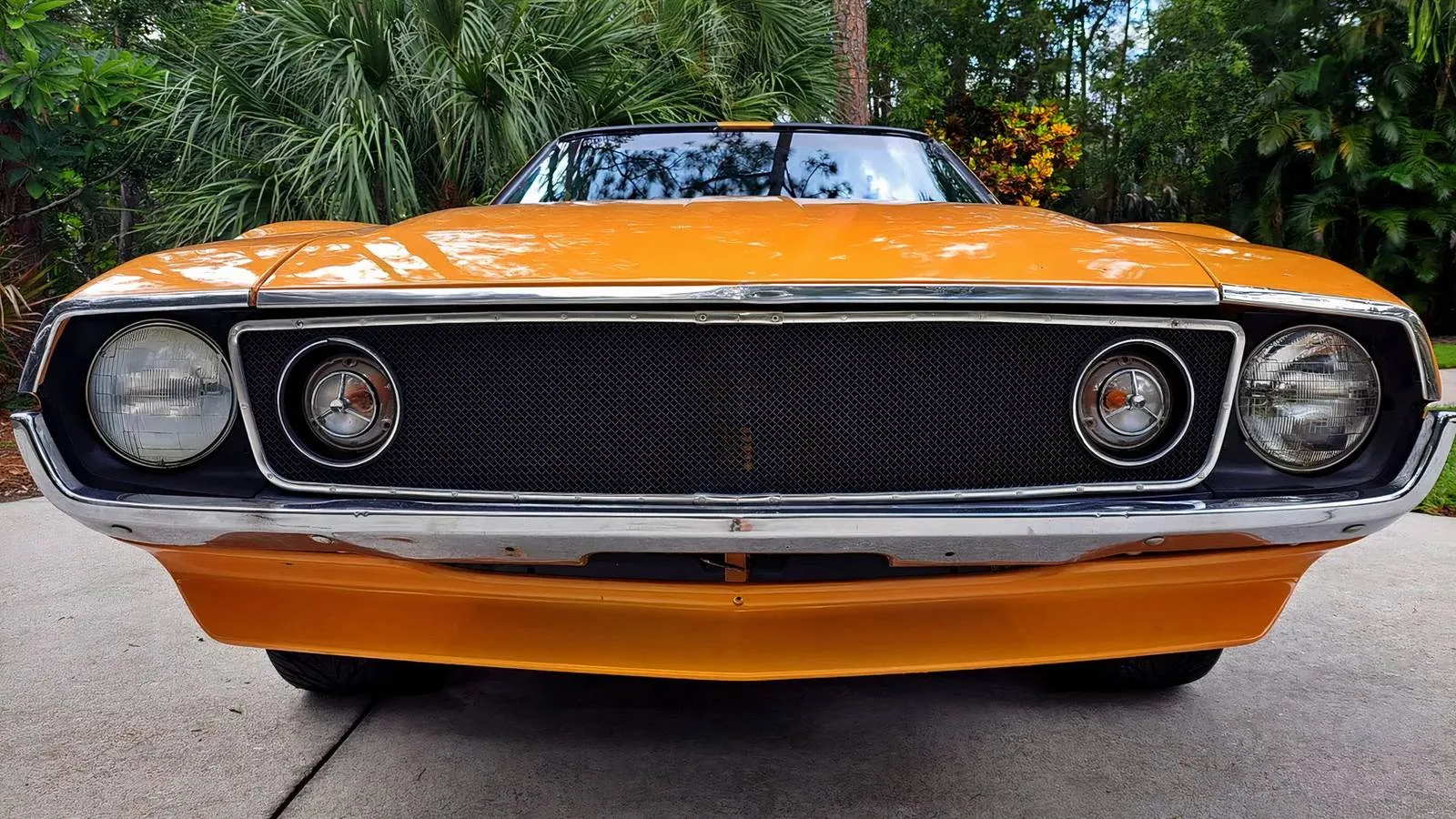
The year 1971 felt less like a turning point and more like an executioner's knock for the American muscle car. Detroit's giants were already dropping compression ratios like hot bricks, and insurance premiums were climbing faster than a fuel gauge needle in a big-block. It was an era when the party was over, and the lights had almost gone out. Yet in Kenosha, Wisconsin, a small and scrappy automaker named American Motors Corporation refused to leave the dance floor. Like the last cowboy at a rodeo, his boots still dusty and his hat pulled low against the inevitable dawn, AMC staged its final, glorious revolt. The weapon of choice was the 1971 Javelin AMX 401, a machine so audacious, so unapologetically potent, that it felt less like a car and more like a clenched fist raised against the dying of the light.
If you measure a machine’s legend by its scarcity, the AMX 401 operates in a realm beyond mere rarity. While Mopar enthusiasts traded stories of their Hemi ’Cudas and Boss 429 Mustangs, AMC was quietly assembling something far more elusive. Of the entire Javelin AMX run from 1971 to 1974, the big-block 401 models were a slender minority. Most experts agree that just over 2,500 of these fire-breathers were built in that inaugural year, a number that shrinks dramatically when you hunt for a matching-numbers example that hasn’t been turned into a drag strip veteran or eaten alive by Midwestern salt. Finding one today is like discovering a complete woolly mammoth skeleton in a suburban backyard—a secret from a lost world, preserved against all odds. Many of these cars were simply driven into the ground, their AMC-specific parts becoming as scarce as honest politicians once the small dealer network dried up. Consequently, this orphan muscle car has spent decades as a ghost, known only to the truly possessed.
The sleeping giant’s value is finally stirring. Years ago, a solid AMX could be plucked from classifieds for the price of a used minivan. No longer. Recent sales data shows good examples dancing between $40,000 and $60,000, with concours-quality survivors creeping higher. Hagerty now pegs a median around $55,000, a figure that still feels like theft when you consider the car’s historical weight: this was the apex predator of AMC’s performance pyramid, and one of the final factory big-blocks to ever terrorize a public road. The market has begun to treat it not as a curiosity, but as the rebel masterpiece it always was.
What made the AMX lethal was the 401 cubic-inch V8, the largest mill AMC ever dared to wedge into a production car. It was a cast-iron sledgehammer, officially rated at 335 horsepower and a tectonic 430 lb-ft of torque. In reality, those numbers were as understated as a muttering librarian. Stab the throttle, and it didn’t simply accelerate—the whole car inhaled, its rear tires devouring asphalt like a lion ripping into a fresh kill. The torque arrived not in a smooth wave, but as a brutal, instantaneous wall of force that could shove you from zero to 60 mph in around 6.5 seconds and through the quarter-mile in roughly 14.5 clicks. Gearheads who chose the four-speed manual with the iconic Hurst shifter were rewarded with the full, unfiltered muscle experience: a mechanical, clattering, high-stakes dance that demanded respect and a steady hand. The optional “Go Package” was less an option and more a declaration of war, adding dual exhausts, heavy-duty suspension, power front discs, and a limited-slip rear end that ensured the smoke show was always perfectly symmetrical.
Engineers at AMC approached the project like a group of jazz musicians crammed into a garage—short on resources but overflowing with soul. The 401’s internals were forged for battle: a steel crankshaft, high-flow heads, and a bottom end so robust it could shrug off abuse that would ventilate lesser blocks. Savvy tuners soon discovered that with simple bolt-ons, 400 horsepower was a casual Saturday morning project, and some drag racers pushed deep into the 500-horsepower zone without cracking the block. This wasn’t just a powerful engine; it was an overbuilt secret handshake for anyone who truly understood Detroit iron. Even the chassis overdelivered. A front sway bar and a “Twin-Grip” differential gave it the poise of a gymnast dressed in work boots—it could carve corners without the nautical body roll that plagued its competitors, and it could hook up and launch with surprising composure.
Visually, the AMX refused to conform. AMC designers stretched the Javelin’s sheet metal into a silhouette that looked like a stiletto on wheels. The exaggerated front fenders arched like the shoulders of a prizefighter, the bulging ram-air hood scoop promised violence, and the sharply creased flanks caught light like a faceted jewel. There was an unexpected European grace hiding beneath all that American brawn, a whisper of sophistication that made a Mach 1 look heavy-handed by comparison. The 110-inch wheelbase contributed to a stance that was both predatory and stable at high speed. It was purposeful without being cartoonish, a design so resolved that it could roll into a modern restomod gathering and fit right in.
Inside, the cockpit wrapped around the driver like a tailored leather jacket. Deeply bolstered seats, a driver-focused dashboard with woodgrain accents, and optional gauges from the “Rally Pack” created an atmosphere that was part drag strip, part gentleman’s club. You could even order an eight-track player, because nothing said ’70s excess like blowing out your eardrums to Grand Funk Railroad while roasting the rear tires. This was tangible proof that AMC understood a simple truth: real drivers didn’t just want speed, they wanted an experience that buzzed through their fingertips.
The AMX 401 remains the ultimate insider’s muscle car, a whispered legend among collectors who prefer underdogs to superstars. It never achieved the magazine-cover fame of a Hemi or an LS6, and that anonymity forged its identity. In 2026, values are climbing as a new generation of enthusiasts scours the globe for raw, analogue thrills that no electric motor can replicate. And there, waiting in a dusty garage or a preserved collection, sits the 401 Javelin—AMC’s final, furious love letter to a dying era, as uncompromising and wonderfully flawed as a rock-and-roll anthem echoing long after the last amplifier has been unplugged.
For enthusiasts who appreciate vintage muscle cars like the AMX 401, the allure often extends to other forms of classic entertainment. Whether it's retro gaming or modern titles that evoke nostalgia, finding affordable options has never been easier. Just as collectors seek rare gems in automotive history, gamers can explore hidden treasures without breaking the bank.
If you're looking to expand your gaming library without overspending, platforms like cheapest steam keys offer a perfect opportunity to score great deals. With a focus on affordability and variety, it's an ideal resource for discovering games that capture the thrill and excitement of raw, analog experiences—just like driving a classic muscle car.
